


Hello, everyone! I'm part of the study-abroad support team here.
There is something I've been a little curious about for a while. On Japanese TV, there are those programmes where a crew at the airport asks foreign visitors, "How long are you staying in Japan?"
And the answers come back with surprising ease: "Two weeks, starting today." "Three weeks, and I'm flying home now." "About a month, I think." Every time, I find myself thinking, "...A month?!" I can't help it.
How many days do you need before a trip feels like enough?
For me, a trip to one place is three nights, four days. Five to seven days at the outside. If I have a whole week, I feel I can really take it easy.
Yet when I look at travellers from overseas, two weeks in one country is nothing unusual. Or three. Sometimes a month.
So do Japanese people really travel for so much less time than people elsewhere? And what changes about a trip when you stay longer?
This time I've dug into the data on trip length, and at the end I'd like to explore a different way of travelling altogether: "Do travel and study abroad really have to be kept apart?"
First, the short version...
What I found is that, yes, Japanese trips are on the short side. But it is not as simple as "the Japanese go short, and foreigners all go long."
How long a trip lasts depends heavily on where you are travelling from and to, how long the flight is, and how many days of leave you can take in one go.
Even for trips to Japan, for example, people coming from South Korea stay for a completely different length of time from people coming from France or Australia.
And the thing I found most interesting in the data is this: as trips get longer, what travel feels like slowly shifts from "sightseeing" to "living".
① How long do Japanese people actually spend on trips abroad?
Let's start with us.
In JTB's 2025 summer holiday travel survey (JTB is a major Japanese travel company), the most common trip length among the 137 respondents who said they were travelling abroad was three nights, four days (21.2%). Next came five nights, six days (16.1%) and two nights, three days (16.1%).
Of course, this is a survey of "people going abroad in summer 2025", not the average annual trip length for everyone in Japan. Even so, I think it shows quite well how Japanese people typically plan a trip abroad: in a few days to a week.
Domestic trips are shorter still. In the same JTB survey, one night, two days came to 36.5% and two nights, three days to 32.8%. Those two alone make up about 70%.
Finish work on Friday, set off on Saturday, be home by Sunday or Monday.
It is a pattern we all know well.
② Yet Western and Australian visitors to Japan stay "10 to 16 nights"
So what about travellers from overseas? Here we look at how long foreign visitors actually stay in Japan.
The Japan Tourism Agency's survey of spending by international visitors, in its final 2025 results, gives the average number of nights for leisure and sightseeing trips by nationality. The differences are striking.
| Country/region | Average nights spent in Japan |
|---|---|
| South Korea | 3.44 nights |
| Taiwan | 5.55 nights |
| China | 6.42 nights |
| United States | 10.74 nights |
| United Kingdom | 12.82 nights |
| Australia | 13.18 nights |
| Germany | 15.23 nights |
| France | 16.53 nights |
Seen this way, it is less that "foreigners take long trips" and more that visitors who come from farther away, such as the West and Australia, stay longer.
From South Korea, the average is 3.44 nights, which is not so different from how we Japanese travel on short hops abroad. From Australia, it is about 13 nights. From France, around 16.5.
"If I'm getting on a plane for ten hours or more, I may as well stay a couple of weeks": that is perfectly sensible, isn't it? The travellers I saw on TV saying "I'm here for three weeks!" were not simply exceptions, it turns out.
③ Why do Japanese trips tend to be short?
So why are we used to relatively short trips? There is no single reason, of course.
The first that comes to mind is how hard it is to secure leave in a single stretch.
According to the Ministry of Health, Labour and Welfare's 2025 General Survey on Working Conditions, workers in Japan were granted an average of 18.1 days of annual paid leave in 2024 and actually took an average of 12.1 days. That is a take-up rate of 66.9%, the highest on record.
But "taking 12 days off" is a very different thing from "being able to take 12 days off in a row".
If your leave is scattered, with a day on a Monday, a day on a Friday, half a day for a hospital visit and a day for a school event, a two- or three-week trip becomes hard to plan. Expedia's international survey (2024) also points out that people in Japan tend to take short breaks frequently.
So perhaps we have naturally got used to trips built around one question: "How many sights can I fit into the little time off I have?"
④ Short trips, enjoyed to the full
That is not a bad thing at all.
In JTB's 2025 summer holiday survey, these were the top purposes given by people taking a domestic trip over the summer (multiple answers allowed):
- Spending time with family: 32.7%
- Relaxing, taking it easy: 28.5%
- Enjoying nature and scenery: 26.5%
- Eating good food, tasting local specialities: 26.5%
In other words, Japanese people do not simply want to tick off the famous sights. We want to unwind, eat well, spend time with family and see nature.
It is just that we cram all of it into two nights and three days, or three nights and four, which may be very much our style.
- 8am: leave the hotel.
- 10am: sightseeing spot.
- 12 noon: famous local lunch.
- 2pm: next stop.
- 5pm: back at the hotel.
- The next day: on the move again.
It is great fun, but the moment you get home, you think, "I need one more day off to recover from my holiday..." Ever had that?
Around the world, from "seeing a lot" to "settling into a place"
In recent travel research, the idea of Slow Tourism or Slow Travel is getting attention. It is not simply about "walking slowly". It means staying in one place for a relatively long time, making fewer moves, and getting to know the food, people, daily life, culture and everyday rhythm of the place.
A 2026 review of slow tourism research likewise describes "travelling slowly" as a style of travel that prizes immersion in a place, understanding of it and deeper cultural exchange.
Booking.com's 2025 survey, which covered about 32,000 people in 34 countries and regions, found that 77% want authentic experiences that reflect the local culture, and 73% want the money they spend on a trip to go back to the local community.
What people want from travel is slowly shifting, from "I saw the famous places" to "how did I spend my time there?"
Stay longer, and you stop being a "tourist"
On a three-day trip, you move between the hotel, the sights, the restaurants and the souvenir shops. But stay in one place for ten days, or two weeks, and your behaviour gradually changes.
- In the first three days, you visit the famous sights.
- Day four: "I've already been there."
- Day five: you stop at a café near the hotel that wasn't in the plan.
- Day six: you like the menu and the atmosphere, so you go back to the same café as yesterday. The staff give you a look that says, "Back again, then."
You go to the supermarket. You do your laundry. You stroll around the neighbourhood. You walk the same streets. Around this point, the trip starts to feel a little like everyday life.
Research on long stays and slow tourism also suggests that staying in one area for longer brings more contact with local residents and businesses, and can lead to deeper cultural engagement.
I love this feeling. Seeing the famous sights is travel. But so is finding you have a "usual café" in a town you didn't know.
So why not make your trip and your study abroad the same length?
Travelling abroad for two weeks. Studying abroad for two weeks. Do the two really have to be treated as separate things?
Shut away in a classroom from morning to night, sightseeing only on days off: that is one kind of study-abroad experience too.
But what about studying English in the morning, walking around town in the afternoon, using English in a local café, going to the supermarket, and heading a bit farther afield at the weekend? I think there is room for a stay like that, where living, learning and travelling all happen together.
If you are going abroad for a week, try learning some English while you are there. If you are studying abroad for two weeks, enjoy those two weeks as a full trip abroad.
When you think about it, it kills two birds with one stone. One plane ticket. One journey. And you bring home not just the fact that you studied English but the memory of having travelled abroad.
B'Hoian: a stay that is truly "learning while living"
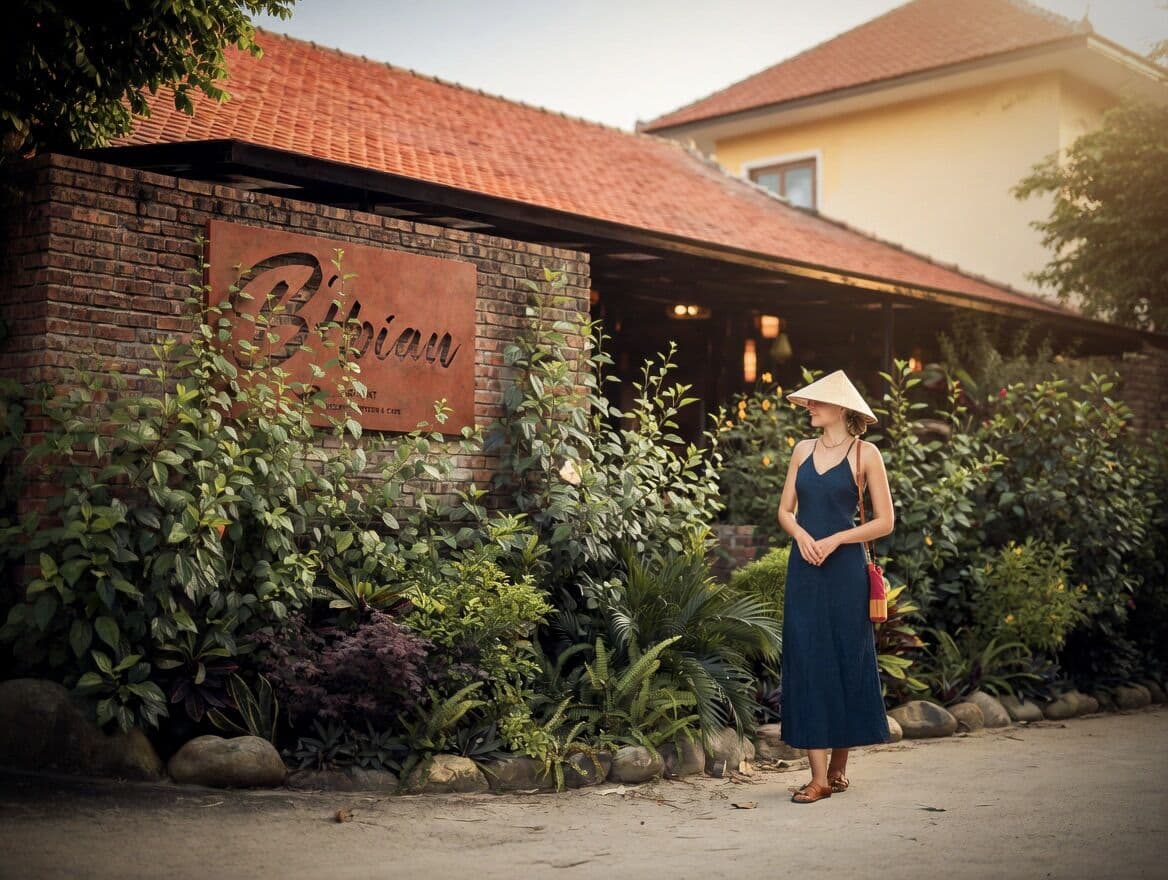
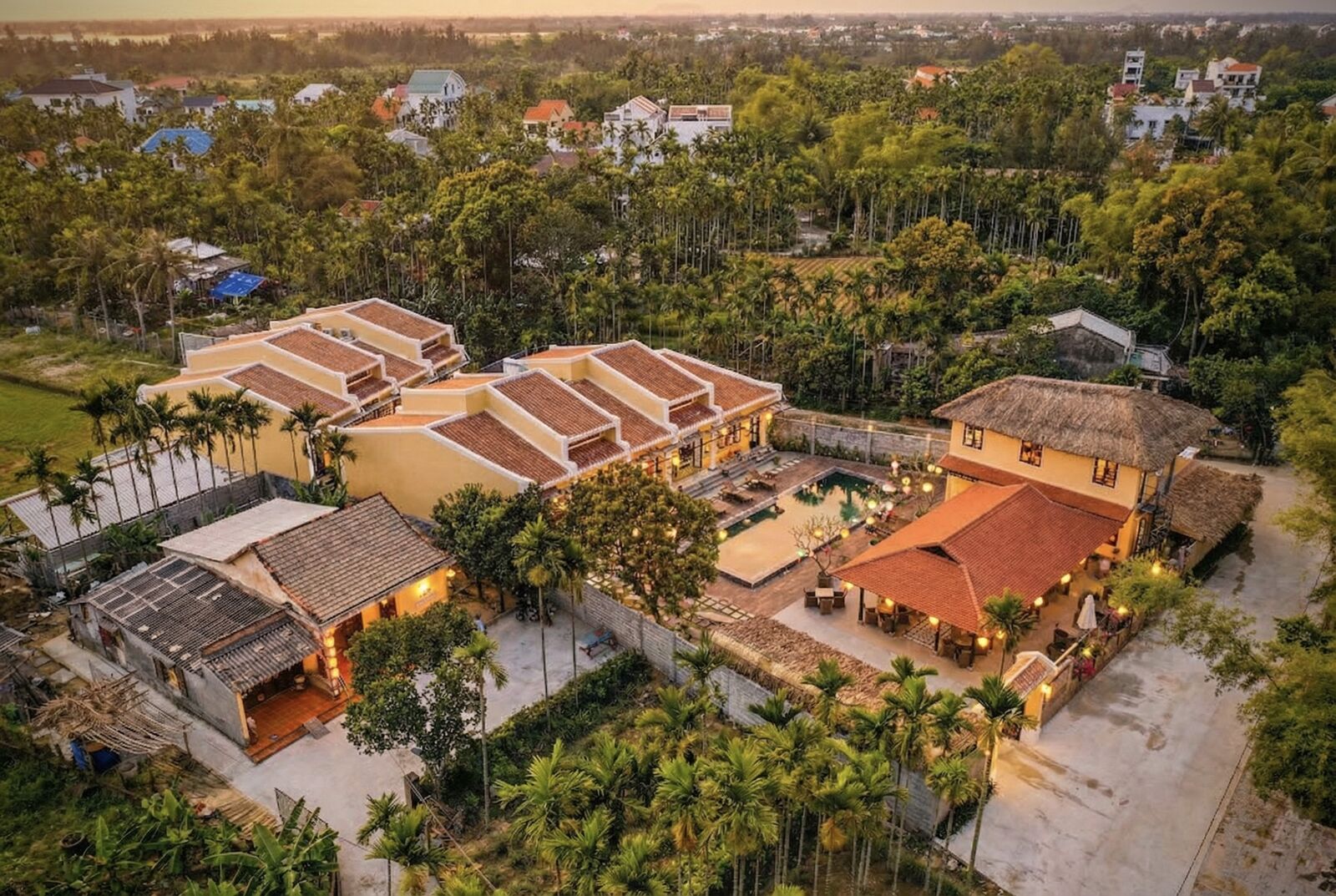
A place that fits this idea very well is B'Hoian in Hoi An, Vietnam, which we offer.
Reading the B'Hoian brochure, you get the impression that its thinking is quite different from the usual language school with "English lessons from morning till late afternoon".
The concept is "learning within everyday life". The brochure describes an approach called "English as Living": English is not kept to lesson time but woven through the day, into meals and casual conversation.
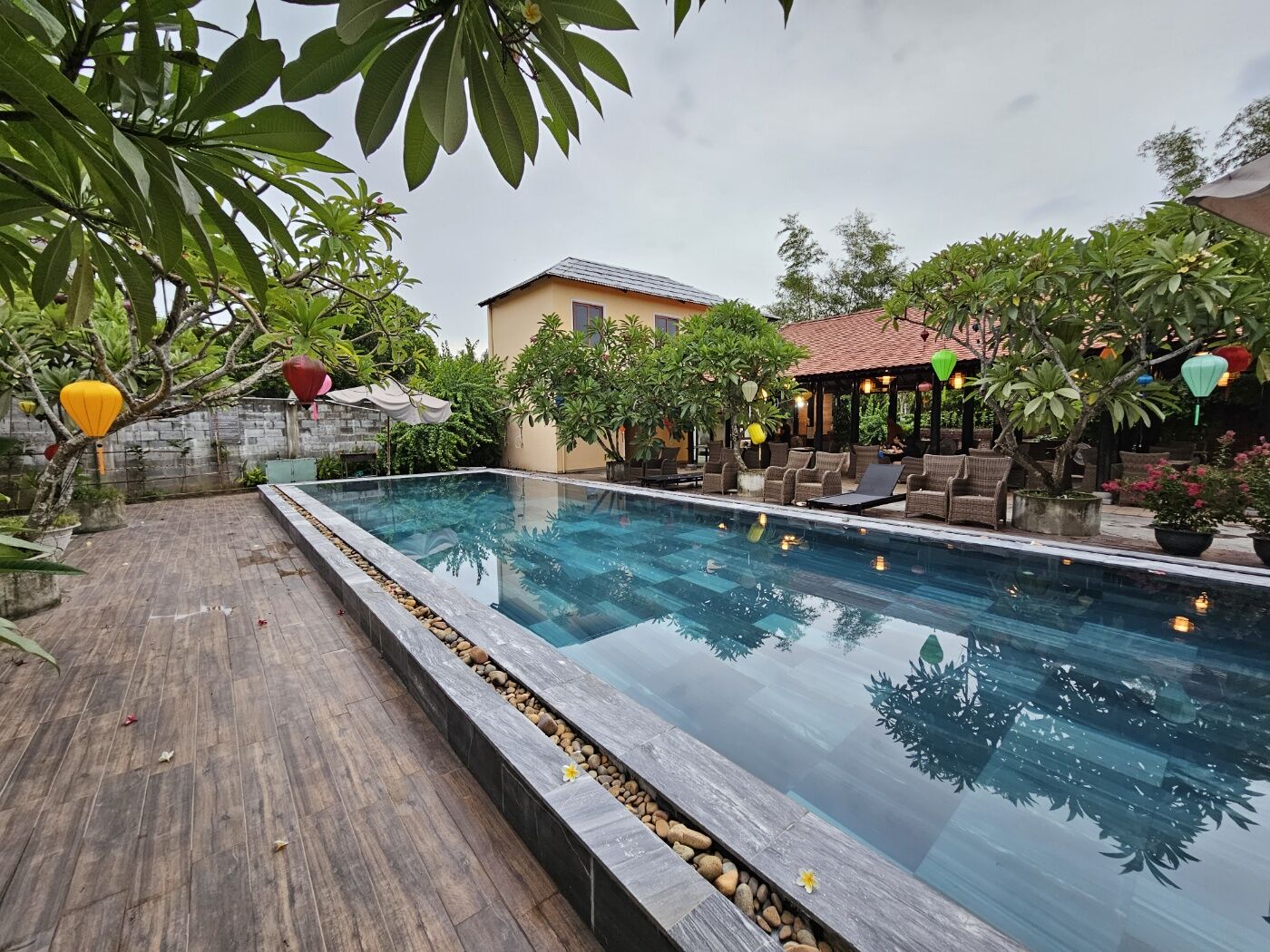
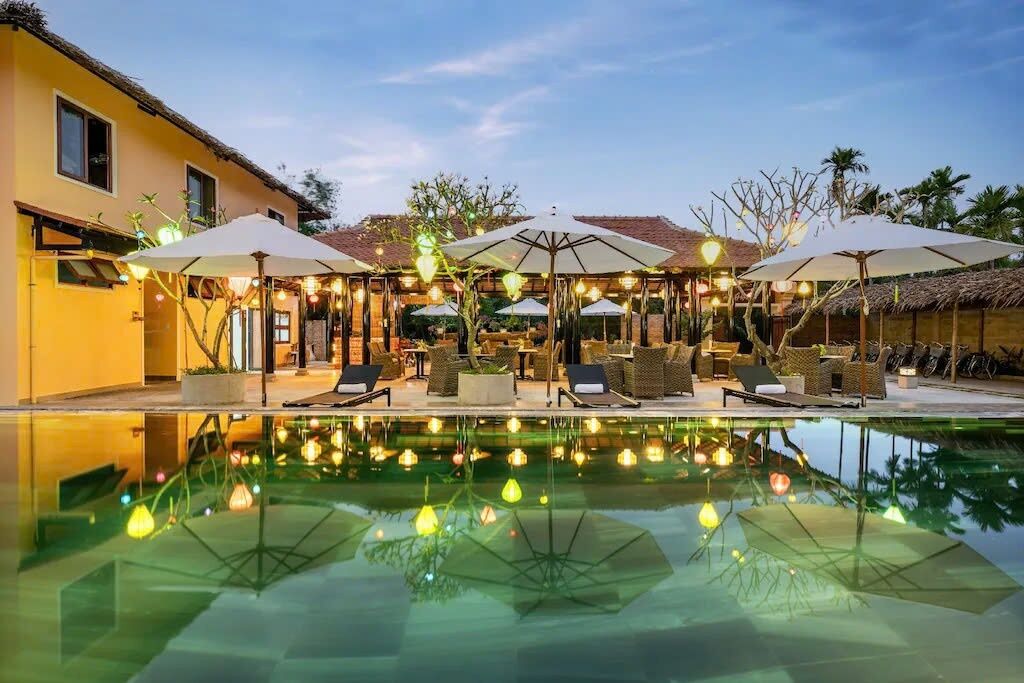
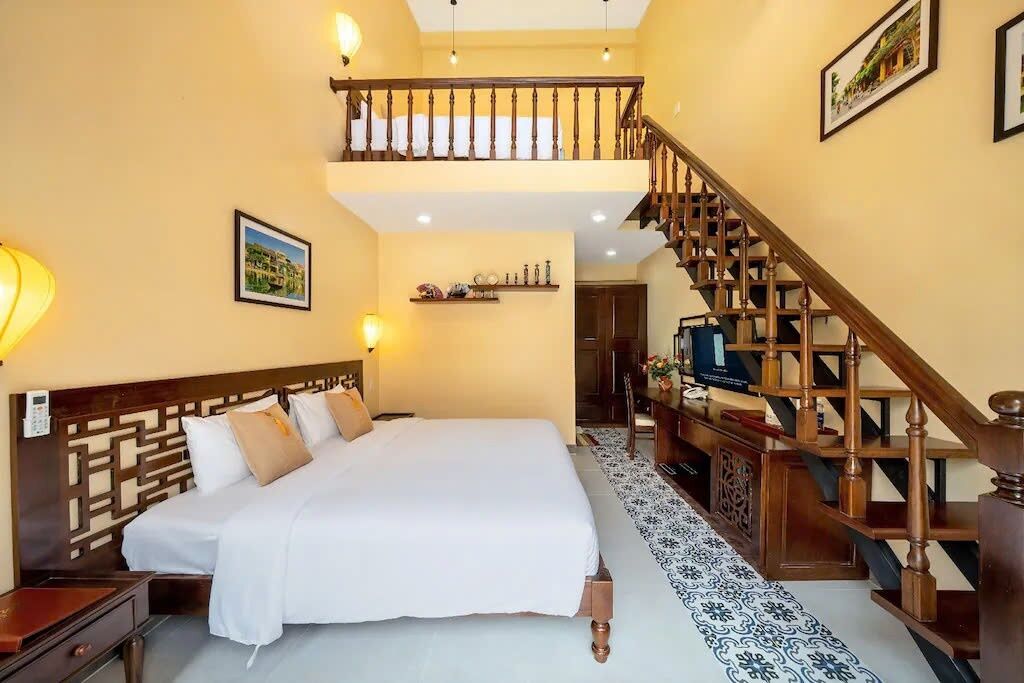
Not English from dawn till dusk
Here is another thing I find interesting about B'Hoian. Looking at the weekly schedule in the brochure, a typical weekday goes something like this:
- 7:30: Easing into the day by the pool, for example
- 8:00: Meditation and yoga
- 10:00: Free time for things like work, reading, walks and rest
- 12:00: Lunch
- 13:00: Small-group English class
- 15:00: One-to-one English or wellness experiences for those who want them (extra charge)
- Early evening: sunset
The programme is also designed so that you can join for anywhere from one to four weeks, in one-week units.
So it is less "going abroad to study English" and more "living abroad for one to four weeks, with English as part of life". To my mind, that is exactly what this article is about.
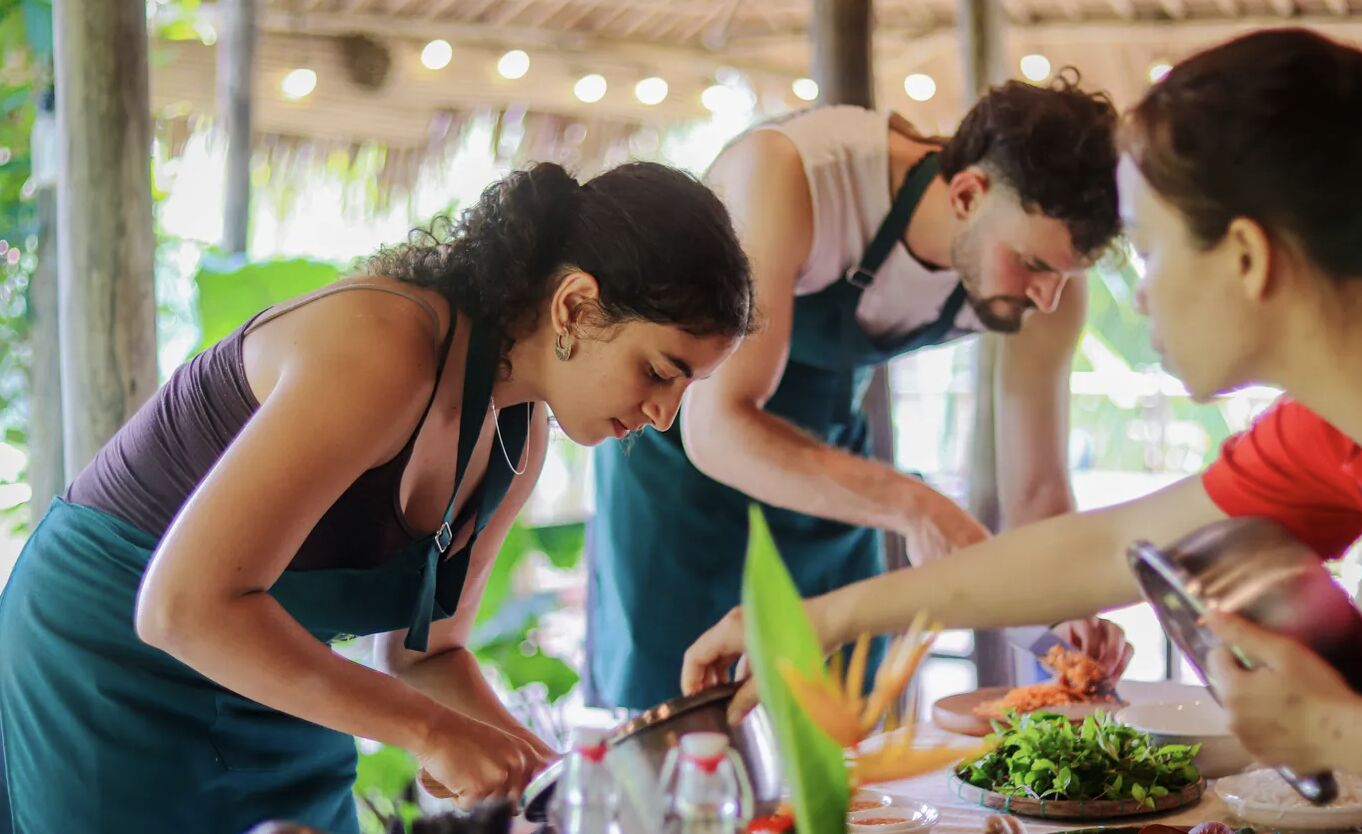
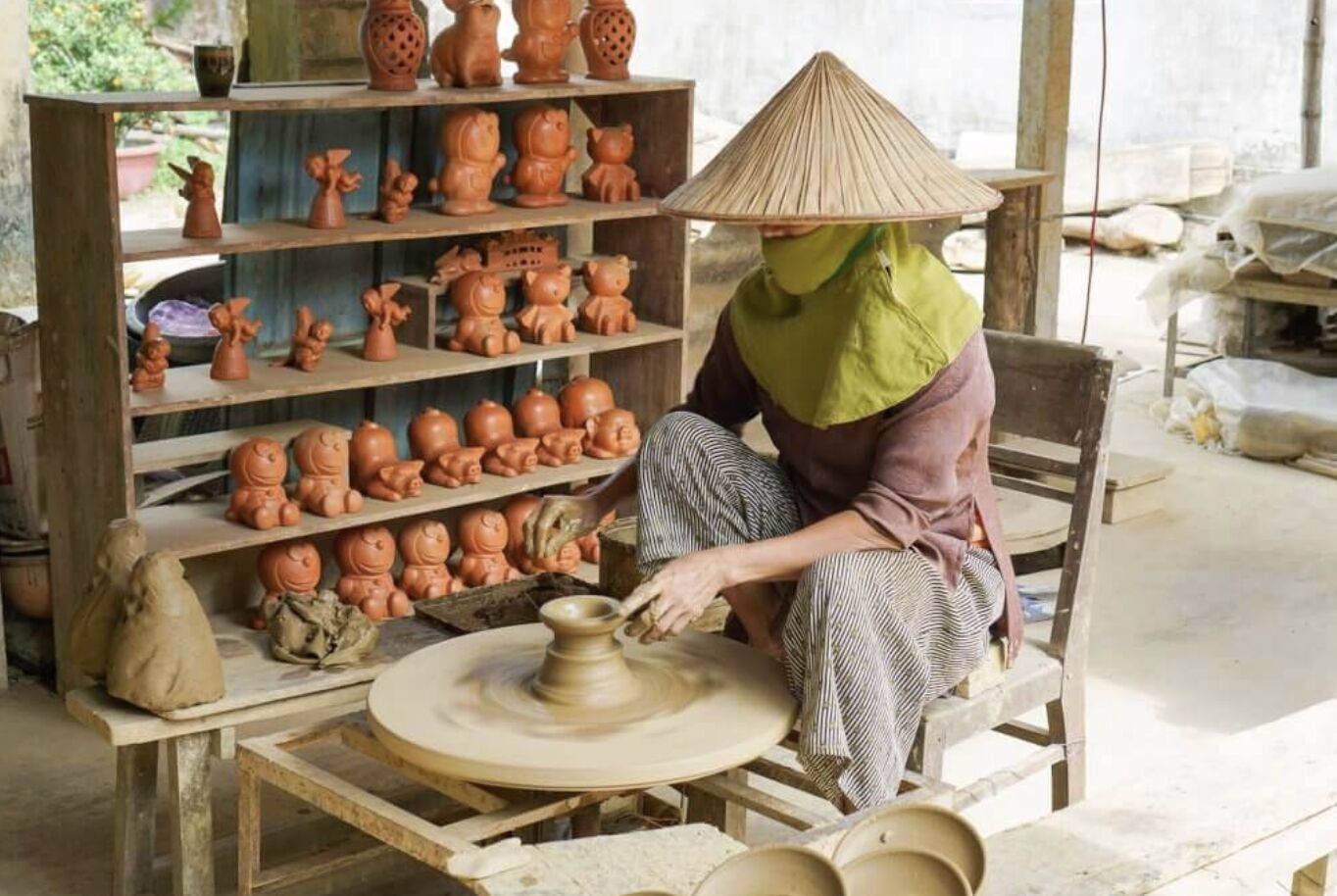
Sightseeing is part of the trip, too
Some of you may be thinking, "I've come all the way to Vietnam, so it would be a waste to see only the school!"
The B'Hoian brochure lists these weekend experiences:
- Mỹ Sơn Sanctuary
- Marble Mountains
- A coconut boat ride
- Dong Dinh Museum
- The "Memory Show" in Hoi An
According to the brochure, the weekend experiences come at no extra charge. The content and locations may change depending on the weather or similar conditions, but local experiences are built into the stay itself.
On ordinary evenings, too, you don't have to do anything at the school. Head into town. Rest where you're staying. Stroll through Hoi An at night. The choice is yours.
So even though it is a study-abroad stay, you still get a proper trip.
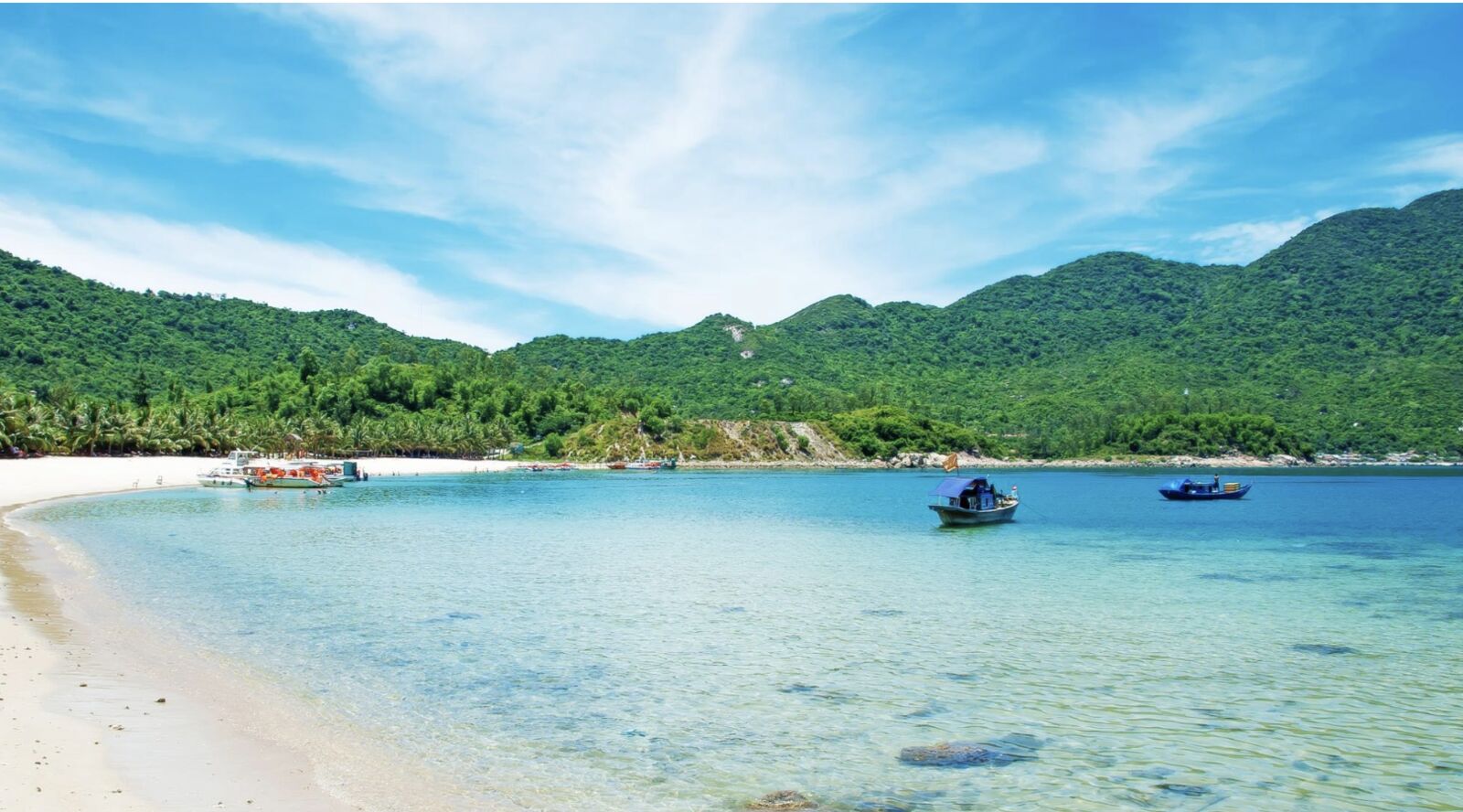
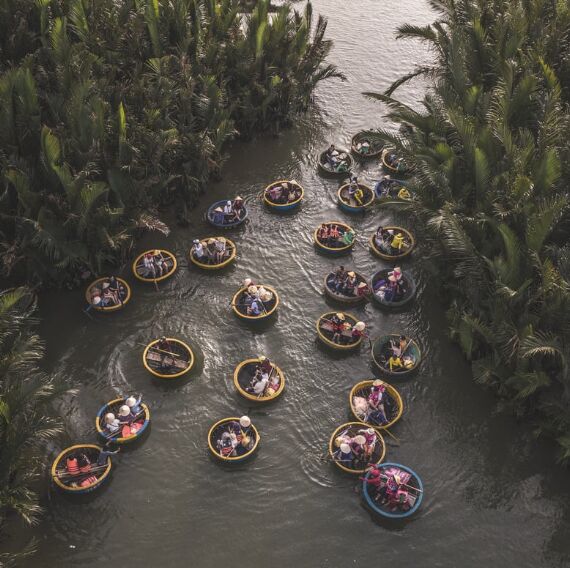
A trip can have "days of doing nothing"
On a short trip, we Japanese are tempted to fill the schedule: "I paid for the flight, so I should make the most of it," or "I've come all this way."
But on a longer stay, there can be a day when you say, "Today, I'm doing nothing."
- Wake up slowly.
- Go to a café.
- Read a book.
- Have a little swim.
- Do some work.
- In the evening, cycle into town.
The B'Hoian brochure also mentions a coworking space, free bicycles, a pool, an outdoor café and more.
It's days like these, in fact, that you may find yourself remembering years later: "That afternoon in Vietnam was lovely." What stays with you is not how many sights you ticked off but how you felt in that place. I think that is part of the value of travel, too.
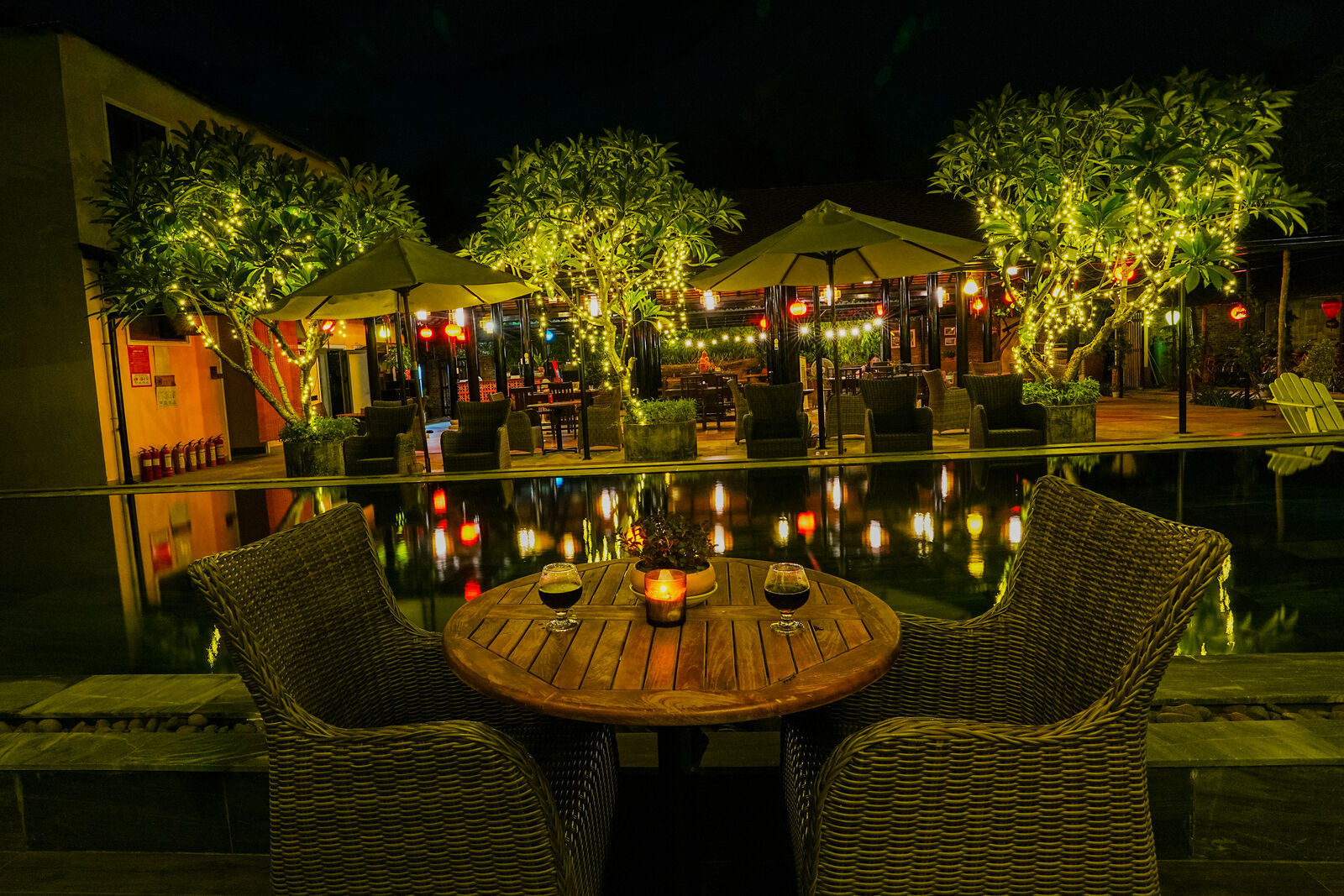
That said, long trips have their downsides
I've been recommending long stays so far, but of course they are not all good news.
First, finding the time. For anyone in work, securing one or two weeks of leave can be hard in itself.
Second, cost. More nights generally means more spending.
And for people who want to see lots of places in a short time, a long stay may feel a little dull. That is purely a matter of taste. Some people want to move on to somewhere new every day, and others would rather take it slowly in one town. Neither is right or wrong.
Still, if you have only ever taken three-night, four-day trips, I'd love you to try, at least once in your life, a trip of a week or more in the same town. It might change how you see travel a little.
Afterword
While writing this article, I found myself thinking, "Next time I go abroad, I'd like to stay in one place a bit longer."
When I travel, I always end up filling the schedule. I've come all this way. I want to see this. I want to eat that. I can't skip that sight either.
But when I think back a few years on, what I remember is, surprisingly often, not a photo of a famous building.
- The small café I wandered into one morning.
- An odd ingredient I spotted in the supermarket.
- The chat with someone I asked for directions.
- The view from the hotel that I saw every morning.
It's that kind of "nothing special" time. And a long stay has room for that kind of time.
The B'Hoian brochure talks about moving "from learning better" to "living more richly". It treats English not as a goal in itself but as a way of savouring time with a place and its people, which ties in neatly with everything above.
- Travel.
- Learn English.
- Rest.
- Meet people.
- Try living in a town you don't know.
Perhaps these needn't be separate plans. Do them all together. It would be fun to see that kind of trip come within easier reach.
References
- JTB(2025)「2025年夏休み(7月15日~8月31日)の旅行動向」. Link
- Japan Tourism Agency(2026)「インバウンド消費動向調査 2025年 年次報告書」. Link
- Ministry of Health, Labour and Welfare(2025)「令和7年就労条件総合調査の概況」. Link
- Expedia(2024)「24th Annual Vacation Deprivation Report」. Link
- Booking.com(2025)「Travel & Sustainability Report 2025: 10 Years of Booking.com Research」. Link
- Zubović, V. & Petaković Ikica, E.(2026)「Quality dimensions in slow tourism: Trends and perspectives from a systematic literature review」. Economic Horizons, 28(1), 83–96. Link
- Wulandari, W. & Jayanti, L.(2025)「Reframing Slow Tourism in the Post-Pandemic Era: A Systematic Review and Regenerative Framework for Smart–Slow Destinations」. Journal of Tourism Sustainability, 5(5), 339–350. Link
- Klarin, A., Park, E., Xiao, Q. & Kim, S.(2023)「Time to transform the way we travel?: A conceptual framework for slow tourism and travel research」. Tourism Management Perspectives, 46, 101100. Link