


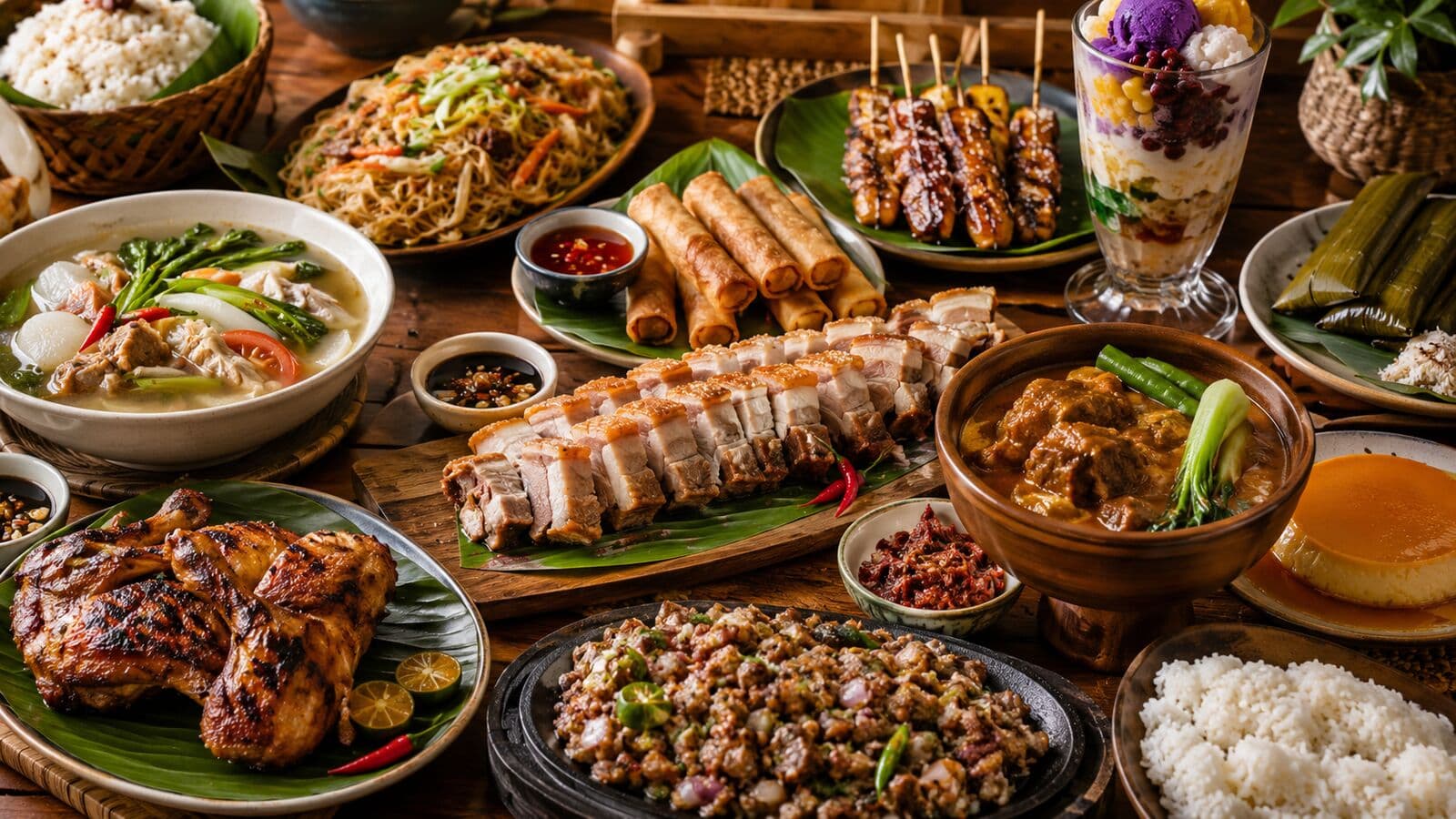
Hello, everyone. One question we hear a lot from people weighing up a short-term study-abroad trip to the Philippines is: "Will I actually enjoy the food there?" In this post we share our honest take — straight from the staff who made the visit — on how Filipino cuisine sits with us as Japanese travellers.
We might just be converts to Filipino food
The short answer: we came back genuine fans.
Before we left, we had a few nagging worries — "Will the flavours be too strong?", "Is everything going to be spicy?", "Will the rice feel right after years of Japanese short-grain?" We were, frankly, a little uncertain.
What we actually found was that Filipino food is surprisingly approachable for Japanese palates. By the end of the trip, mealtimes had become one of the highlights of each day.
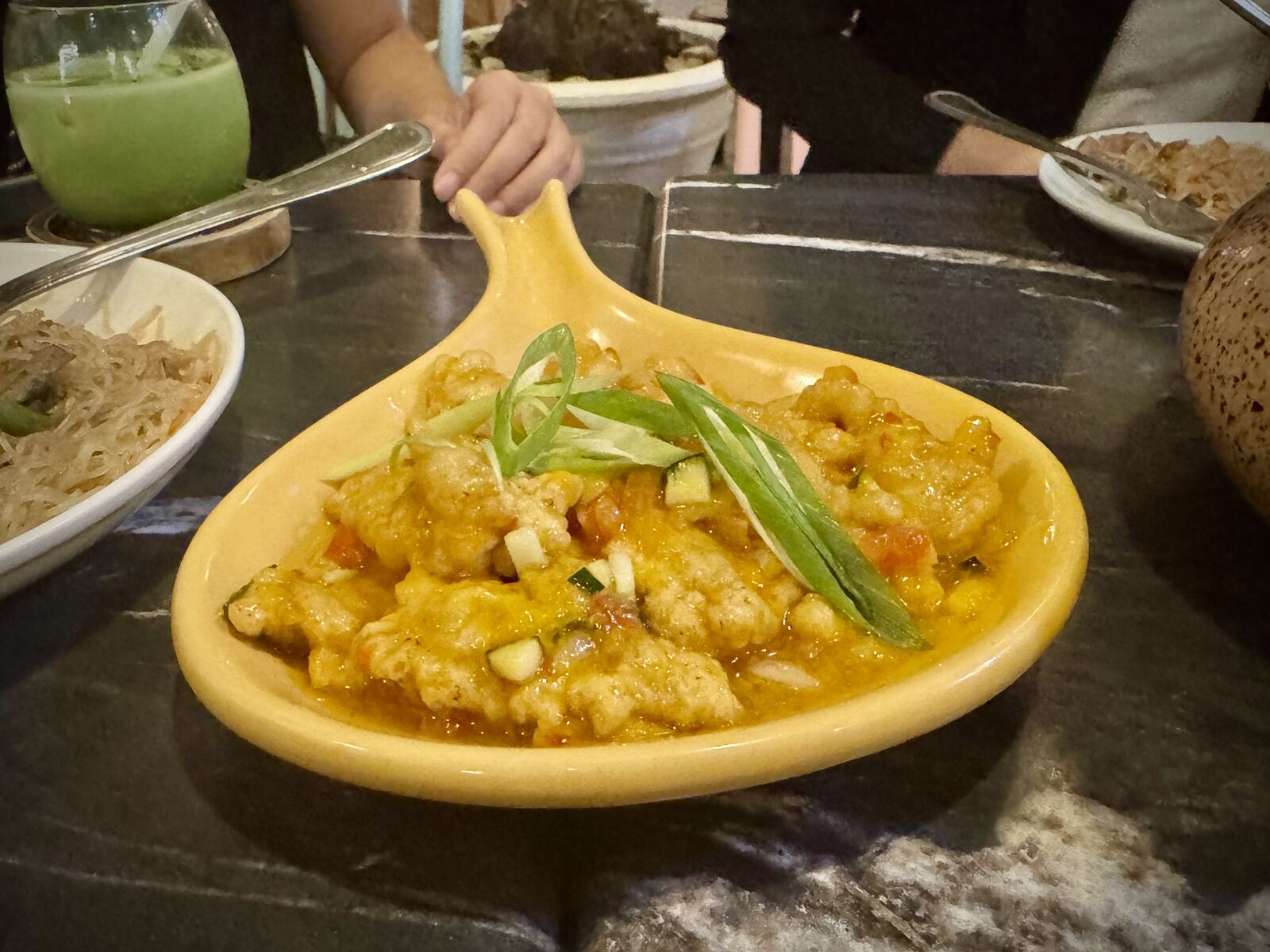
Filipino food and rice are made for each other
The first thing that struck us about Filipino cuisine was how well everything goes with rice.
Meat and fish dishes with a sweet-savoury glaze, tangy broth-based soups, fragrant grilled pieces, satisfying fried bites — it is all food you instinctively want to eat with a bowl of rice alongside.
The rice itself surprised us too. Among all the rice we have eaten across Asia, Filipino rice comes closest to Japanese short-grain. It is not identical, of course, but it has enough body and stickiness that it never feels dry or difficult — it just works with the food.
If you have ever struggled with rice abroad, there is a good chance the Philippines will be the pleasant exception.
Our personal favourites: Lechon and Sinigang
Two dishes stood out above the rest on this visit: Lechon and Sinigang.
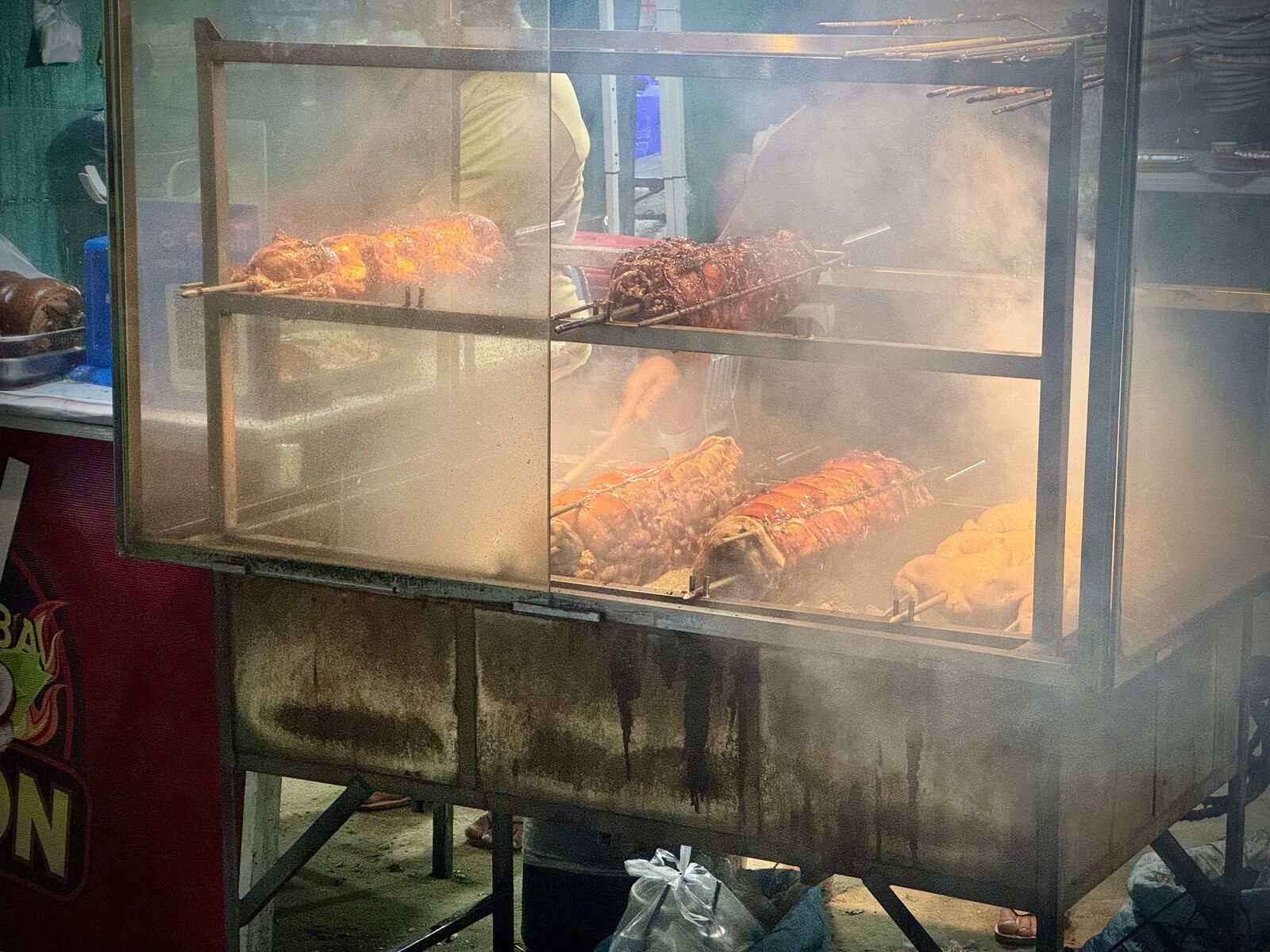
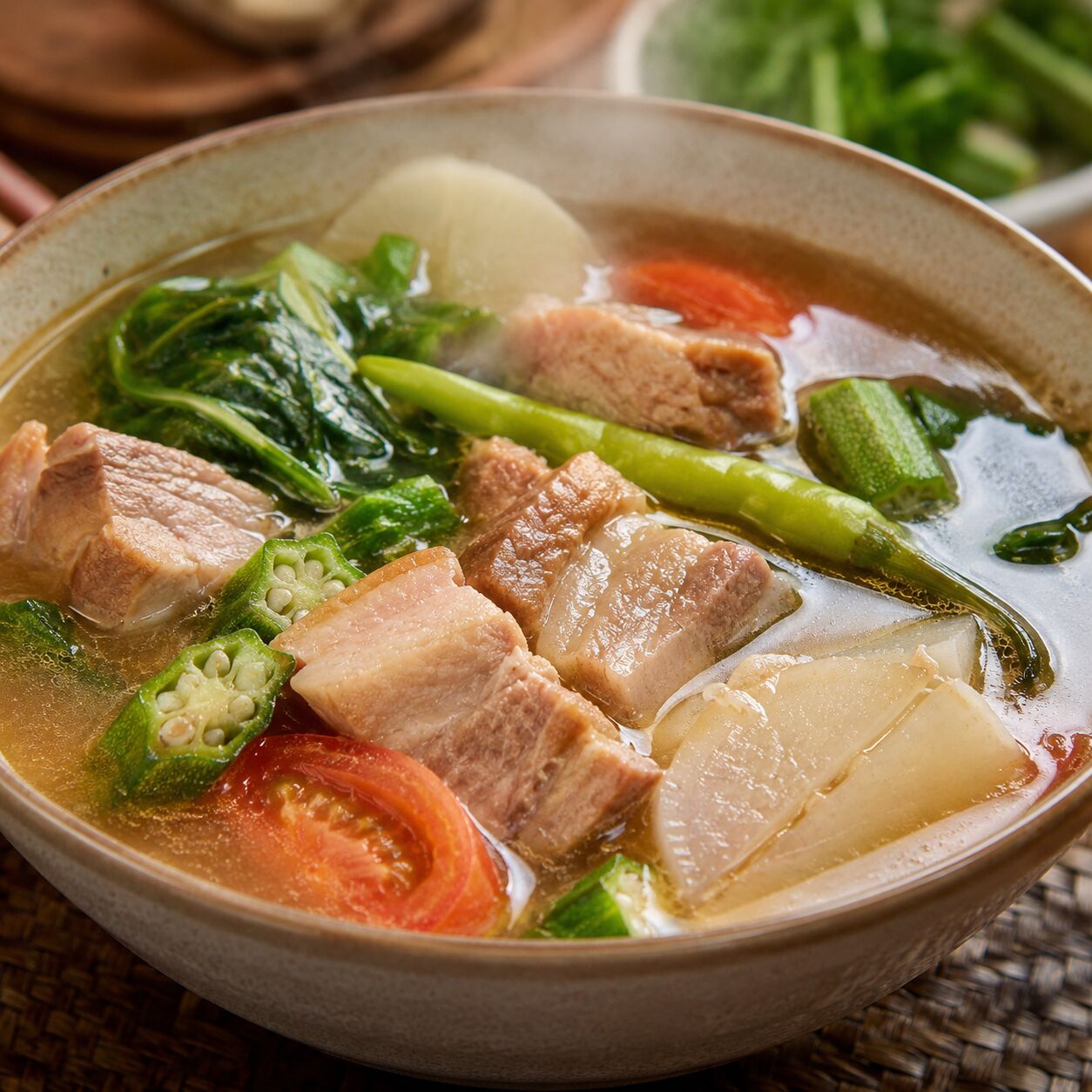
Lechon is roasted pork — deeply savoury, crackling-crisp on the outside and juicy through the middle. Eating it fresh off the spit at a night market was one of those food memories that stays with you. The Pork Lechon we had that evening is genuinely one of the best things we ate on the whole trip.
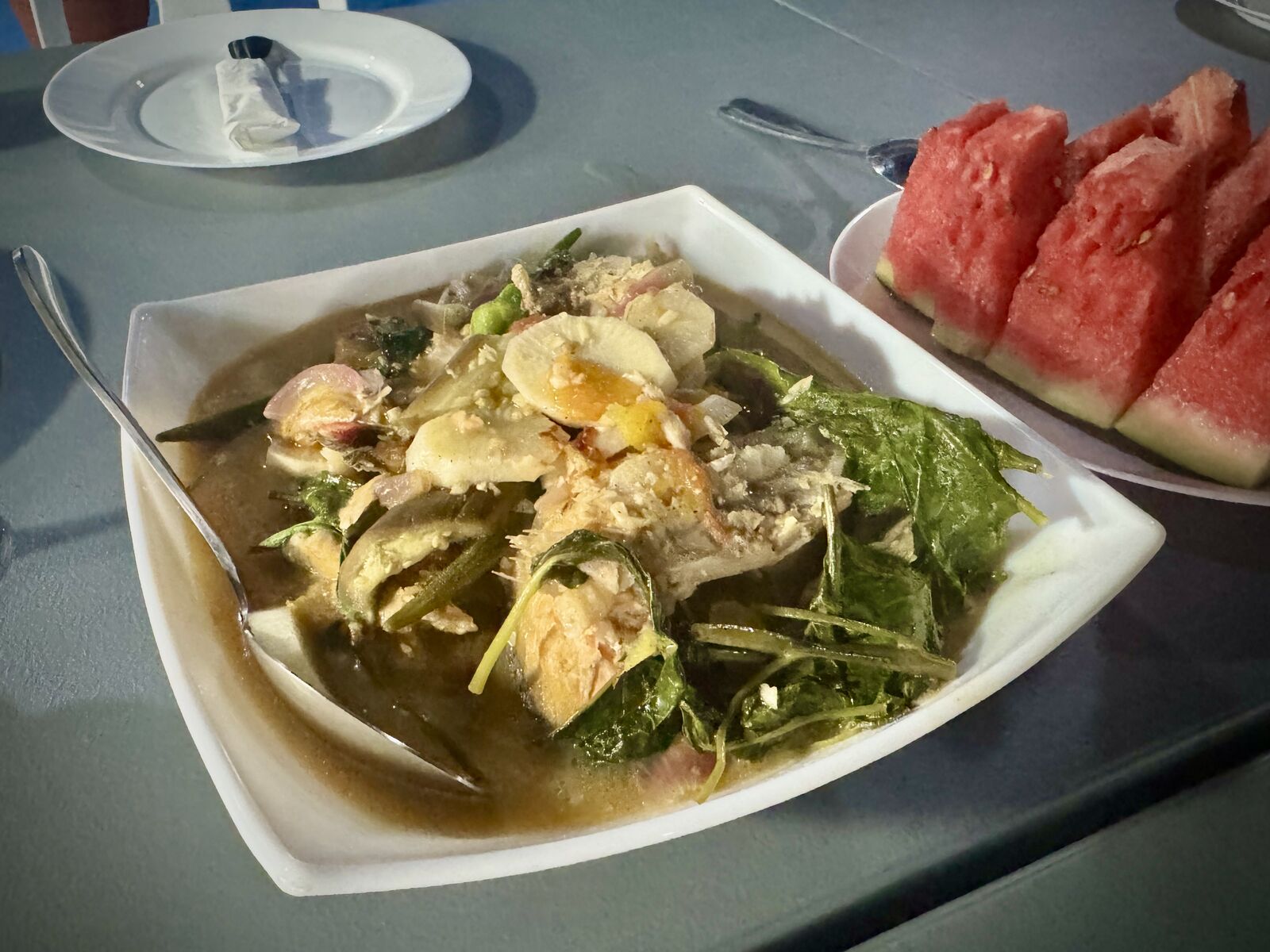
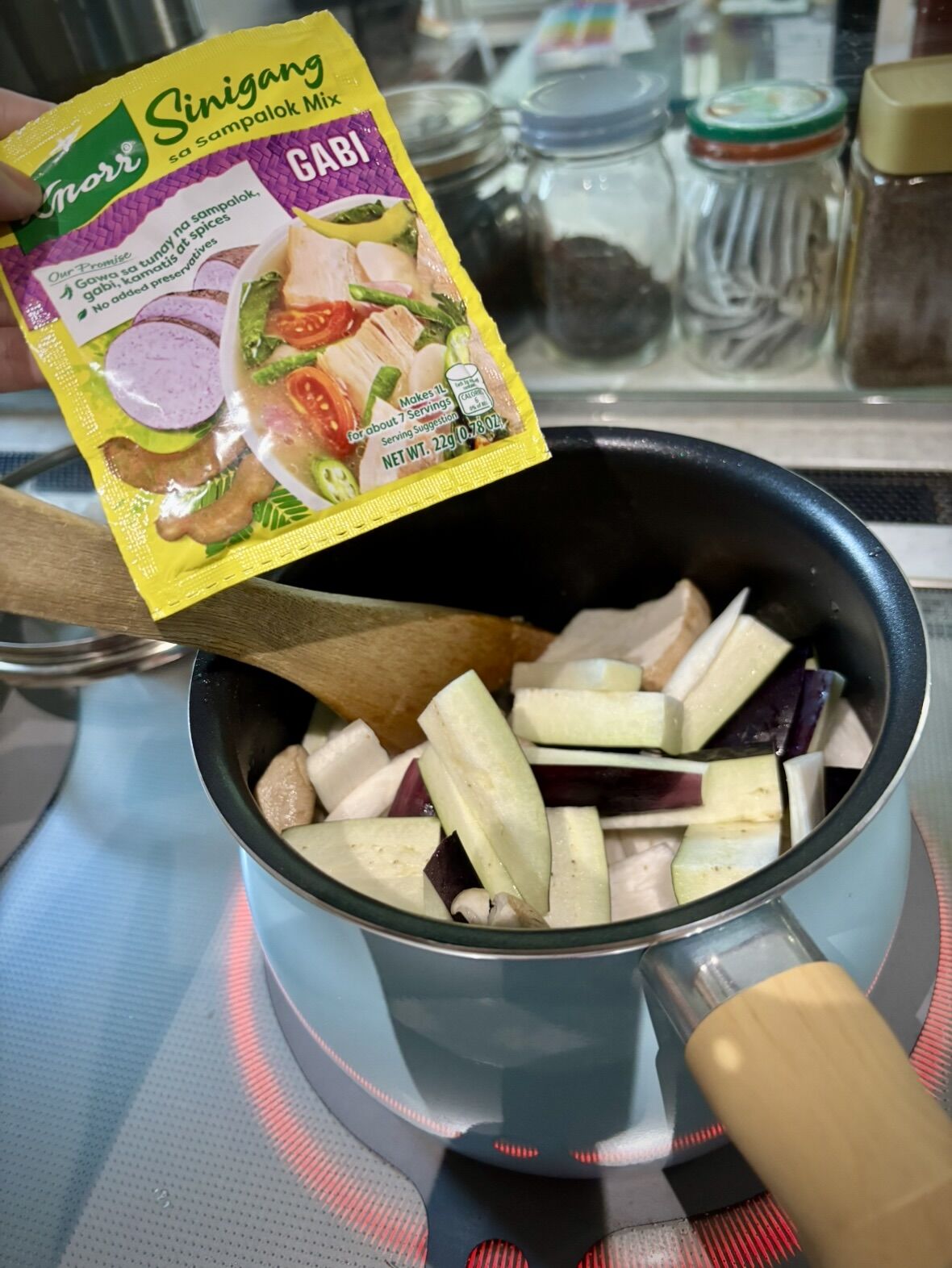
Sinigang was the other revelation. It is a Filipino soup built around the bright sourness of tamarind, typically made with pork, fish, prawns, or vegetables — and sometimes a combination.
We will be honest: "a sour soup?" sounded a little unusual to us. But the first mouthful won us over completely. The acidity is clean and refreshing rather than sharp, and in the heat of the Philippines it feels exactly right. We were so taken with it that we brought Sinigang powder home and have been making it ourselves ever since.
Our Top 10 Filipino dishes — a Japanese staff pick
Here is our ranked list of Filipino dishes to try, based on what we ate on the ground and how well each one landed with us as Japanese travellers.
No. 1 — Sinigang
Sinigang is the quintessential Filipino soup: a broth sharpened with tamarind (or other souring agents), typically loaded with pork, fish, prawns, and vegetables. It is light and refreshing in a way that feels tailor-made for a hot climate.
The sourness is unfamiliar at first, but it grows on you quickly. After a run of rich, heavy dishes it is exactly what you want — and every bowl we had seemed to hit the spot a little more than the last.
No. 2 — Lechon / Lechon Kawali
Lechon is whole roasted pork, cooked until the skin shatters and the meat inside stays tender and juicy. Lechon Kawali is the pan-fried version — pork belly deep-fried to a golden, crispy finish.
Either way, the contrast between the crackling exterior and the moist meat underneath is irresistible. It is the kind of straightforward deliciousness that needs no explanation, and it pairs beautifully with rice.
No. 3 — Adobo
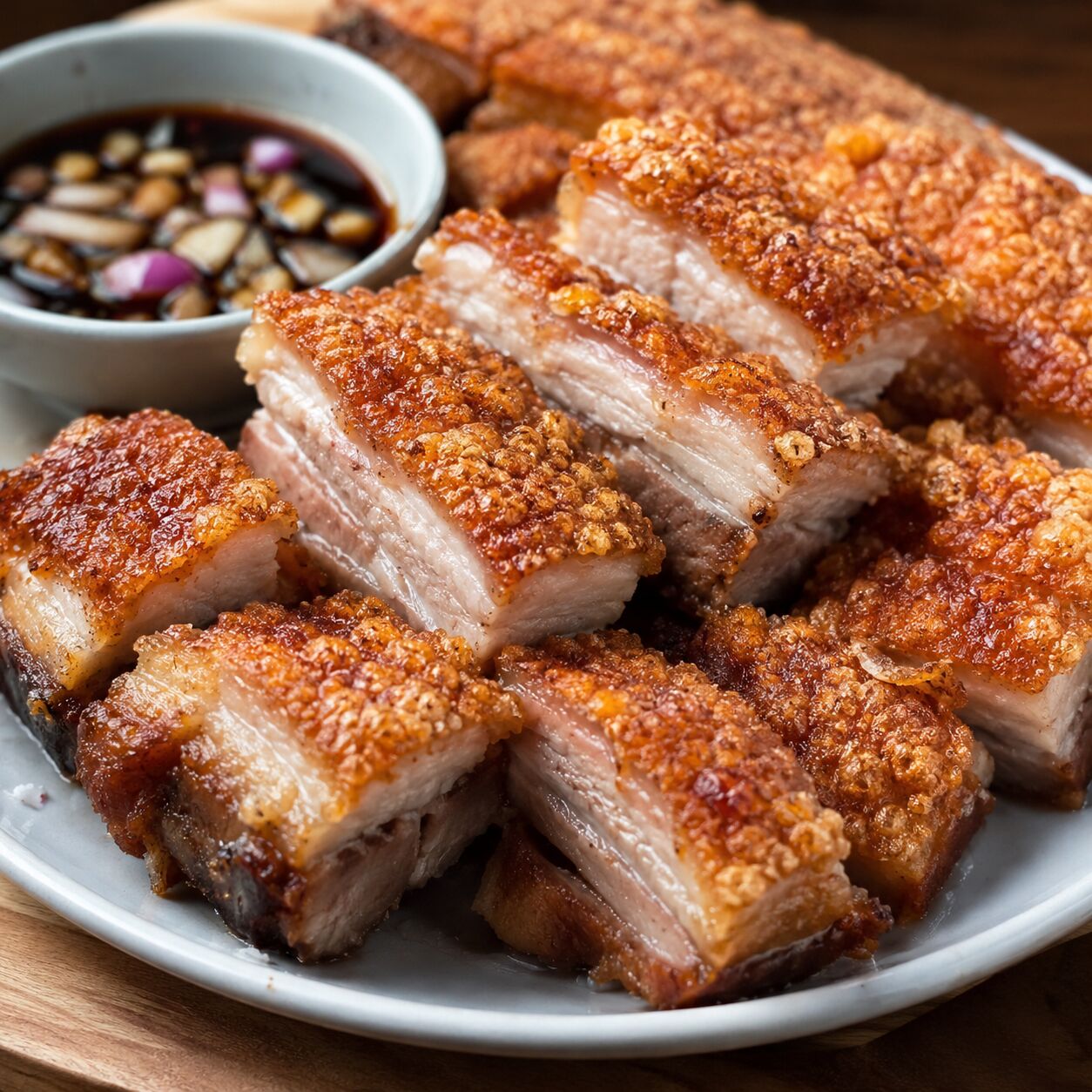
Adobo is the Filipino home kitchen staple: meat — usually chicken or pork — braised slowly in vinegar, soy sauce, garlic, and bay leaves until the sauce clings and caramelises.
For Japanese palates it feels instantly familiar — somewhere between a sweet-savoury kakuni (braised pork belly) and a soy-glazed chicken. It is comfort food in the truest sense, and the sauce practically demands a second scoop of rice.
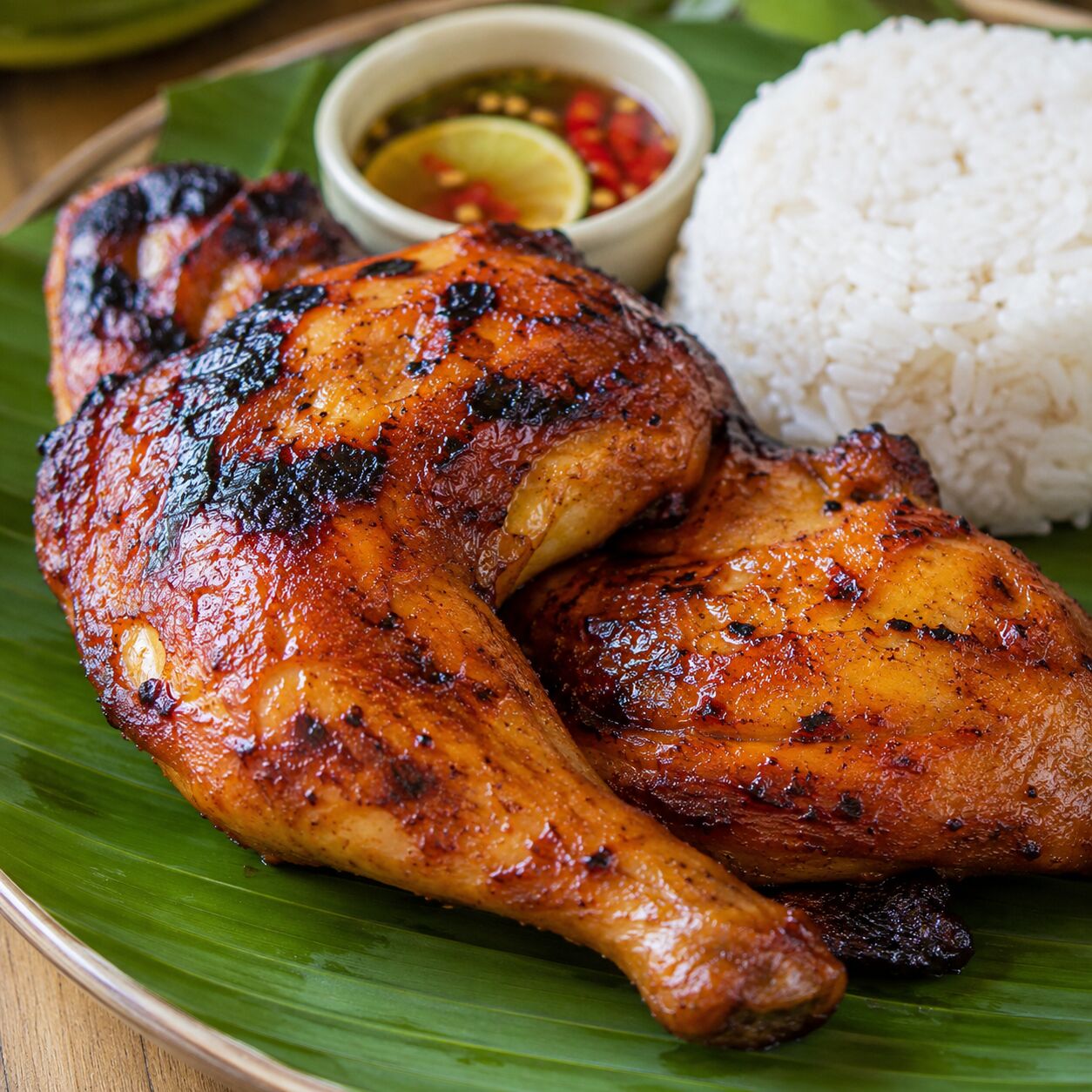
No. 4 — Chicken Inasal
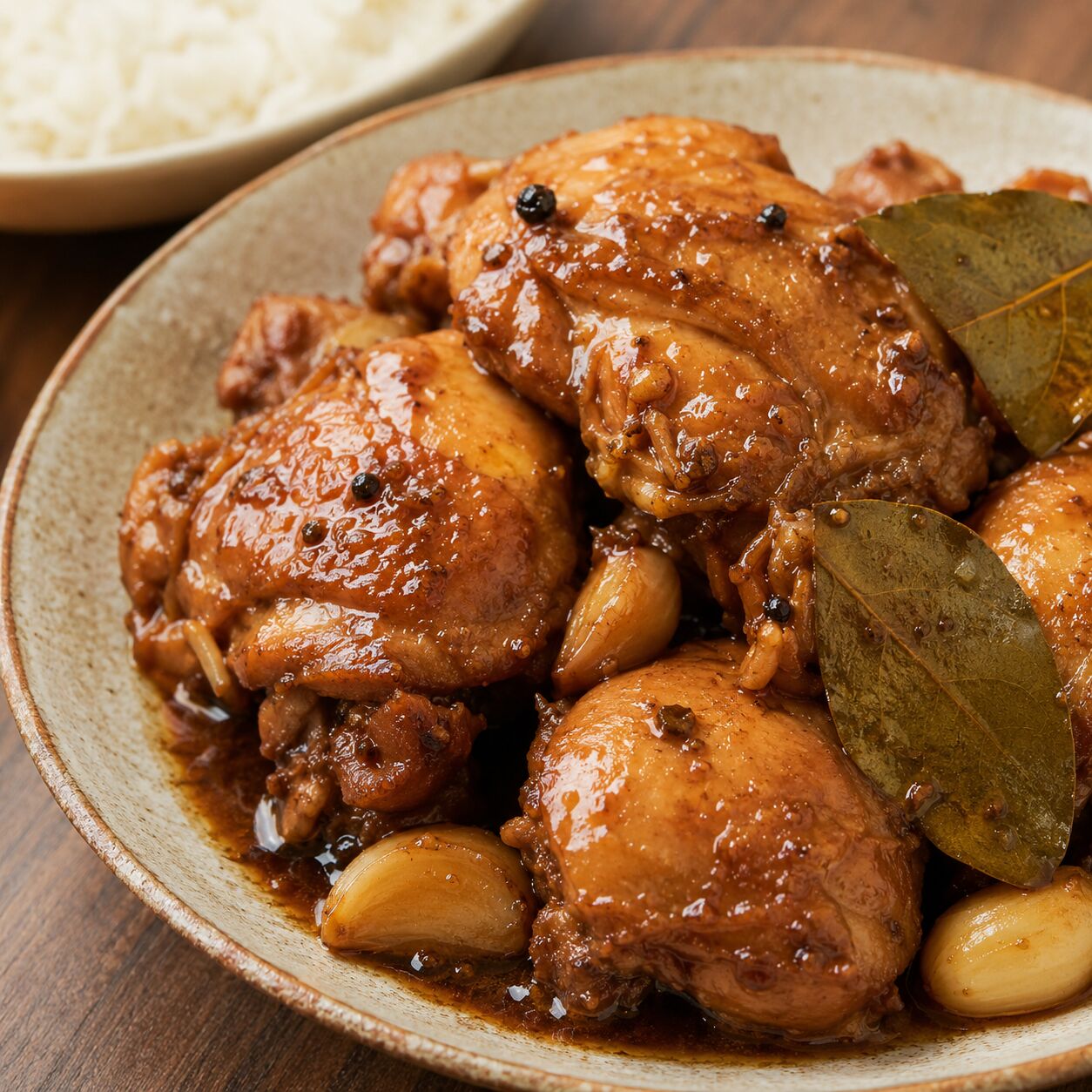
Chicken Inasal is marinated chicken grilled over charcoal until the edges char and the skin turns golden and fragrant.
The smoky aroma and the char-kissed flavour put us in mind of Japanese yakitori — familiar enough to feel approachable, distinctive enough to feel genuinely Filipino. It is not spicy, and the flavour profile is one that works for everyone from young children to grandparents. If you are eating Filipino food for the first time and want a safe but delicious entry point, this is it.
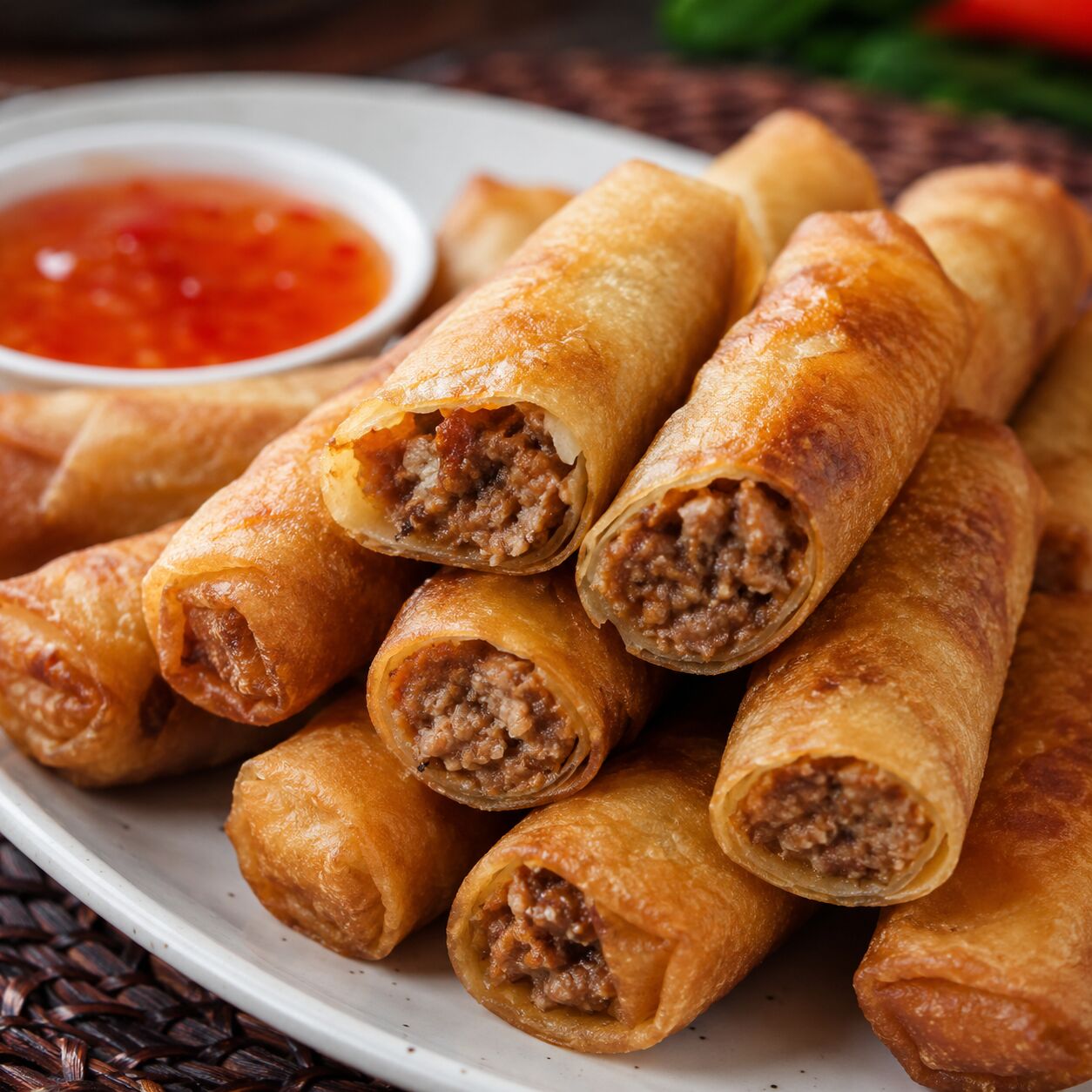
No. 5 — Lumpia Shanghai
Lumpia Shanghai are the Filipino take on spring rolls — slim, tightly rolled, and deep-fried until perfectly crisp, filled with seasoned minced meat and vegetables.
The taste is instantly recognisable for Japanese diners, and they disappear fast. They work equally well as a side dish or a snack, and we suspect they would be a hit with children too. At parties and gatherings they are passed around like the most popular guest at the table — easy to pick up, hard to put down.
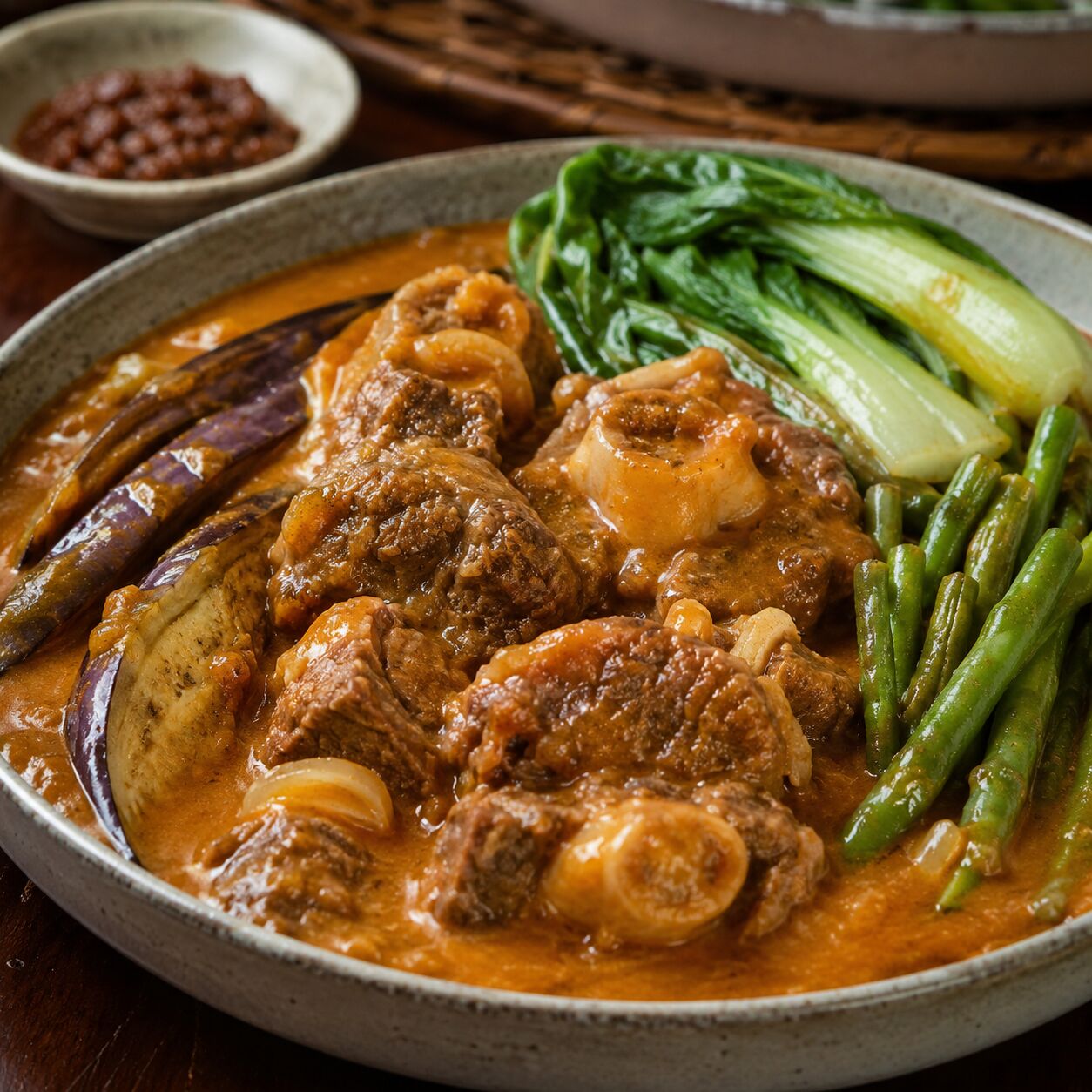
No. 6 — Kare-Kare
Despite the name, Kare-Kare has nothing to do with Japanese curry. It is a rich, slow-cooked stew in a deeply savoury peanut sauce, built around oxtail, tripe, or vegetables — or a combination of all three.
The first taste can catch you off guard: it is mellow and nutty rather than spiced. But if you enjoy peanut flavour, the sauce is genuinely satisfying, and the stew has a depth that lingers. For anyone who wants to eat something unmistakably, traditionally Filipino, this is the one to try.
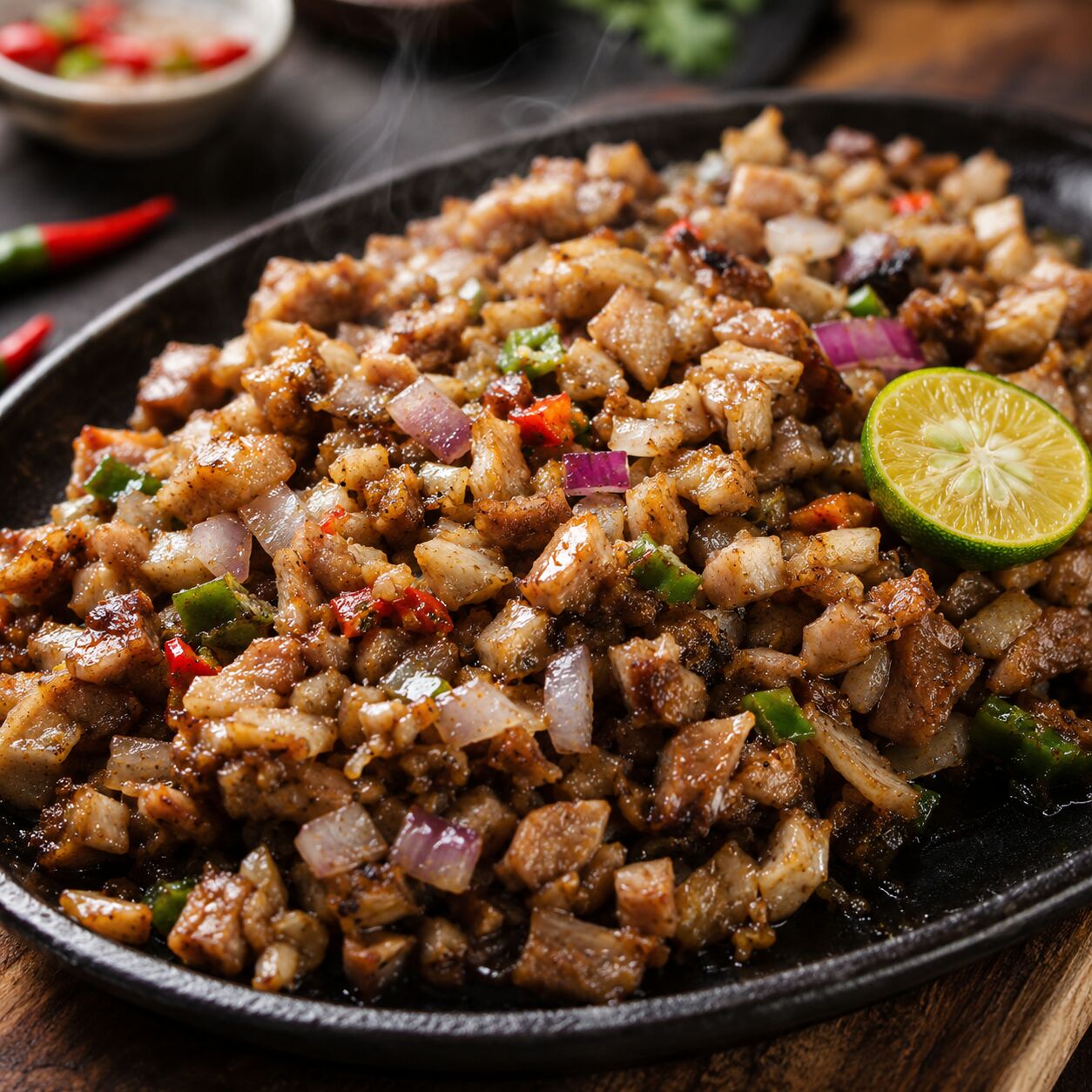
No. 7 — Chicken Sisig
Sisig is finely chopped meat cooked on a sizzling iron plate until the edges crisp up and the whole dish arrives at the table still crackling. The chicken version we had was smoky, savoury, and deeply satisfying alongside plain white rice.
The seasoning is on the bolder side, which is exactly why it pairs so well with rice — the plain starch balances it out and you end up finishing your plate without noticing.
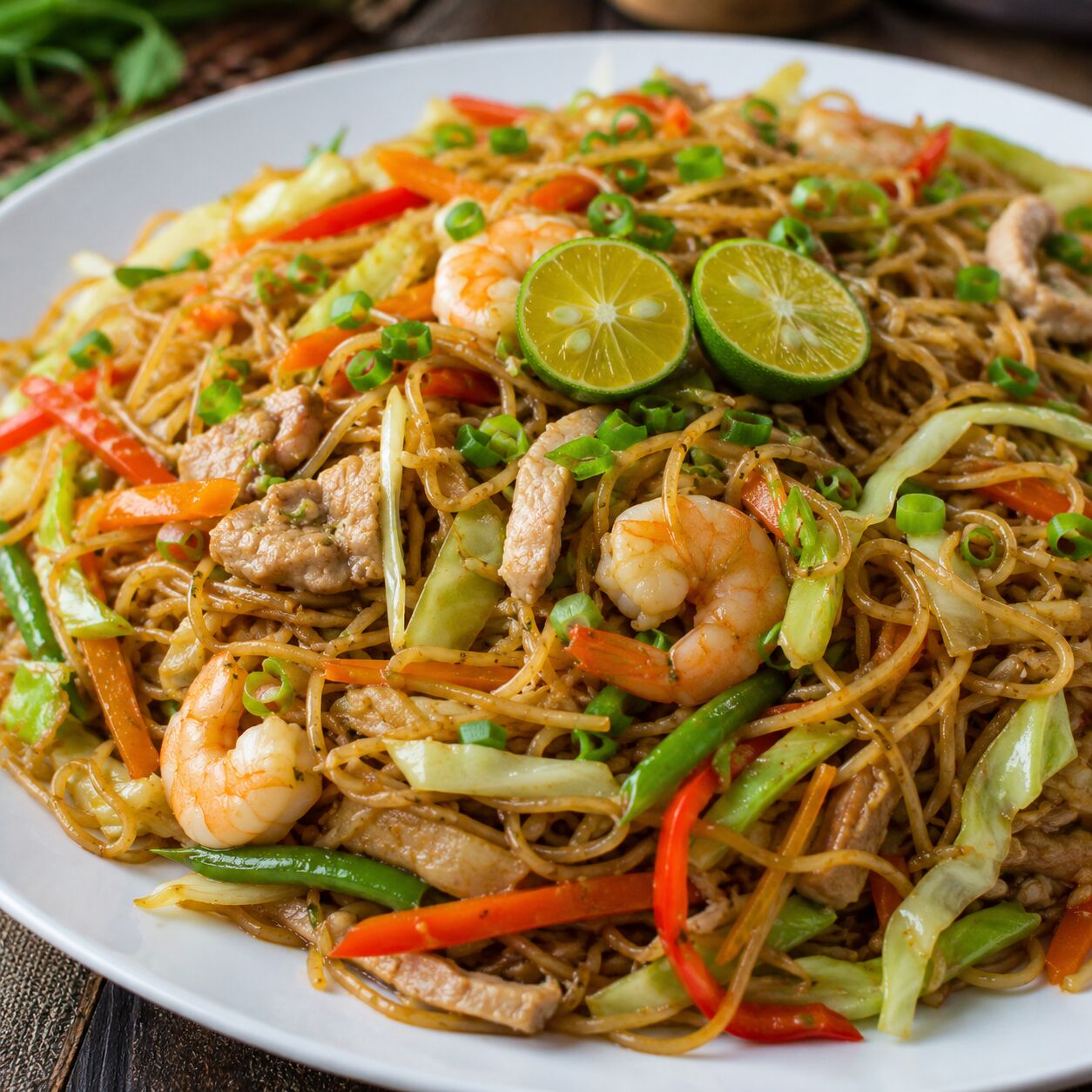
No. 8 — Pancit
Pancit is the Filipino noodle dish — stir-fried noodles with vegetables, meat, and sometimes seafood, all tossed together in a light, well-seasoned sauce.
For Japanese diners who are used to yakisoba or ramen, the noodle format alone makes Pancit feel immediately comfortable. It works as a light meal or a snack, and on days when you want a break from rice it is a welcome change of pace.
No. 9 — Salu-salo
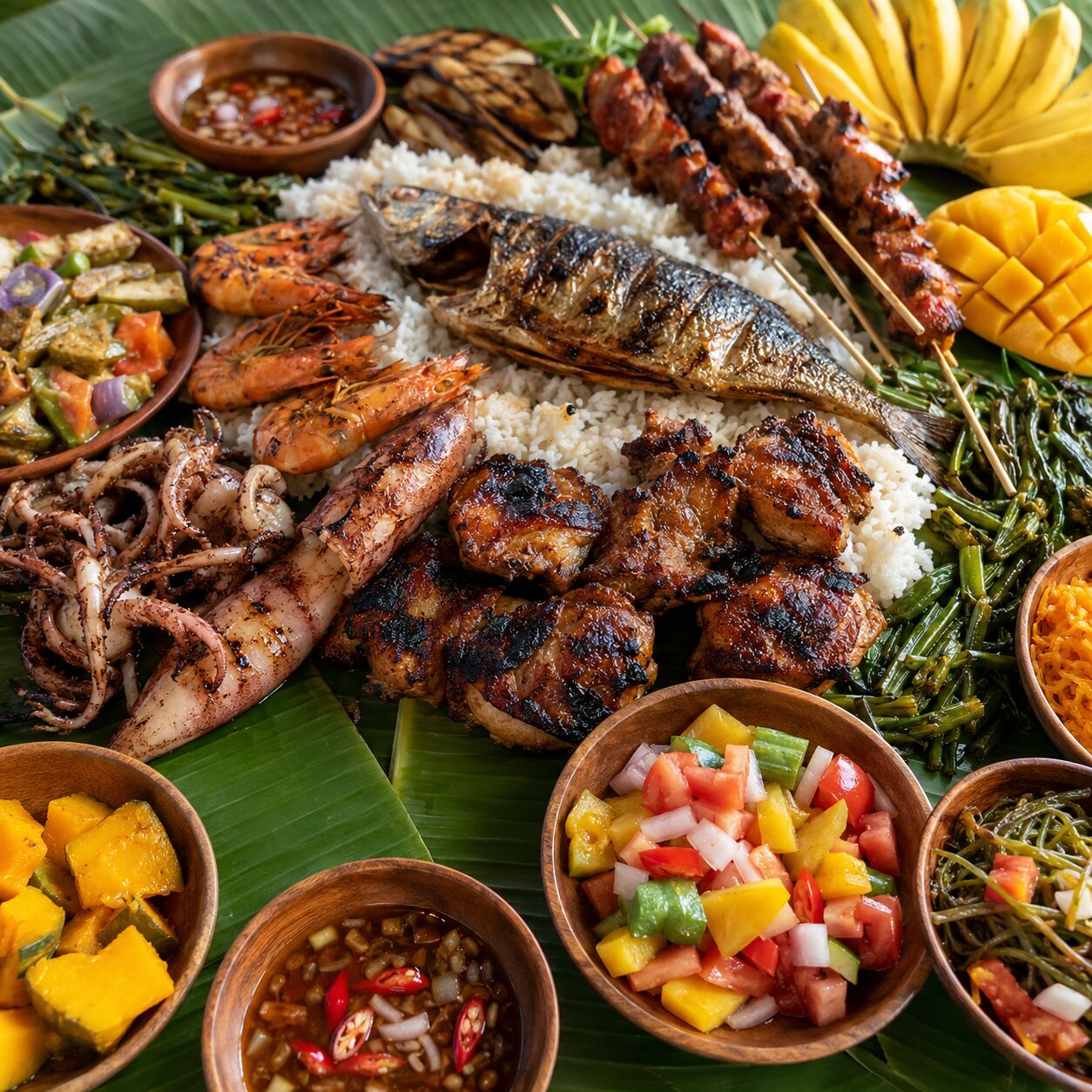
Salu-salo is less a dish and more a way of eating — a traditional Filipino communal meal where everyone gathers around a shared spread of food. Traditionally, you eat with your hands.
On this visit we experienced Salu-salo at an open-air pavilion on the school's own farm. We joined the group, tried eating the traditional way, and — we will not pretend — we were nowhere near as graceful as the locals. But everyone was laughing and nobody minded, and the warmth of sitting together sharing food in that way left a deeper impression than any single dish could.
Food in the Philippines, we felt, is as much about how you eat as what you eat.
No. 10 — Jollibee Fried Chicken
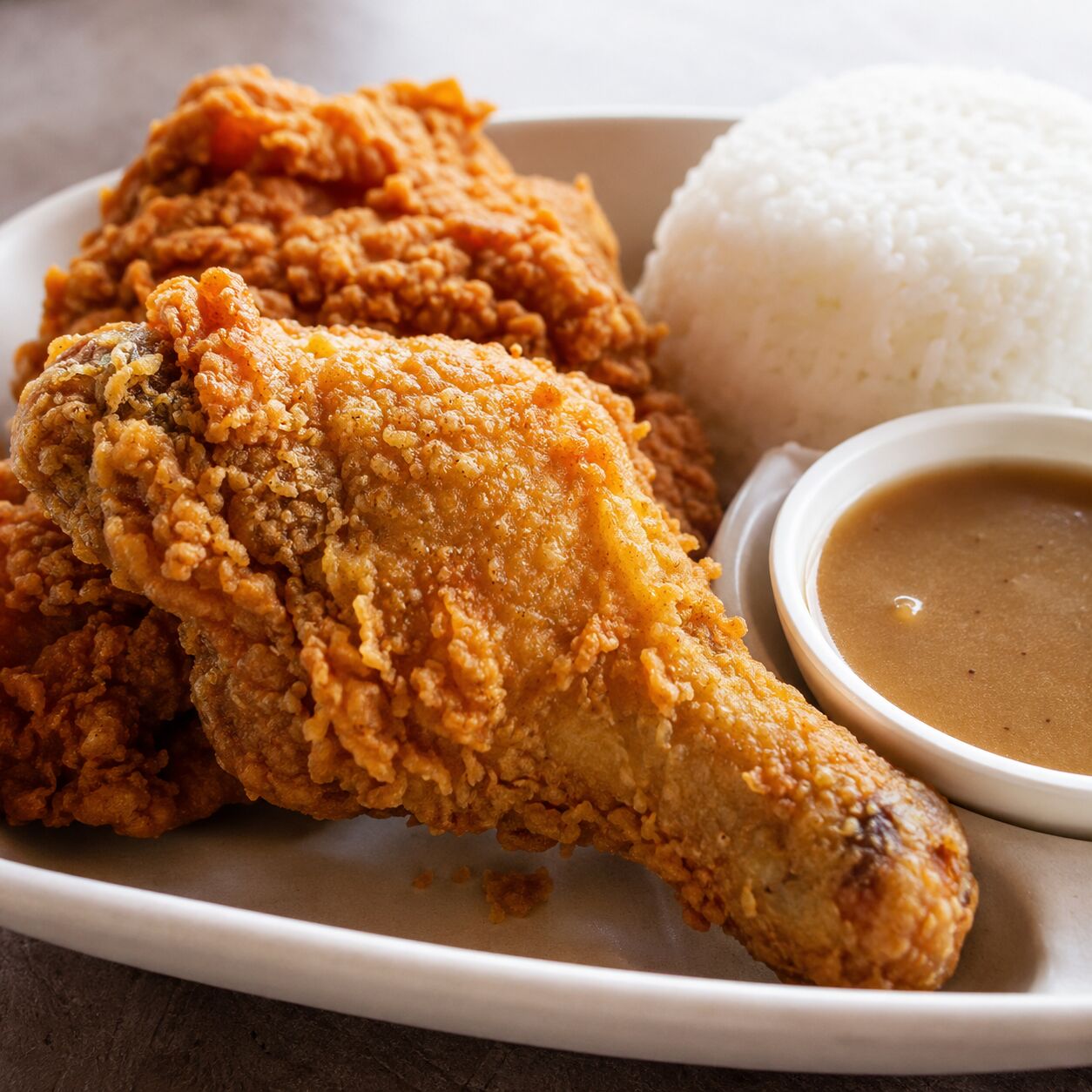
Strictly speaking, this is not traditional Filipino cuisine — but no honest account of food in the Philippines can leave out Jollibee.
Jollibee is a Filipino fast-food chain with a following that borders on devotion, and after finally getting through the door on this trip, we understand why. The fried chicken is genuinely juicy in a way that surprised us. It has a quality that the name "fast food" does not quite prepare you for.
Prices are very affordable — some set meals come in at around US$2 — and eating there is less about the food alone and more about experiencing something that is woven into everyday Filipino life. If you are studying in the Philippines, going at least once feels almost obligatory.
Bonus: Our Top 5 Filipino sweets
Filipino sweets deserve their own section. From cold desserts perfectly suited to the heat, to street-stall snacks you can grab on the go, the Philippines is a country that takes its sweets seriously — and we loved every bite.
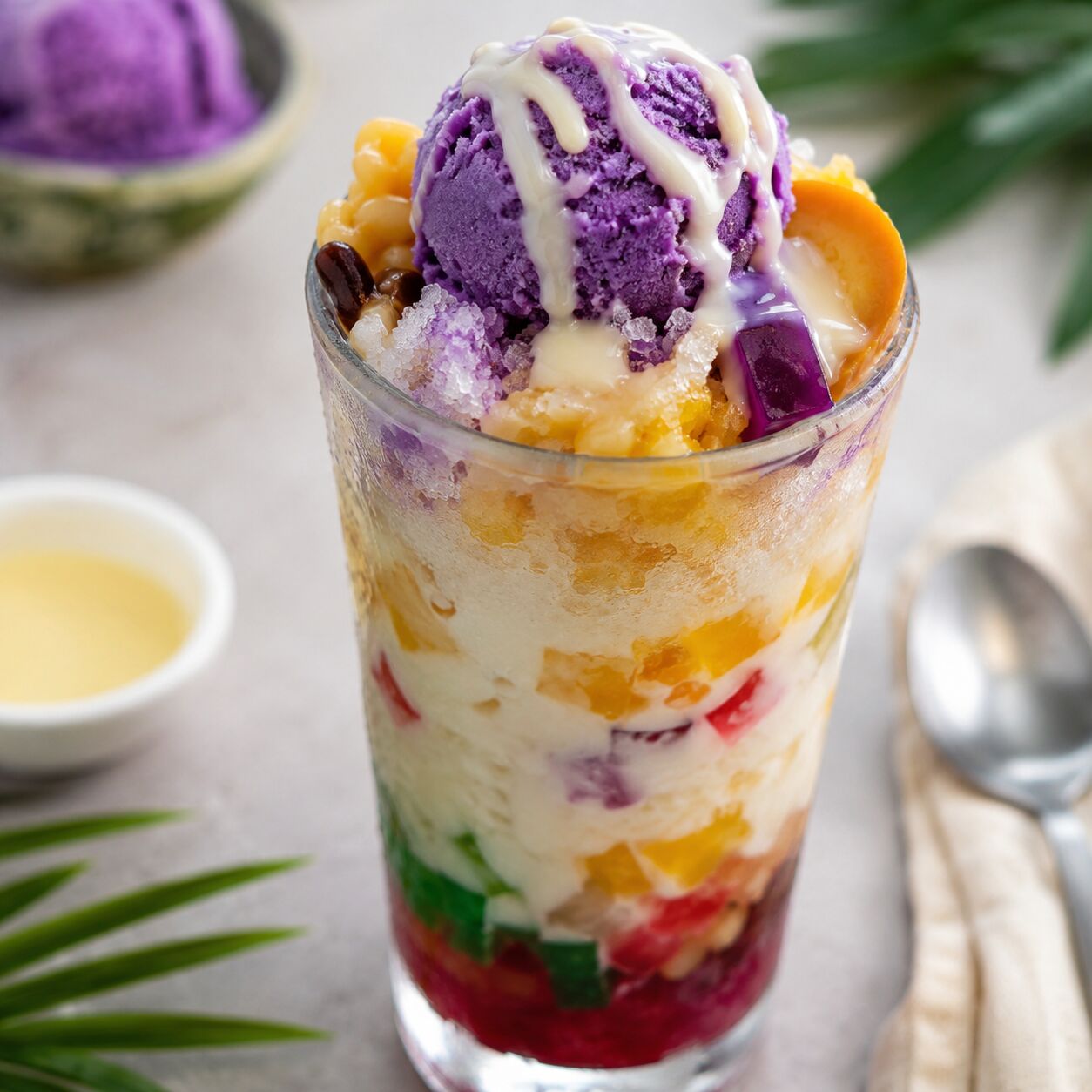
No. 1 — Halo-Halo
Halo-Halo is the dessert that defines the Philippines. Shaved ice is layered over a colourful mixture of jelly, beans, fruit, evaporated milk, and a scoop of ice cream, then handed to you to mix together (halo-halo literally means "mix-mix" in Filipino).
Eating it in the Philippine heat feels entirely right — bright, refreshing, and joyful in a way that is hard to put into words. It looks like a tropical carnival in a glass.
No. 2 — Taho
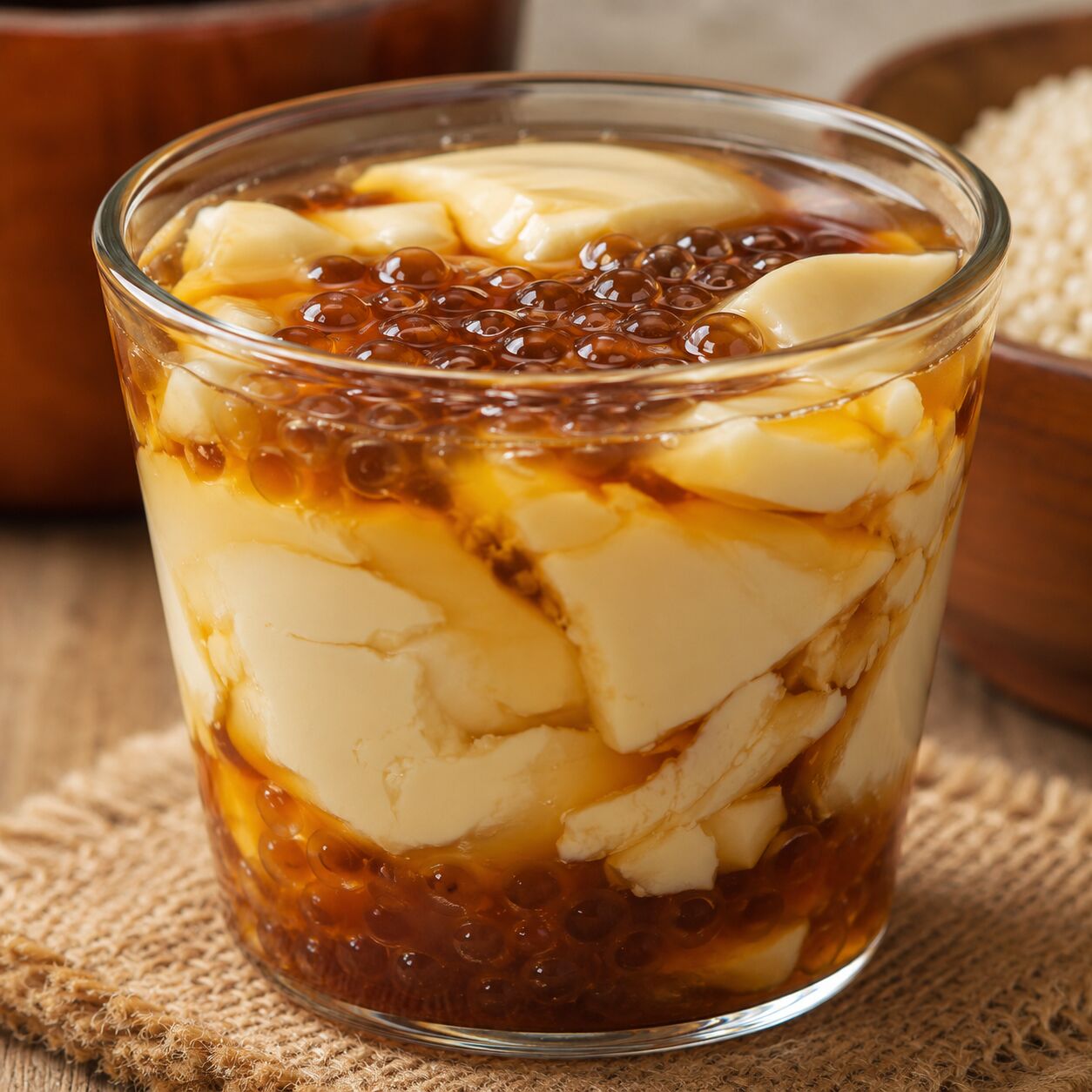
Taho is warm silken tofu — softer and more delicate than any tofu we know from Japan — served in a cup with sweet brown-sugar syrup poured over it. It is a humble, quiet dessert, but it has a gentle, soothing quality that we found unexpectedly comforting after a long day on our feet.
No. 3 — Leche Flan
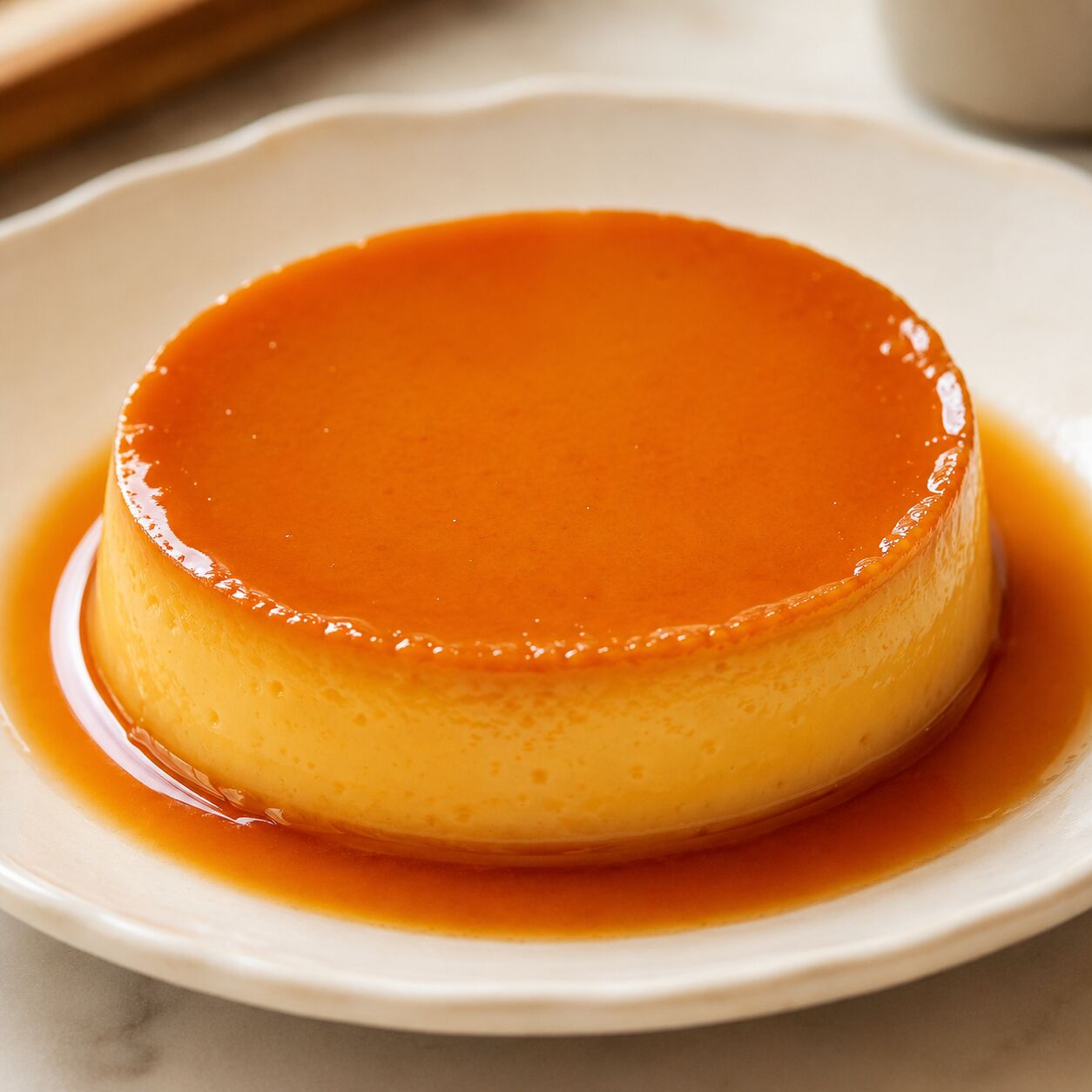
Leche Flan is the Filipino version of crème caramel — richer and denser than its Japanese counterpart, with a deep eggy sweetness and a silky-smooth texture.
If you have a sweet tooth, a single slice is very satisfying. It is a fixture at celebrations and family meals, and once you try it you can see exactly why.
No. 4 — Turon
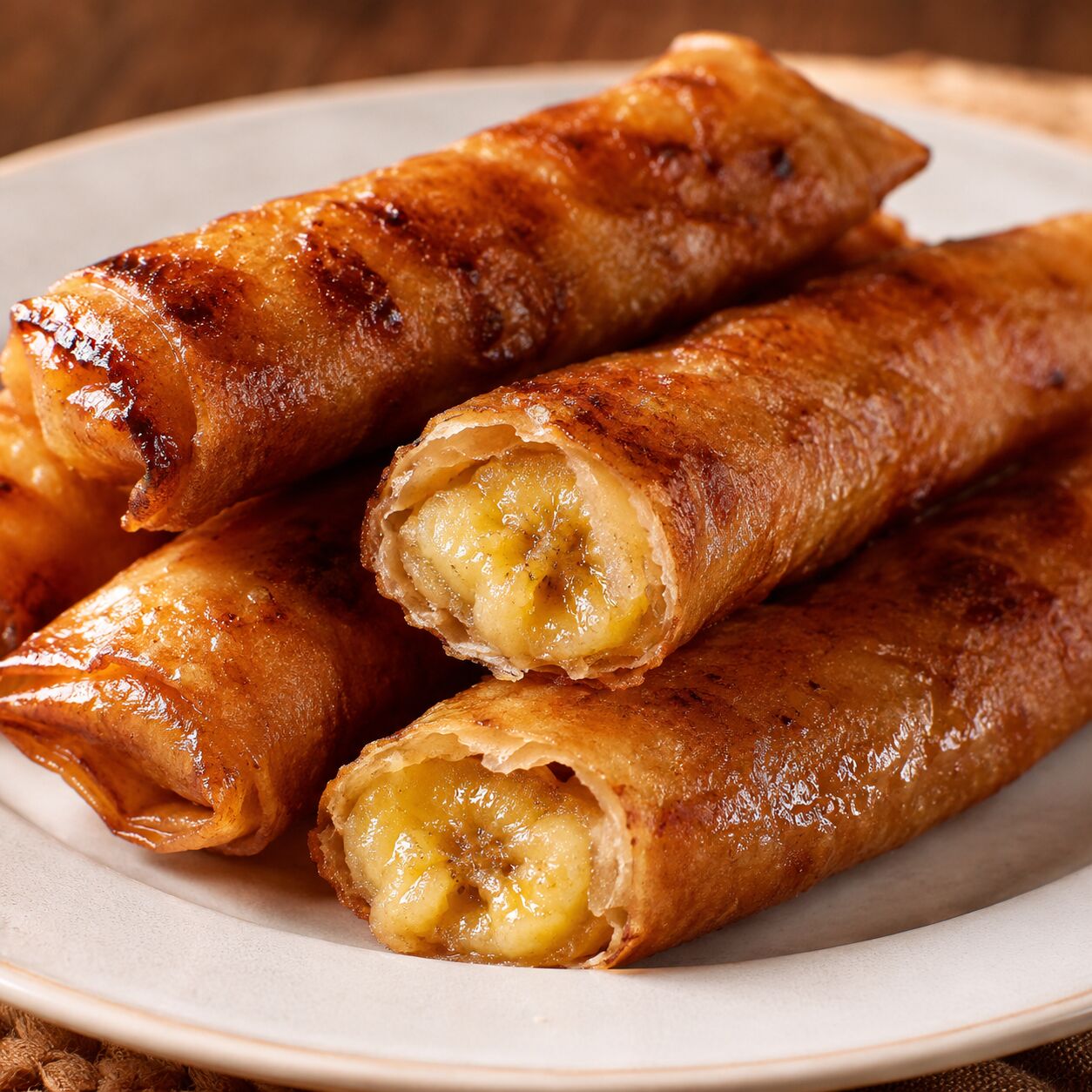
Turon is a banana sweet we would happily eat again on any future visit. Ripe banana is rolled inside a thin spring-roll wrapper and deep-fried until it is golden and crisp on the outside, with soft, caramelised banana within.
It is easy to eat, easy to love, and widely available from street vendors. Banana fans: this one is non-negotiable.
No. 5 — Banana Cue
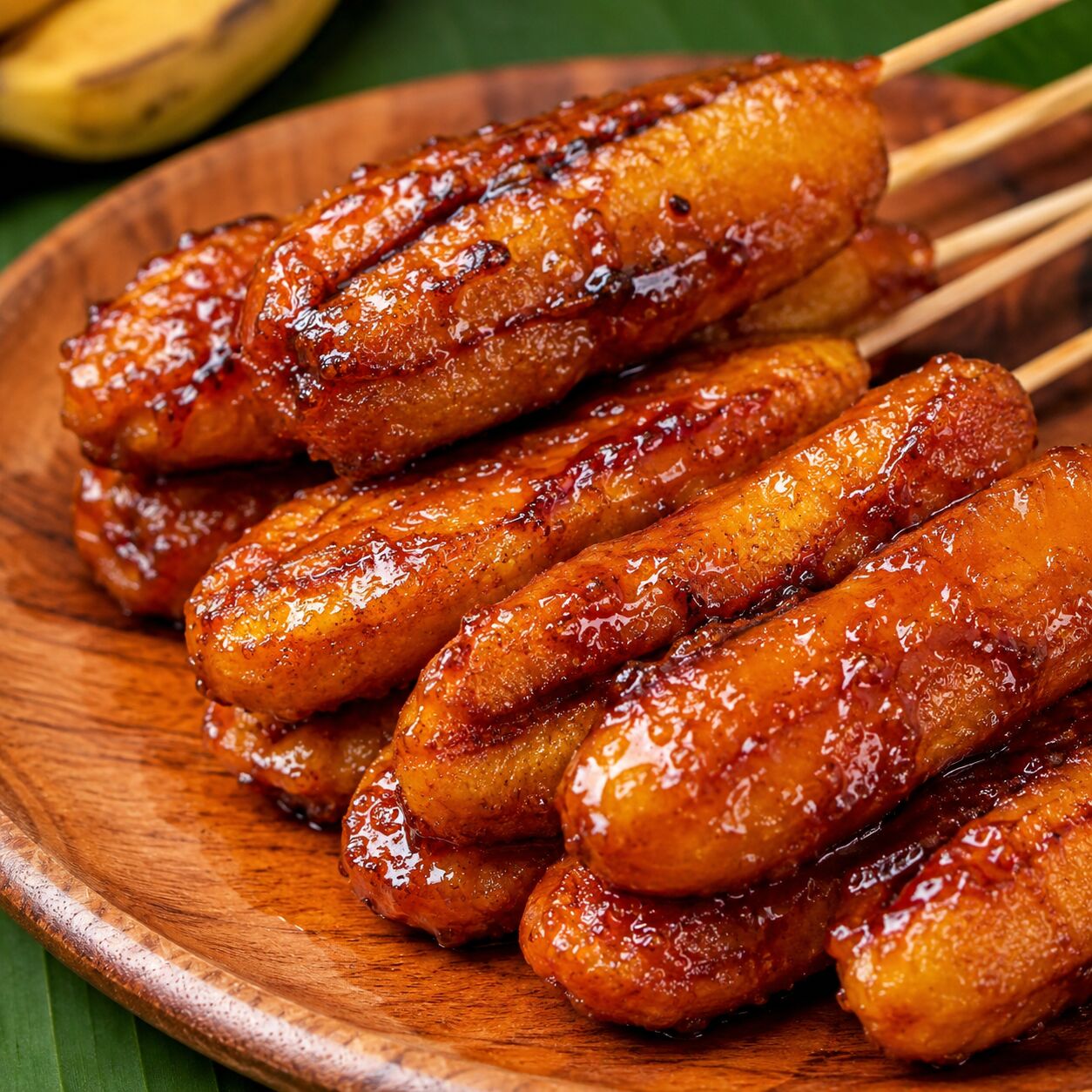
Our second banana recommendation is Banana Cue — deep-fried banana coated in caramelised sugar and skewered on a stick. The outside is sweet and lightly crunchy; the inside is soft and warm with the natural richness of ripe banana.
It reminded us of the sweet grilled treats you find at summer festivals back home — that same approachable, unfussy pleasure. If you spot a vendor selling them, do not walk past.
The verdict: food in the Philippines is one of the best parts of the trip
Filipino cuisine surprised us — in the best possible way.
Rice-friendly flavours. Dishes that are rarely fiercely spicy. Meat cooked in sweet-savoury sauces that feel immediately at home. Refreshing sour broths that cut through the heat. Tropical fruit and sweets unlike anything we can find in Hokkaido. And the warmth of sharing a table with people who genuinely love to feed you.
Not every dish will suit every palate — the tangy soups, the sweeter seasoning, the occasional unfamiliar ingredient may take a moment to adjust to. But that is part of what studying abroad means: encountering something genuinely new and finding your own way into it.
We came from Hokkaido to the Philippines. The climate is different, the language is different, the food culture is different. But the feeling of sitting down together over a good meal — that is the same everywhere, and it makes people smile in every language.
To everyone joining us for a short-term study trip: we hope you will enjoy the food here as much as the English lessons. Because by the time you fly home, we are fairly confident you will have a dish you cannot stop thinking about — whether it is Sinigang, Lechon, Halo-Halo, or something else entirely that you did not expect to love.