


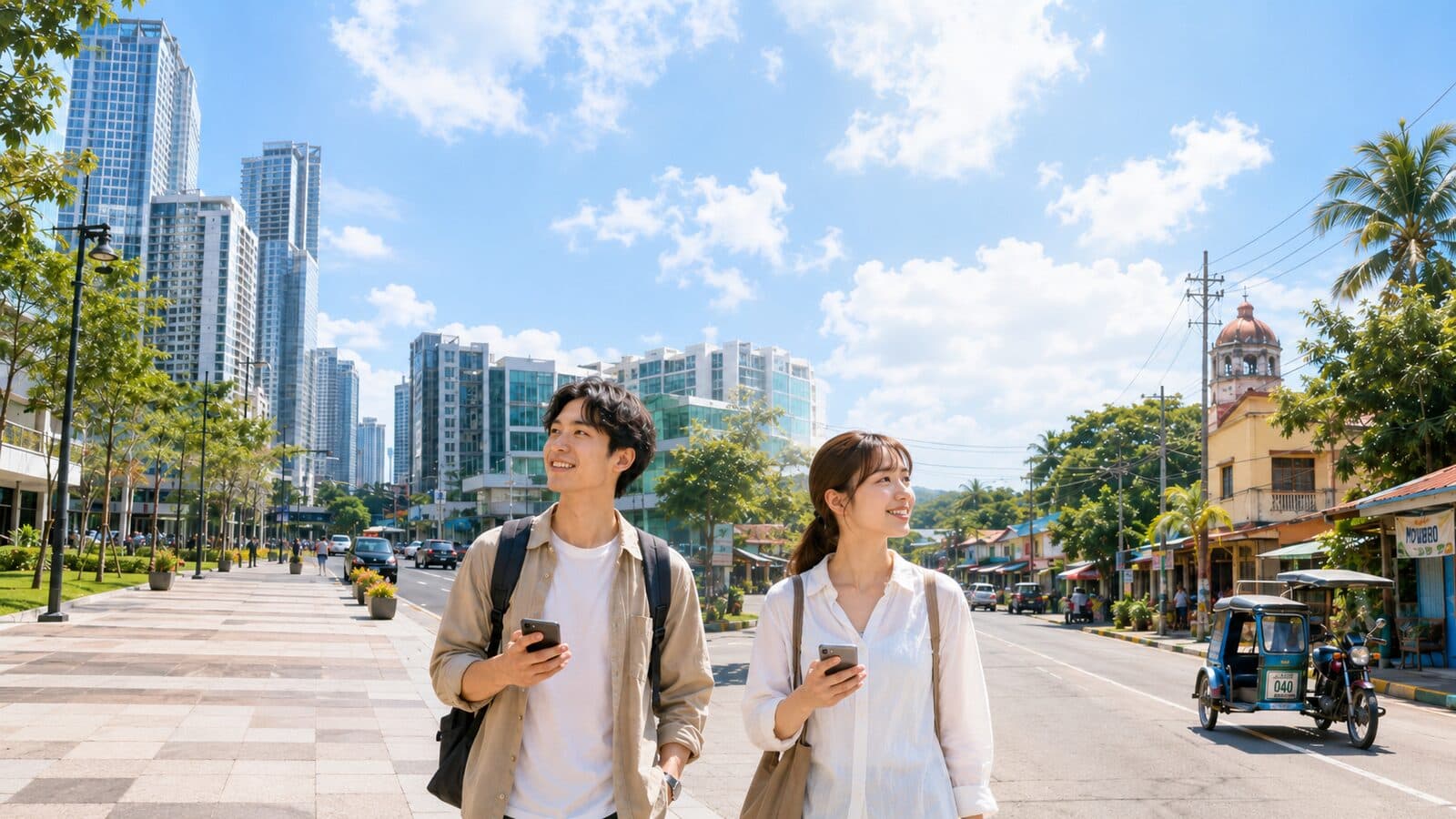
Hello, everyone. We get this question a lot from people considering a short-term study-abroad trip to the Philippines: "What's the safety situation actually like there?" In this post we share what we saw and felt on the ground — honestly, from the perspective of staff who made the visit themselves.
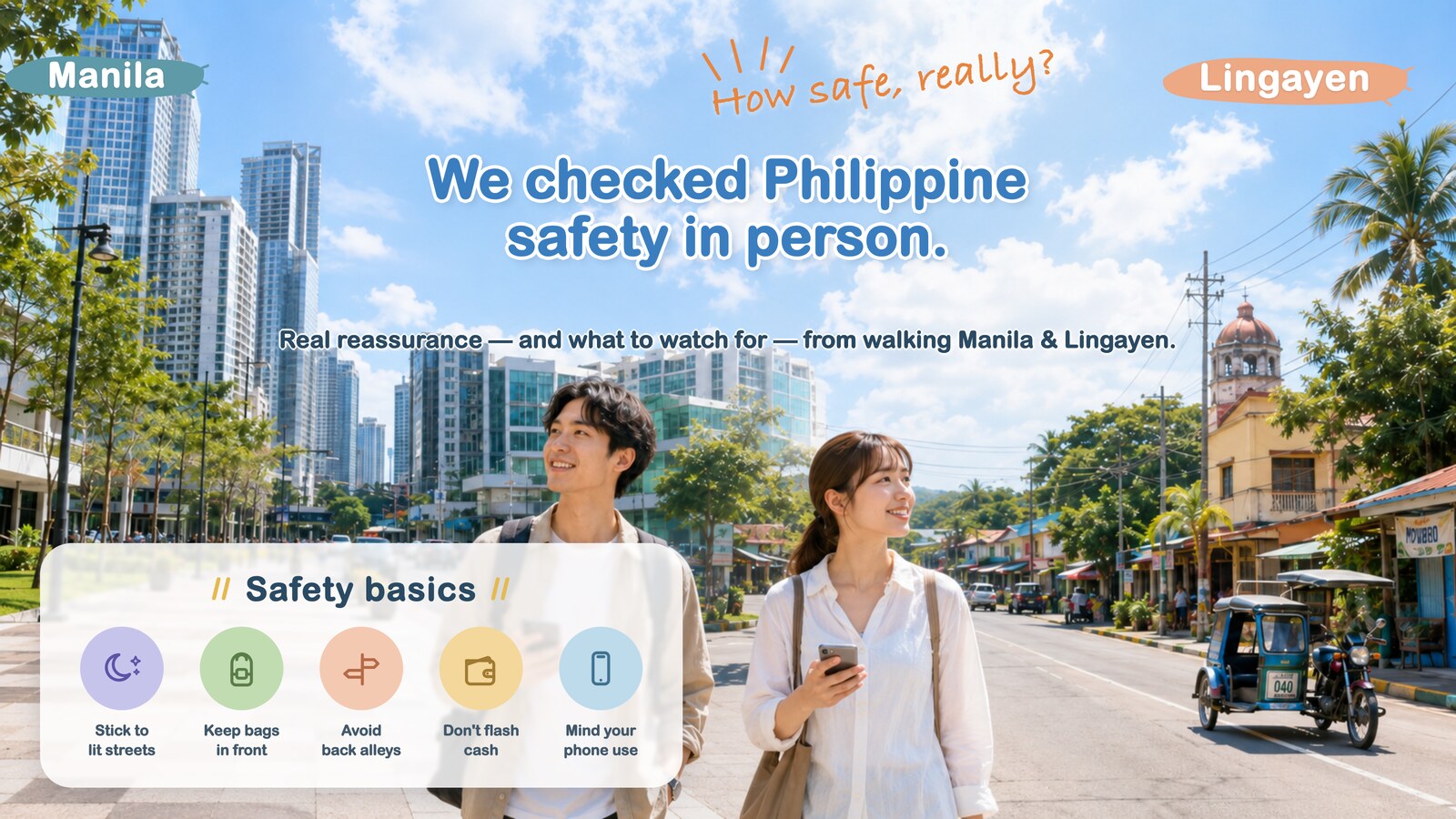
Is the Philippines safe?
To be candid: we were a little on guard before we went.
In Japan — and in plenty of other countries — the Philippines carries a reputation — "the security situation isn't great", "pickpockets and bag-snatchers are common", "it's risky to walk around with your smartphone out". Stories of tourists falling victim to crime do make the news, and it is entirely natural to feel anxious before your first trip.
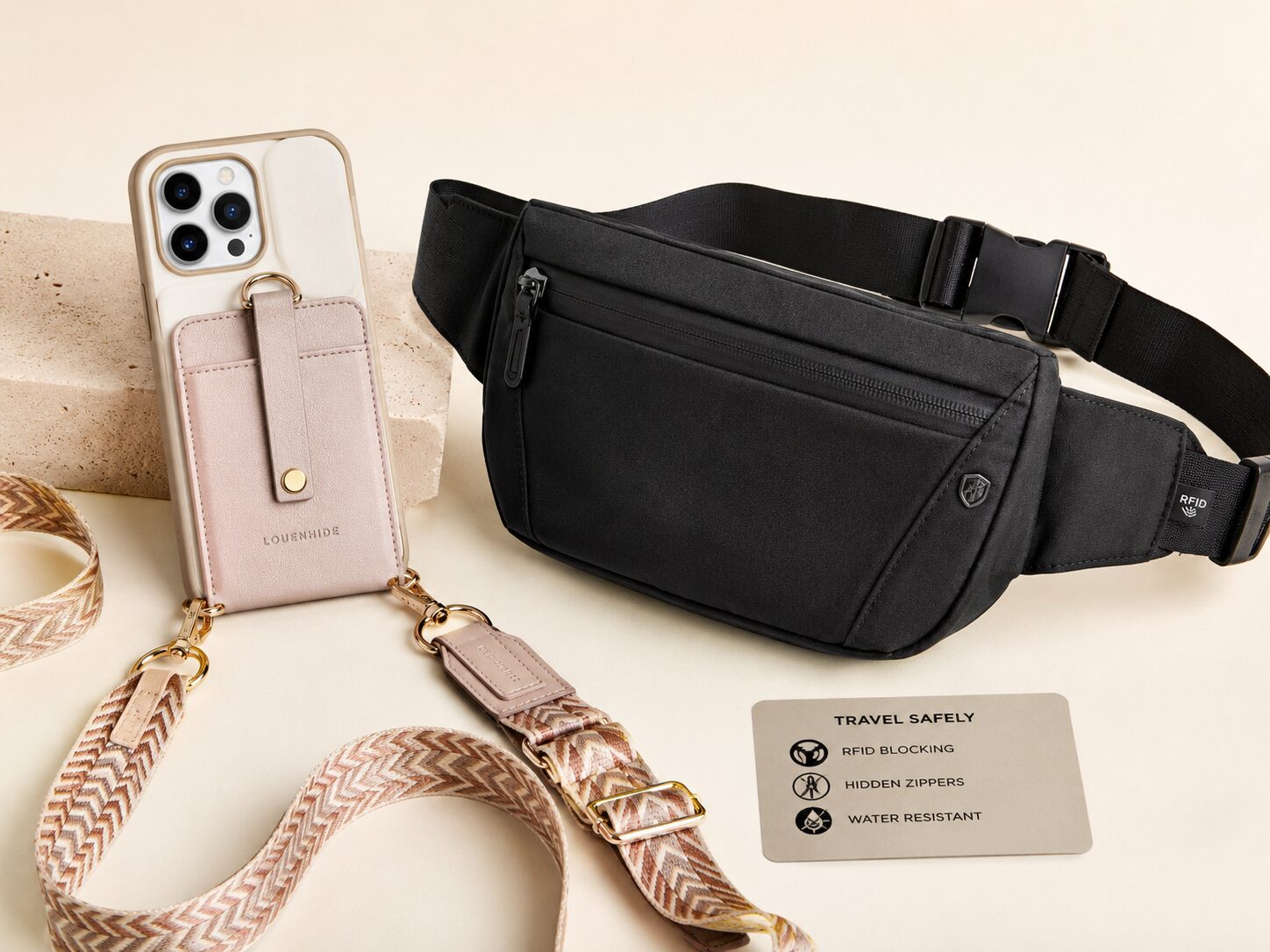
We were certainly cautious. Before departure we bought a phone holder on a strap to keep around our necks, and we found a waist pouch with strong security features. We genuinely worried: "Is it dangerous to carry a backpack on your back? Will someone snatch our phones if we hold them up?"
Walking around, the reality was different from what we expected
Once we arrived and started exploring on foot, that image began to shift.
People in the Philippines walk around with their smartphones in hand perfectly naturally. Many were taking photos; in restaurants we saw people rest their phones on the table during meals without a second thought.
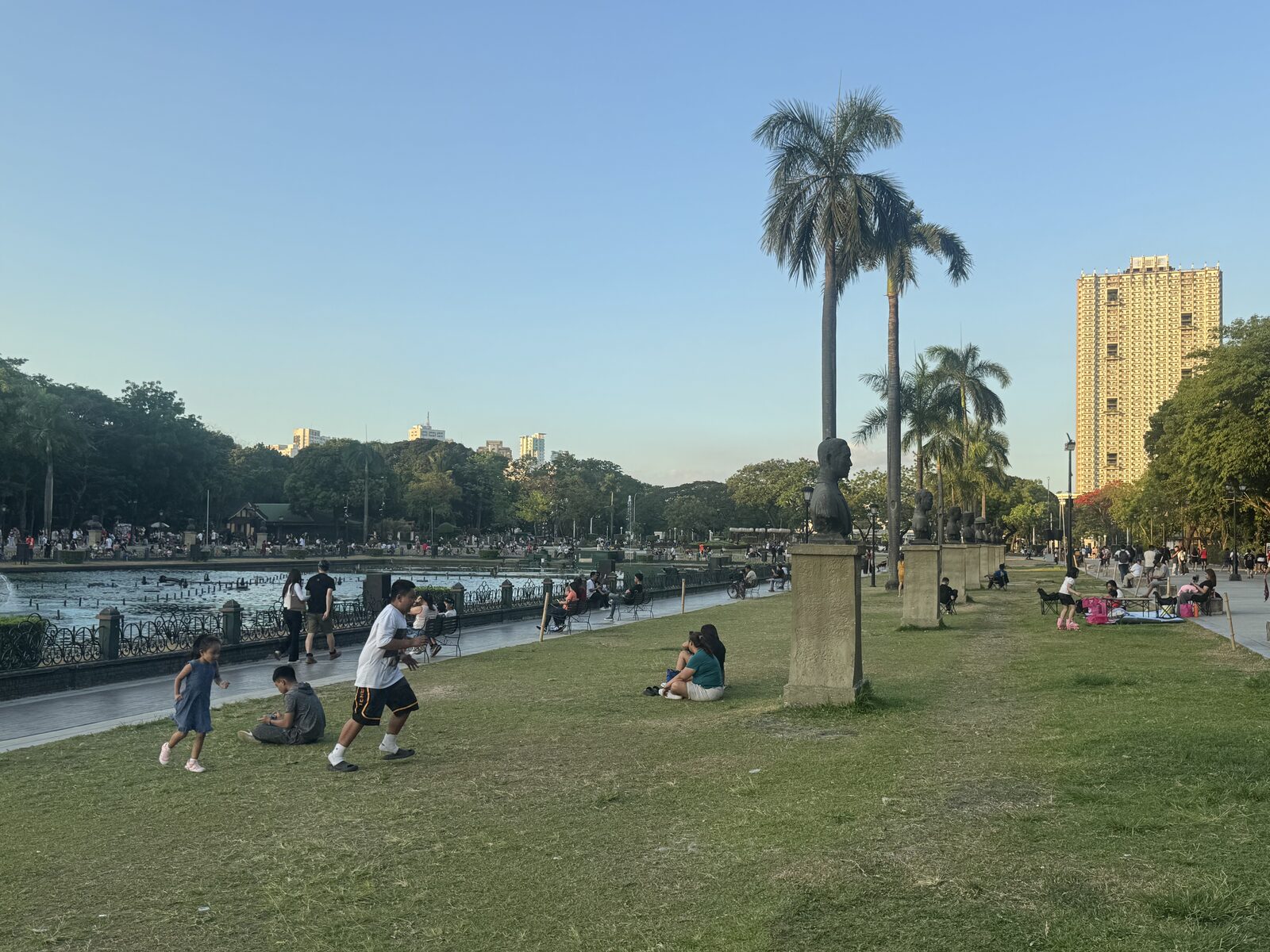
We ourselves walked around Manila and Lingayen shooting photos and videos, and there were very few moments where we felt genuinely unsafe.
That said, this does not mean you can let your guard down entirely and treat it like being at home in Japan. As with any overseas destination, you do need to be alert to pickpocketing, bag-snatching, and opportunistic theft. But it was not a place where we felt we had to walk around in a constant state of fear.
You may encounter people begging
One difference from Japan is that you may occasionally see people begging on the street.
The first time can come as a surprise. What we found in practice, though, was that rather than being aggressively pressed for money, if someone did approach us and we said "I don't have any cash on me" or "Sorry, I don't understand Tagalog," they would generally move on without any fuss.
The local people around us handled these situations calmly too — not coldly dismissing anyone in need, but keeping a natural distance. (If you do want to give something, some sweets you have on hand or a few small coins are received with genuine gratitude.)
These scenes are part of the reality of the Philippines. Encountering a different face of society from what you know in Japan is, we felt, one of the reasons studying abroad has meaning.
There are things you genuinely need to watch out for
Even though there were many reassuring moments, precautions still matter.
Do not go out alone late at night. Avoid back streets with little foot traffic. Do not carry large amounts of cash. Do not follow strangers. Do not leave belongings or your phone unattended. If trouble does occur, do not resist.
These are the basics of staying safe abroad — not unique to the Philippines.
In our study-abroad programme we place real importance on local-staff escorts and guidance. Whether you are a first-timer or not, we aim to brief participants in advance on where to go, which hours are comfortable, and how to handle situations as they arise.
Lingayen felt calmer still compared to Manila
On this visit we walked both Manila and Lingayen.
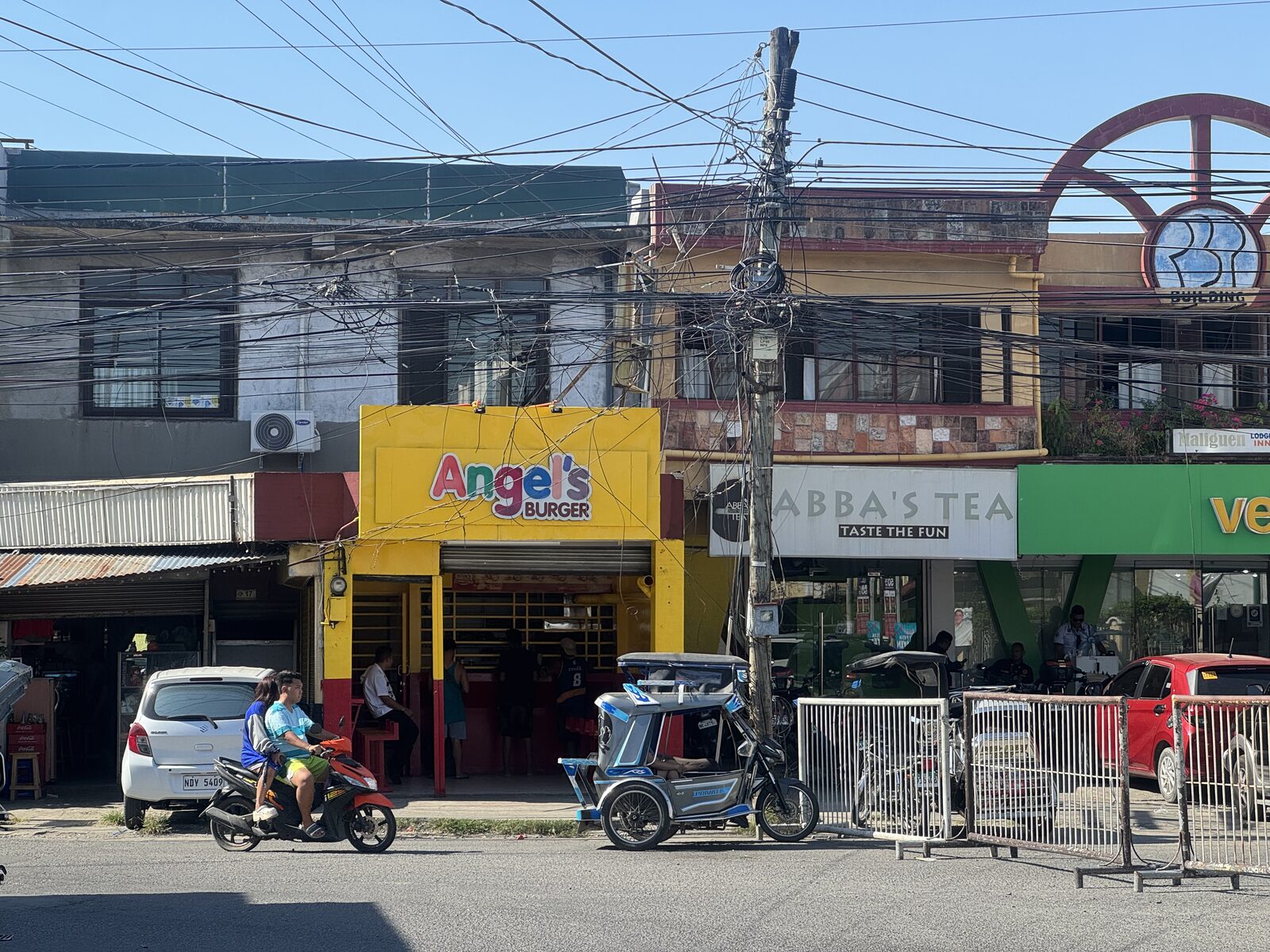
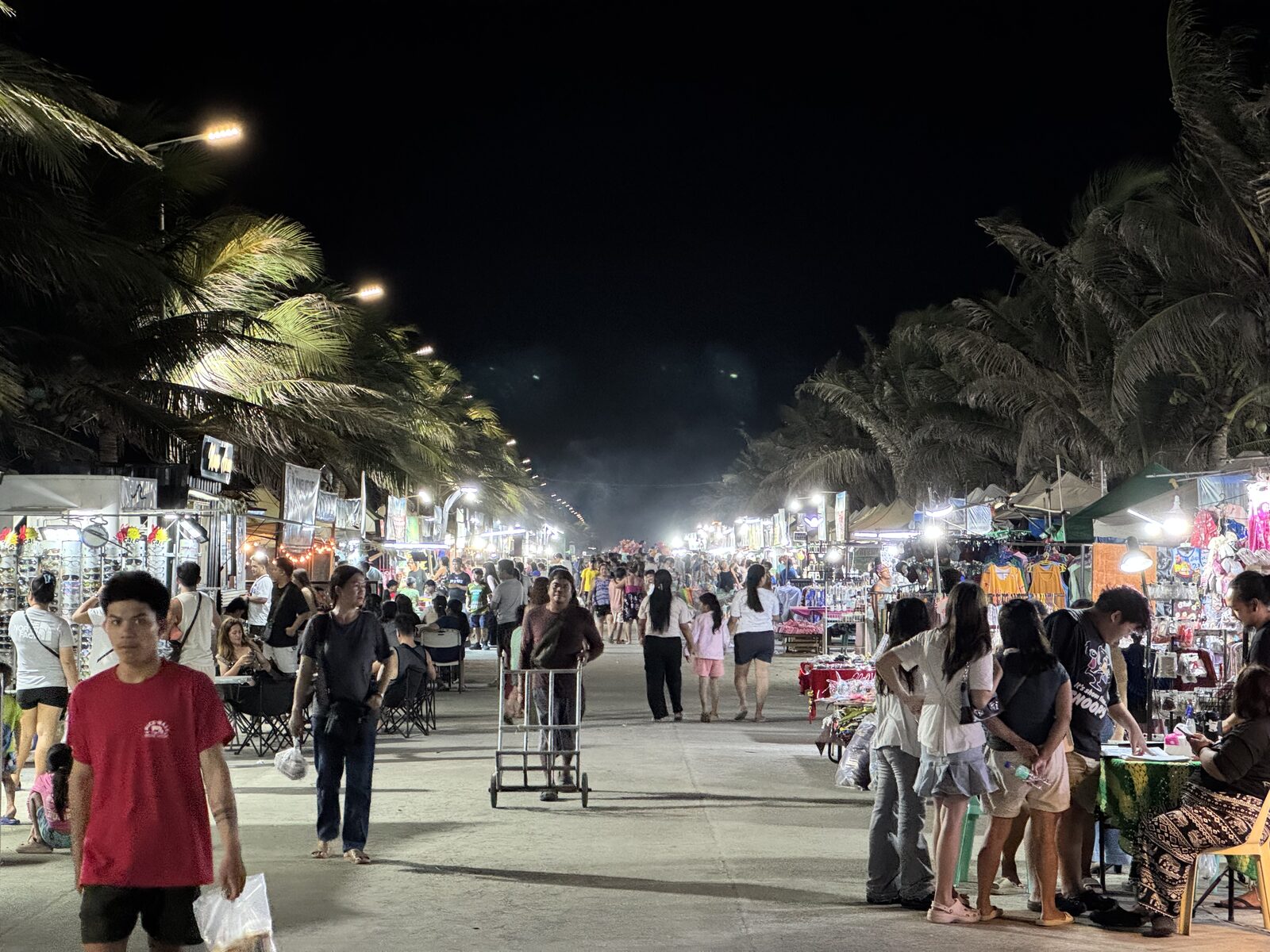
Manila is a major city, so the density of people and traffic brings an inevitable big-city alertness with it. Lingayen, by contrast — home to the language school Parrots-kun — had a noticeably more relaxed, unhurried feel.
We got around by tricycle, strolled through the night market, and went to see the cafés and the laundromat near the school. The people in town were gentle and easy-going, and the overall atmosphere felt safe and comfortable to be in.
For us, coming from Hokkaido, Lingayen's unhurried pace felt genuinely pleasant. It does not have the same convenience as central Sapporo, but people feel closer, and there is a real warmth to the town.
Our conclusion: no need to worry excessively — but do not be careless either
The Philippines is a country where there are things to be mindful of compared to Japan. Japan's Ministry of Foreign Affairs and the embassy both advise travellers to be vigilant against robbery, pickpocketing, bag-snatching, and snatch theft.
That said, what we actually felt after walking around on the ground was this: if you stick to the basic safety practices, there is no need to be excessively afraid.
In Lingayen especially, the reassurance of having local staff close by made a real difference. Even on our first visit to the Philippines, we were able to settle in and feel at ease.
Feeling anxious before going abroad is perfectly normal. But that anxiety can be eased considerably by having the right information and reliable on-the-ground support.
What we want this study-abroad programme to offer is more than English learning. We want everyone joining us from Hokkaido to be able to take that first step with confidence. And we want them to come away thinking, "This country was so much warmer than I imagined."
The Philippines, once you know what to watch out for, is a place full of smiles and the kindness of its people.