


Hello, everyone. Welcome back to our Site Visit Diary, following our team's site visit to short-term language schools in the Philippines. This is Day 4.
A lesson at 9 a.m. — eighty minutes carried by Kay's warmth
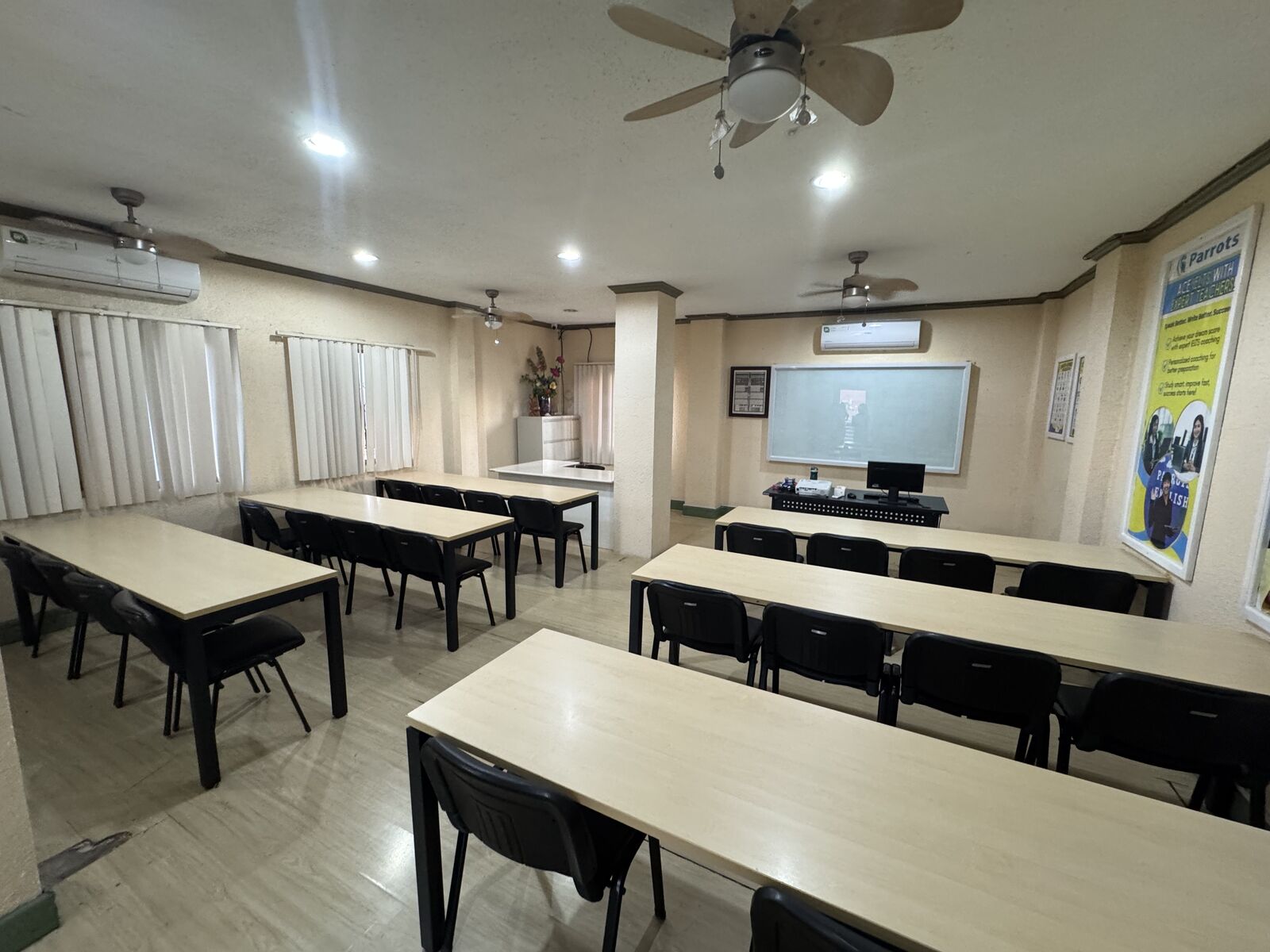
The day began at nine in the morning with a trial lesson — a genuine class, just as any student would experience it. Our teacher was Kay, who has been teaching at Parrots-kun for eight years. The lesson was a speaking class: given a topic, you find your words and share your thoughts in English.
Even after studying English in Japan, there are moments when you open your mouth to say something and the words simply do not come. That happened to us here too — that feeling of knowing exactly what you want to say, but not being able to reach the English for it.
What made the difference was Kay. She never rushed us. She waited, gently and cheerfully, for whatever came. When things stalled, she offered a look, a gesture, a simpler way of phrasing things — and slowly, the tension started to ease.
"It's fine to get it wrong." "Just try to say it." She was the kind of teacher who makes you feel that.
Eighty minutes can sound like a long time, but it went by in a flash. Even for someone who carries some anxiety about speaking English, a teacher's warmth like that can make all the difference — and turn the whole experience into something you genuinely want to try.
Teaching materials from toddlers to exam prep — a wide range confirmed
After the lesson, we were shown around the school's teaching materials.
The shelves held a remarkable variety: early childhood English materials, exam preparation resources, learning posters, graded readers and textbooks for different levels.
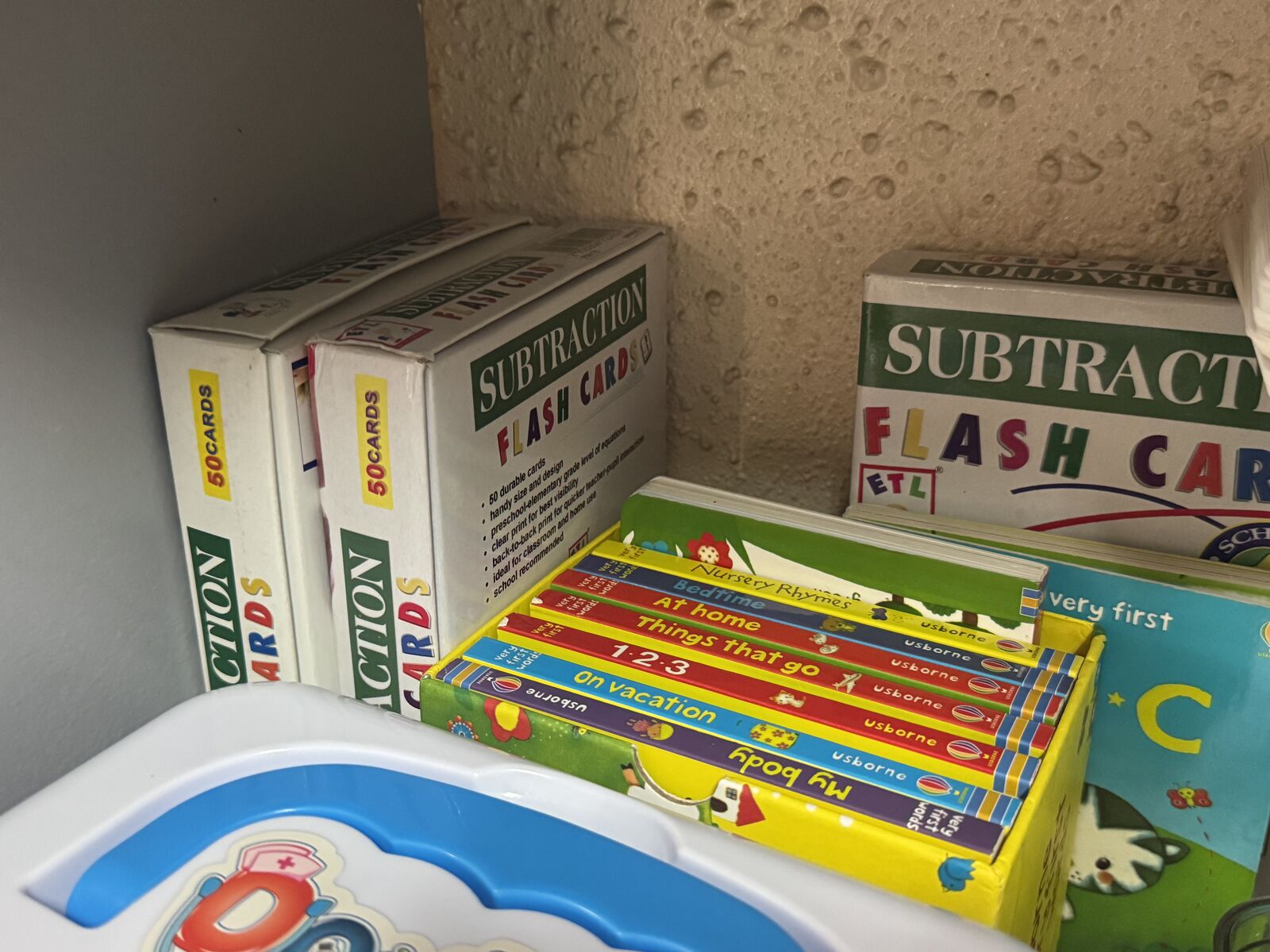
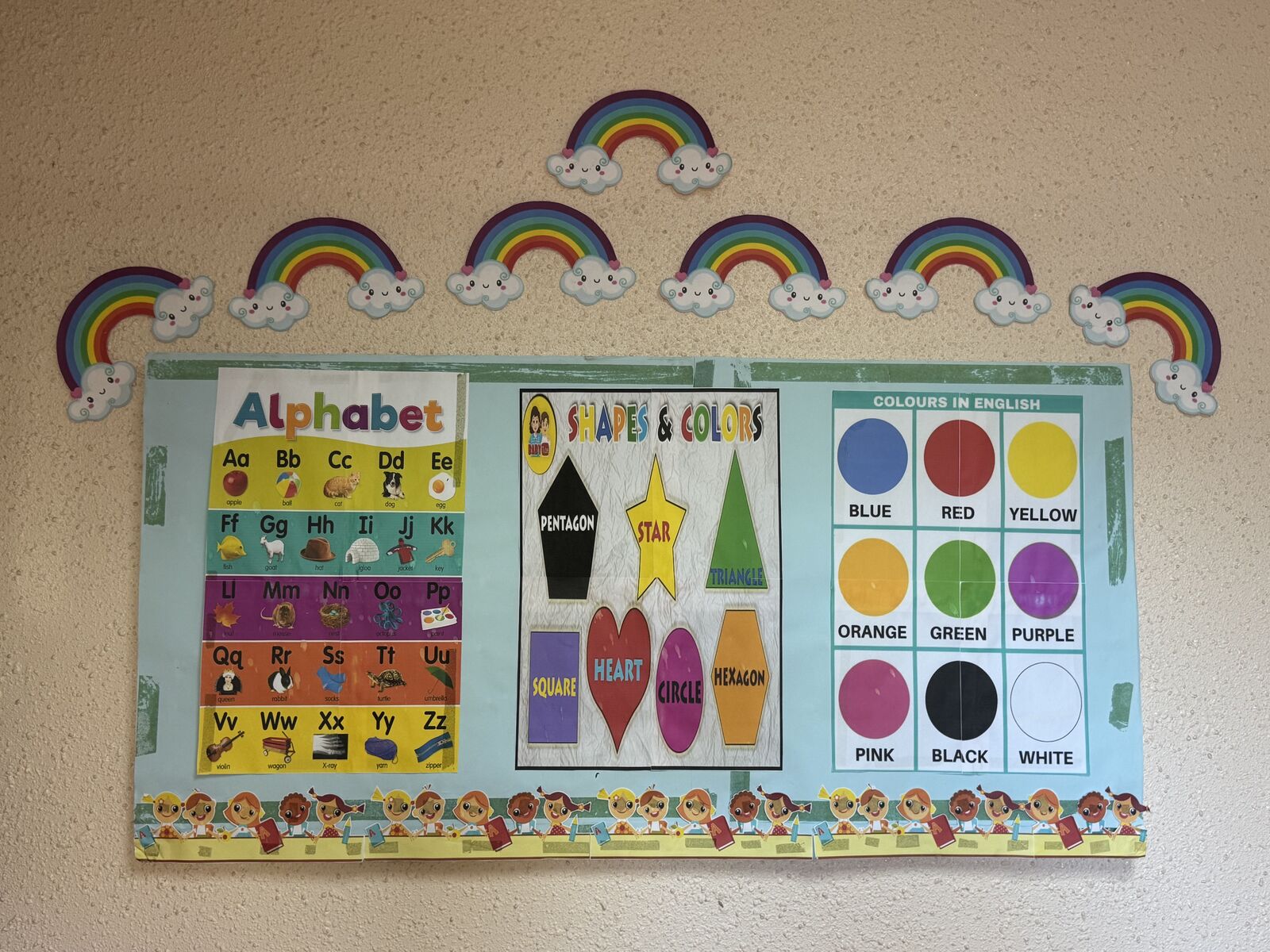
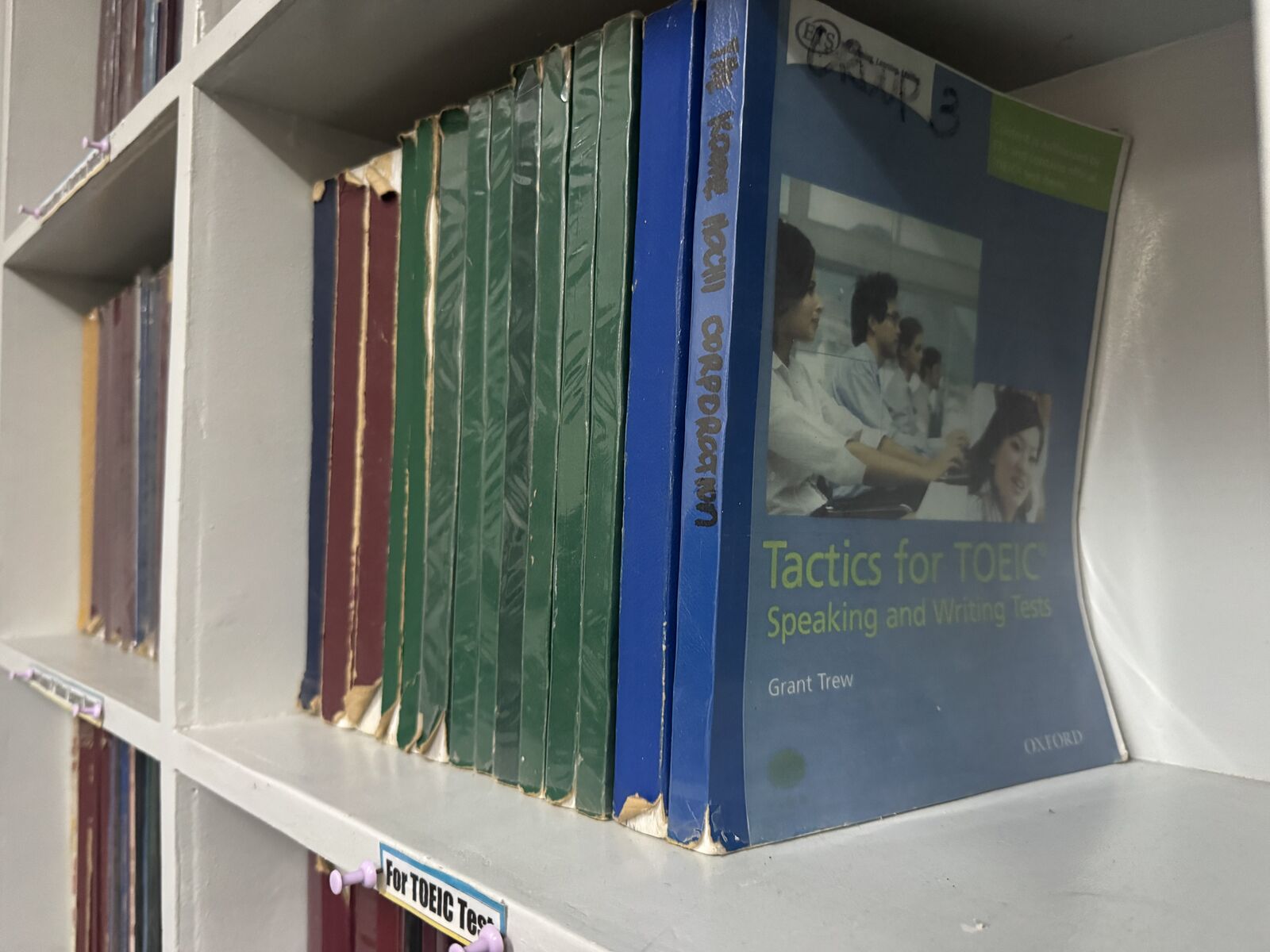
We were told that the shift toward digital materials over recent years has reduced the volume of printed resources — but it was clear that the school can still meet learners wherever they are, whatever their age and purpose.
That flexibility matters particularly for the Hokkaido Study-Abroad Programme.
The people who will join this programme are not all students in the traditional sense. Some will be parents hoping to experience English alongside their children. Others will be working adults returning to learning. Some will be in their senior years, finally taking that step to experience life abroad. And some will have exam targets in mind. Each person's reason is different.
Precisely because of that, having materials and teachers who can meet a wide range of levels and ages is a genuine reassurance.
The school's own farm — harvesting pesticide-free vegetables and tropical fruit
Around midday, we were taken to the school's own farm plot.
The farm grows vegetables and fruit without pesticides — okra, bitter melon, mango, papaya, calamansi, and more. The kind of produce that belongs unmistakably to this part of the world.
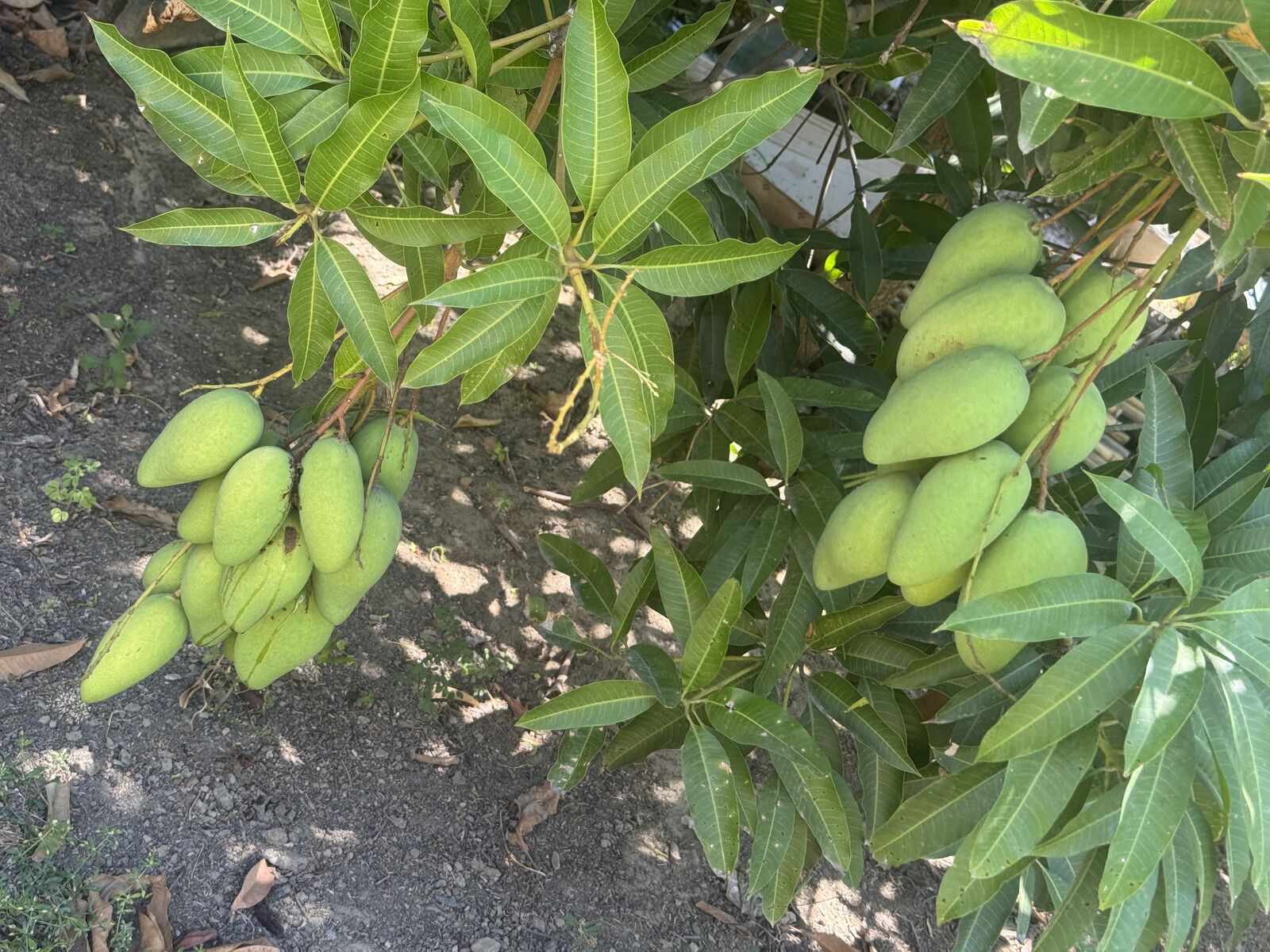
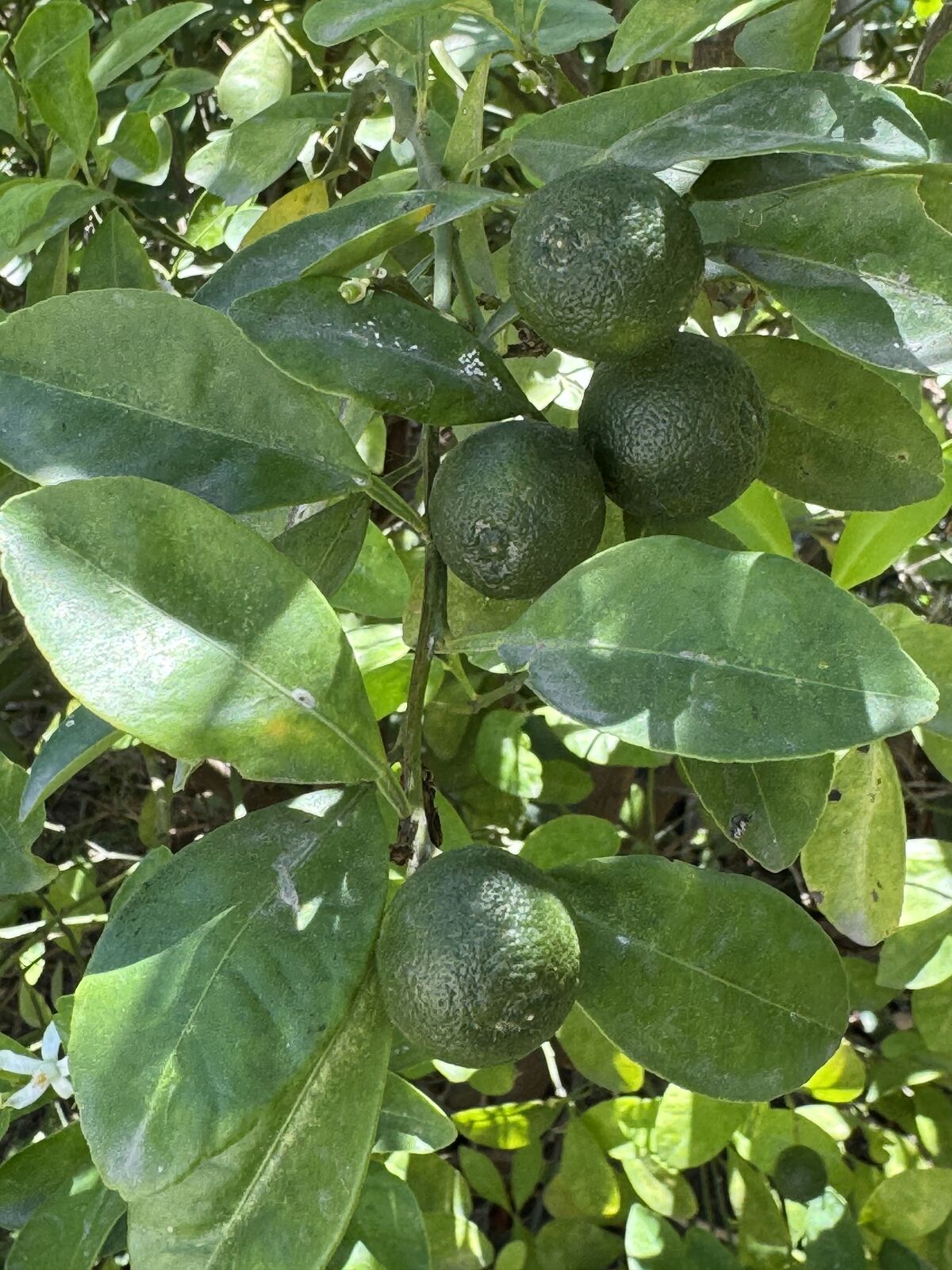
We were invited to harvest some ourselves.
Growing up in Hokkaido, you do not often get to see mangoes or papayas hanging from a tree just in front of you. Simply standing in the middle of a farm with tropical fruit ripening at eye level is, in itself, a genuinely fresh experience.
The vegetables and fruit grown here sometimes make their way onto the dinner table in the evening. Knowing that what you picked with your own hands might end up on your plate gives the meal ahead a certain extra pleasure.
English study is one thing — but being able to brush up against the food culture and daily life of the country you are visiting is another. That, we felt, is one of the things that makes a short-term stay at Parrots-kun its own kind of experience.
Lunch at the farm pavilion — experiencing Salsalo, a Filipino communal feast
After the harvest, we sat down for lunch in an open, pavilion-style space on the farm.
That day's lunch was Salsalo — a traditional Filipino way of eating, typically brought out at celebrations and gatherings where a large group comes together around the food.
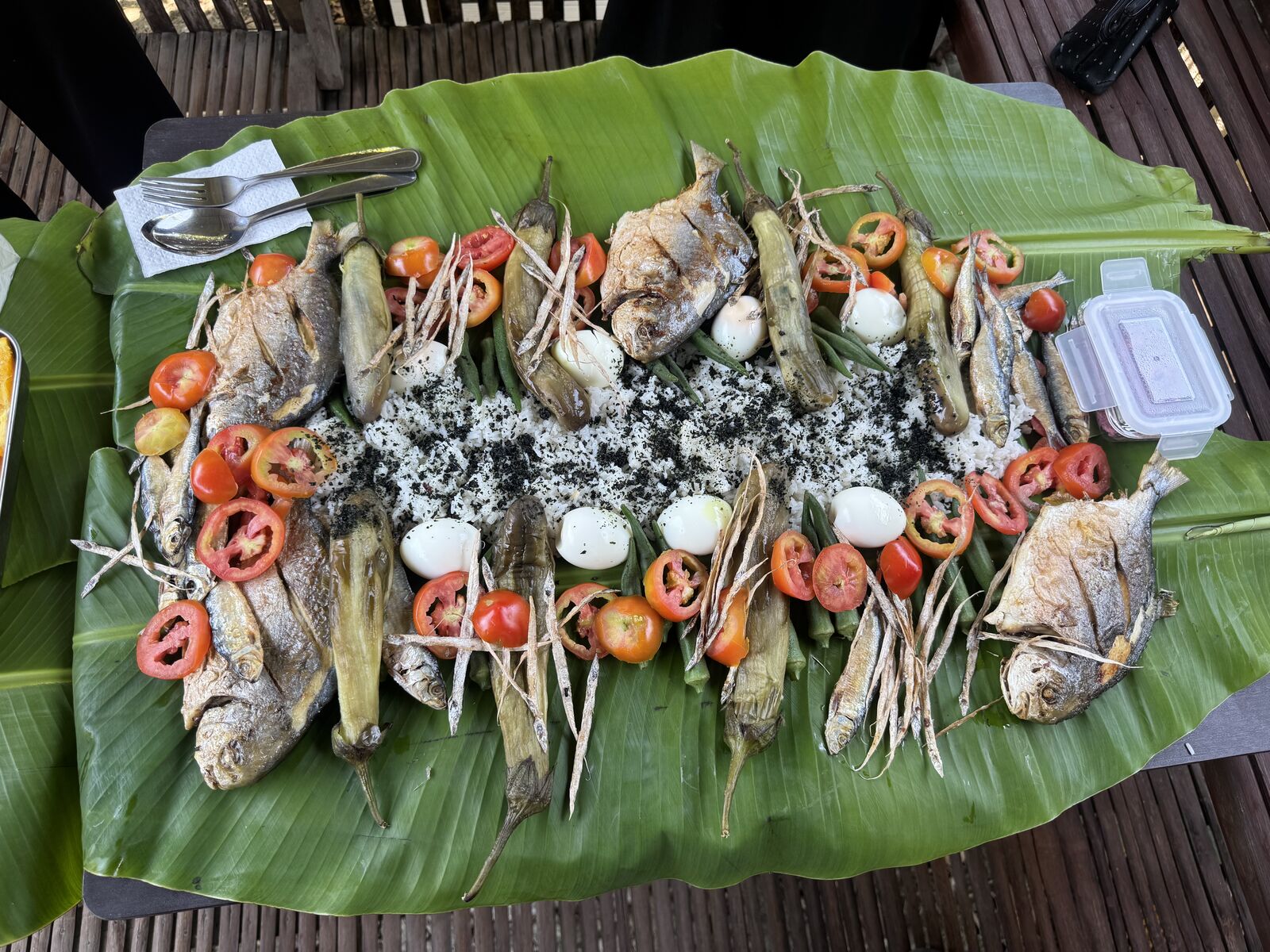
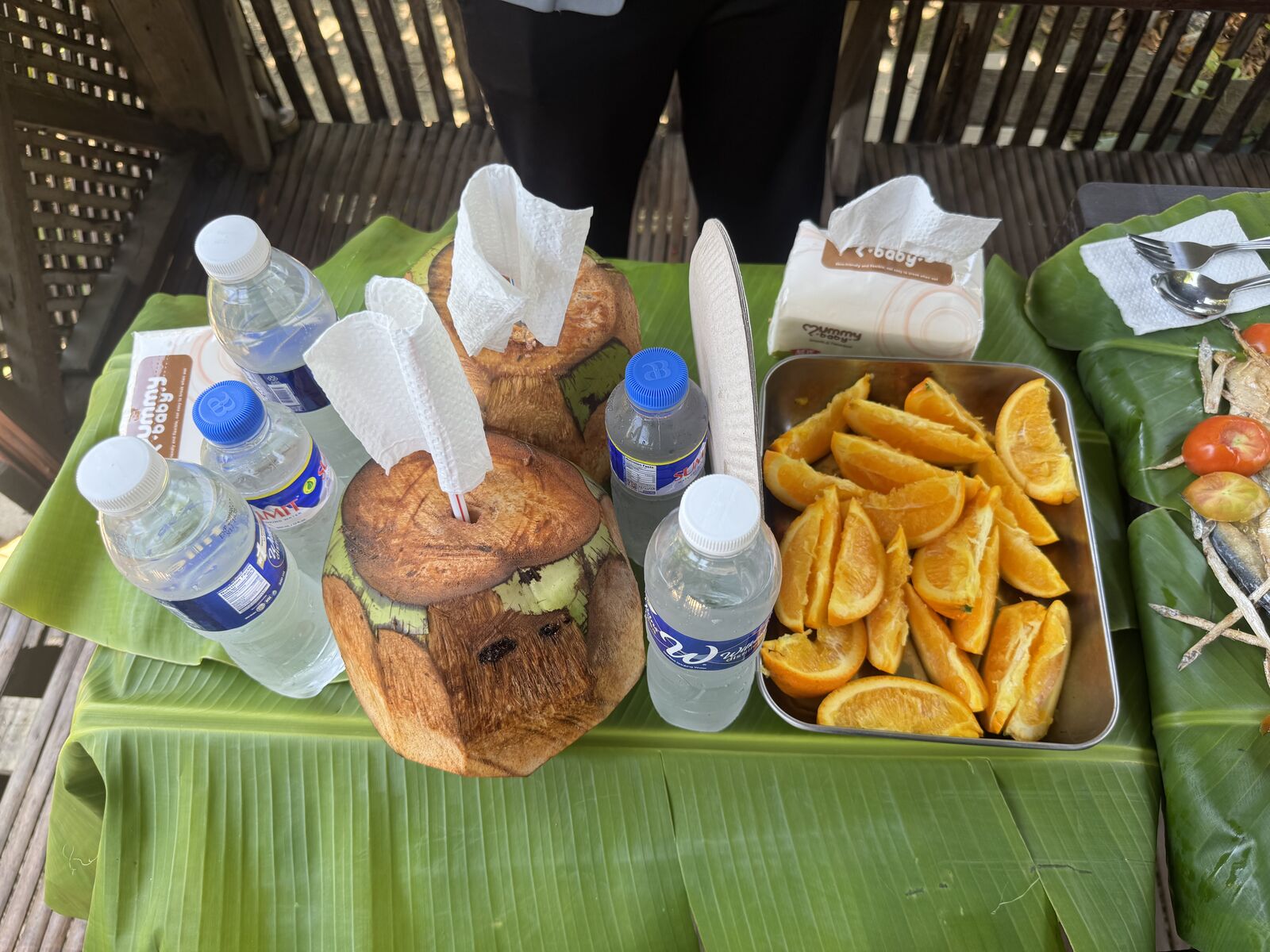
With Salsalo, the dishes are laid out all across the table and everyone gathers around to eat. Traditionally, it is eaten with the hands — and we gave that a go ourselves.
Which, it turned out, was harder than it looks.
The local staff made it look completely natural, but we struggled to pick anything up the way they did. Our efforts caused a round of laughter, and somehow that made the conversation easier and more relaxed than it might otherwise have been.
A meal is not only about filling your stomach. It is a moment to meet a country's culture, and to close the distance between people.
Sitting in the farm breeze, gathered around the food together — that lunch was warm in every sense of the word, and not something we will soon forget.
A visit to the coin launderette — genuinely useful, as it turns out
After lunch, we made our way to the coin launderette near the school.
We had already scouted it out on Day 3, but with laundry starting to pile up, this felt like exactly the right moment to actually try it.
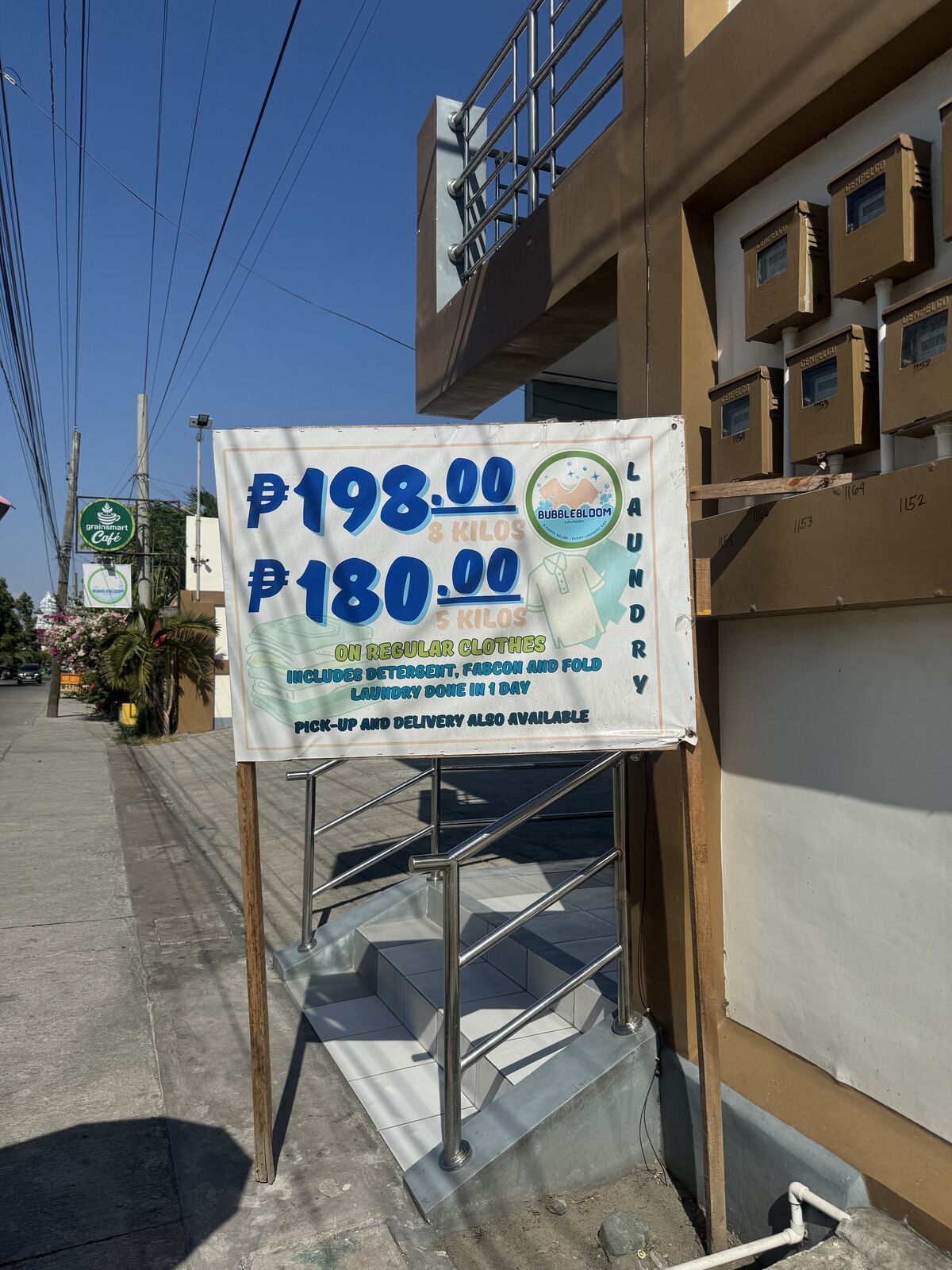
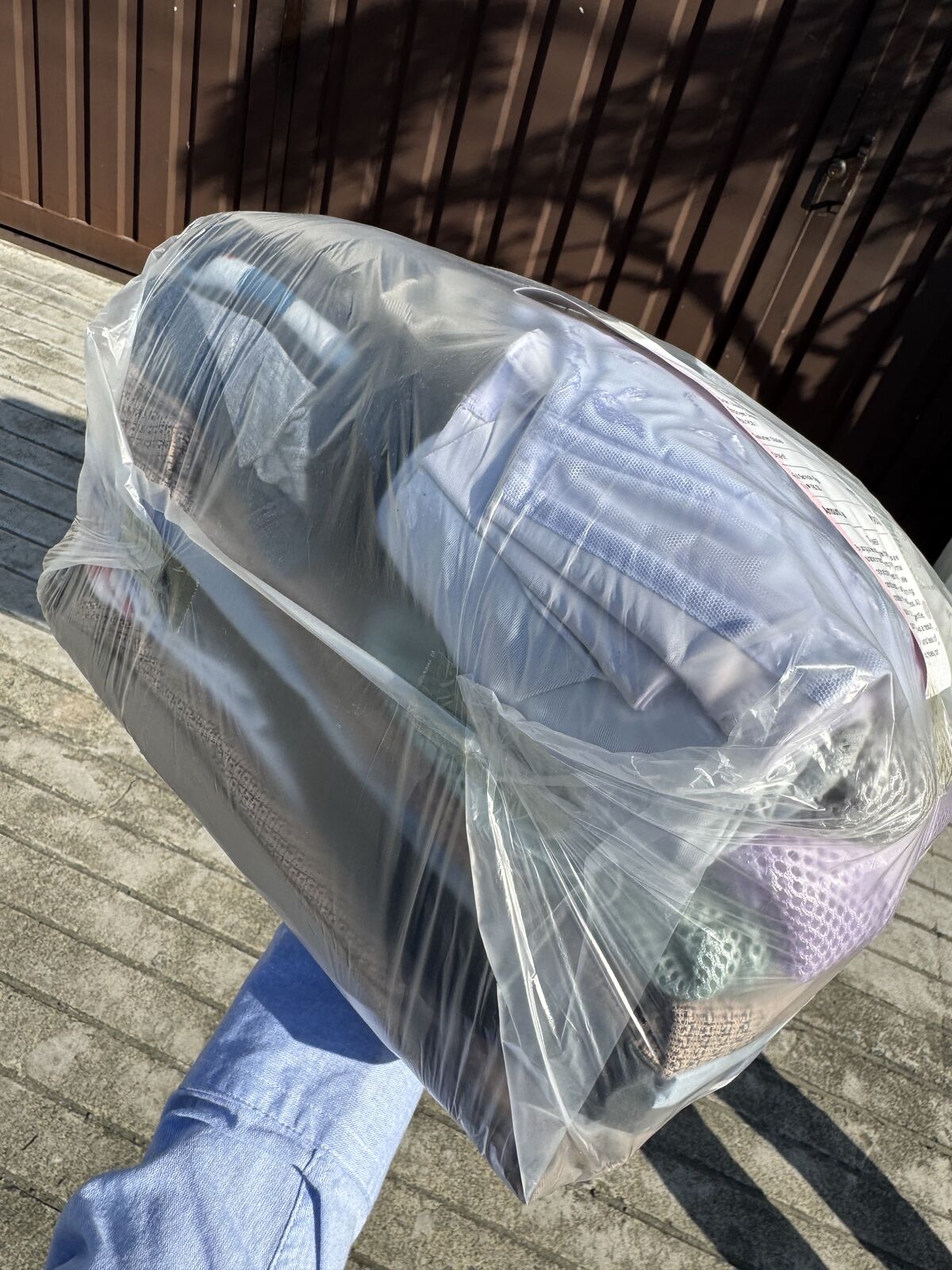
Drop your things off in the morning, and around five hours later you collect them — washed, dried, and folded. Not just folded, either: the clothes came back in perfect condition, as though they had been pressed.
For 5 kg of laundry, the full service — wash, dry, and fold, all done by the staff — costs around 250 PHP (roughly US$4). You hand it in before your morning lesson and pick it up in the afternoon.
It is a genuinely excellent service.
The launderette is within a five-minute walk of the school, which means you do not need to bring an excessive number of clothes for your stay. Many people travelling on a short study-abroad trip want to keep their luggage as light as possible, so having a facility like this right nearby is a real practical comfort.
This is especially true for anyone travelling from Hokkaido, where the clothes you set out in can be very different from what you need once you arrive. Being able to adjust what you pack is a quiet but meaningful convenience.
A visit to the partner hospital — checking that the safety net is there
In the late afternoon, we went to visit one of the hospitals that the school has a partnership with.
Staying healthy throughout your time abroad is of course the ideal. But unfamiliar weather, different food, and the physical demands of travelling can take their toll, and knowing that a medical facility is close by — one you can turn to if something goes wrong — is important.
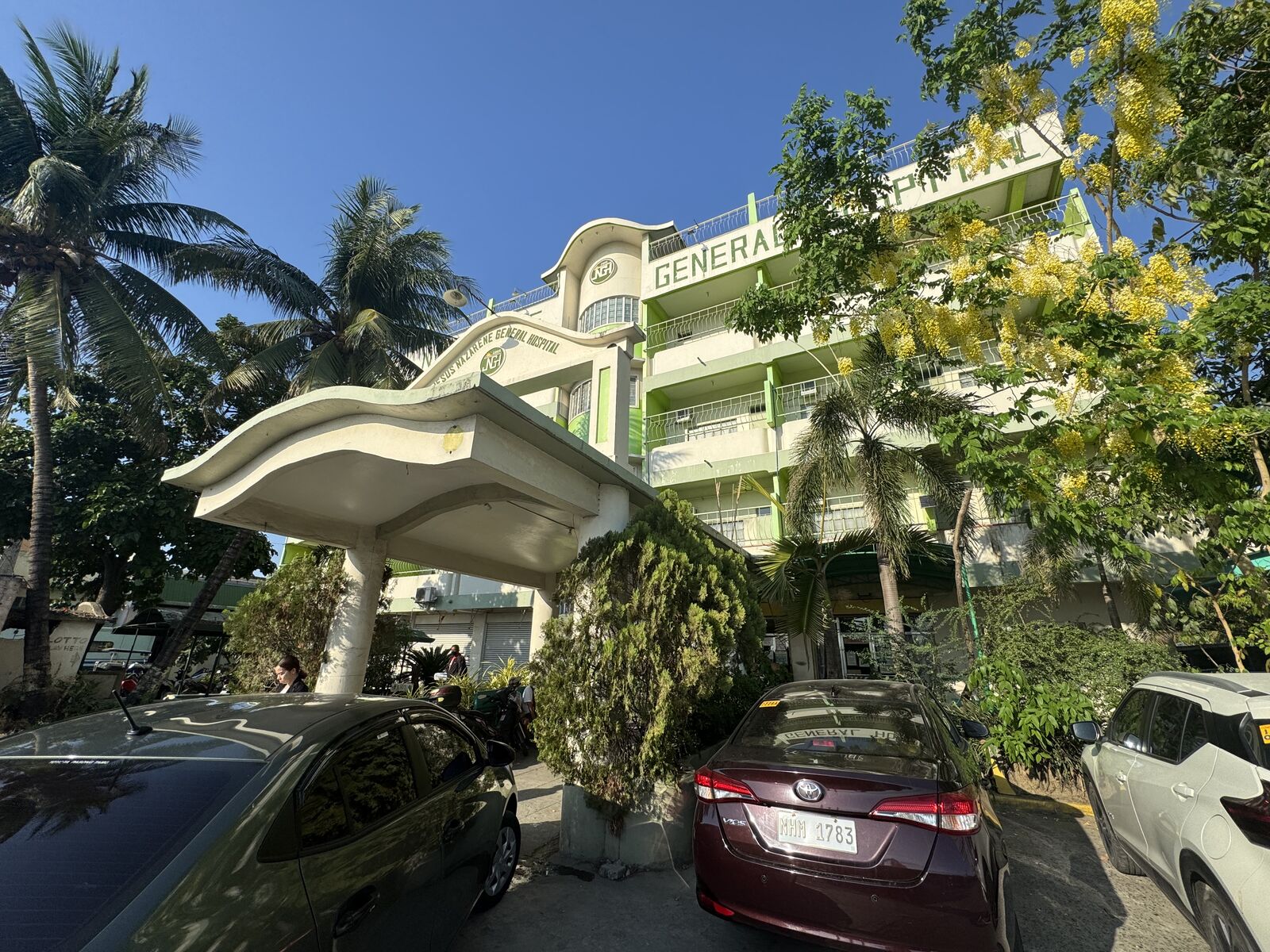
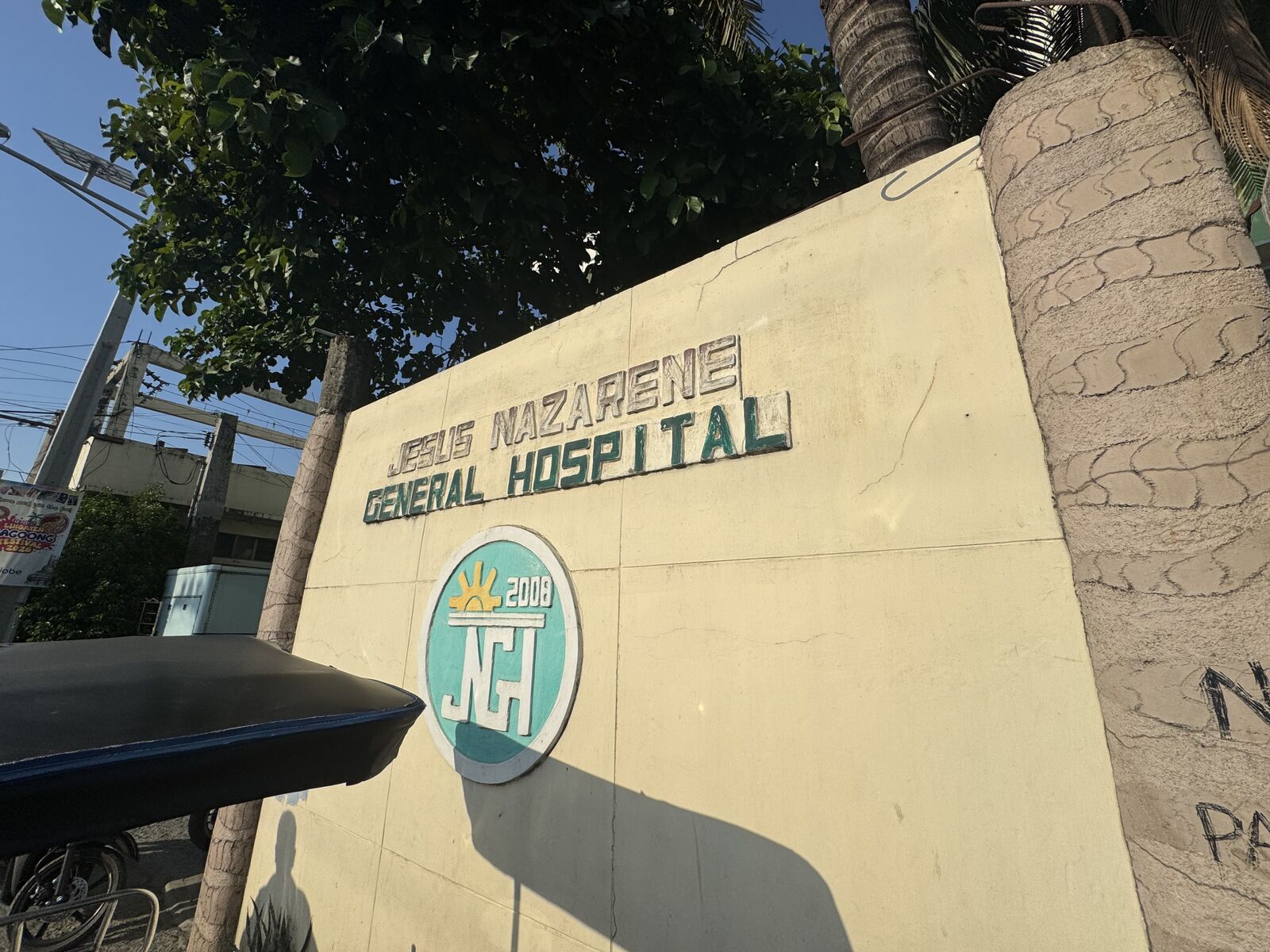
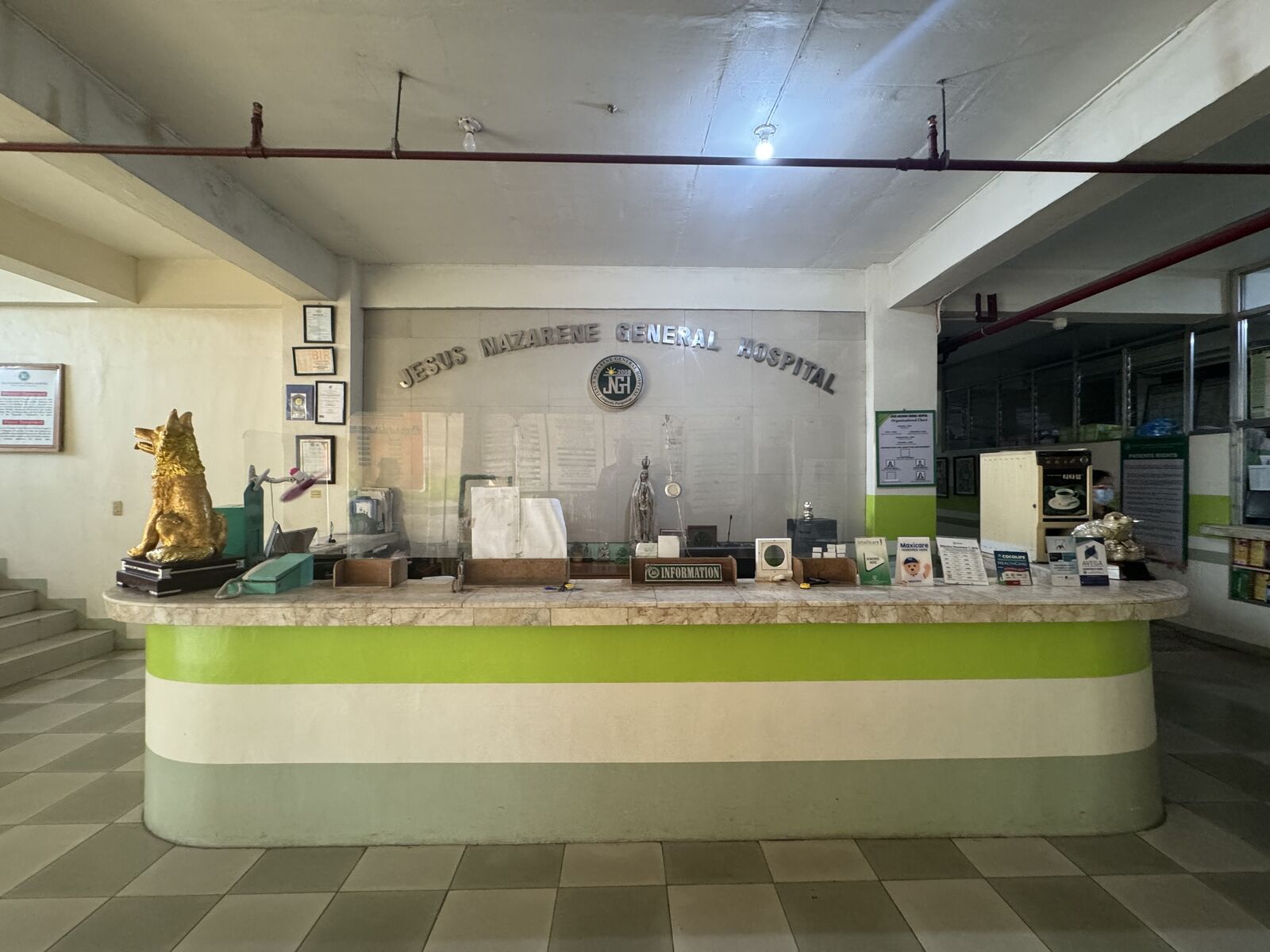
The hospital was large, and the facilities inside looked well equipped. There is also an emergency reception desk, we were told, with twenty-four-hour availability.
Of course, the best outcome is never needing it at all. But knowing that the provision is genuinely there matters — not just to the person on the programme, but to their family at home.
The Hokkaido Study-Abroad Programme takes seriously not only the enjoyable, enriching parts of a stay abroad, but the safety and practical side of it too.
Hotel visits for those who prefer their own space — two options in Lingayen
Next, we visited two hotels in Lingayen — for those who would prefer a hotel stay rather than the student dormitory.
The first was River Palm Hotel.
It sits in a quiet location alongside the river, with a calm, unhurried atmosphere. There was very little sound from outside — the kind of place where you feel the pace slow down.
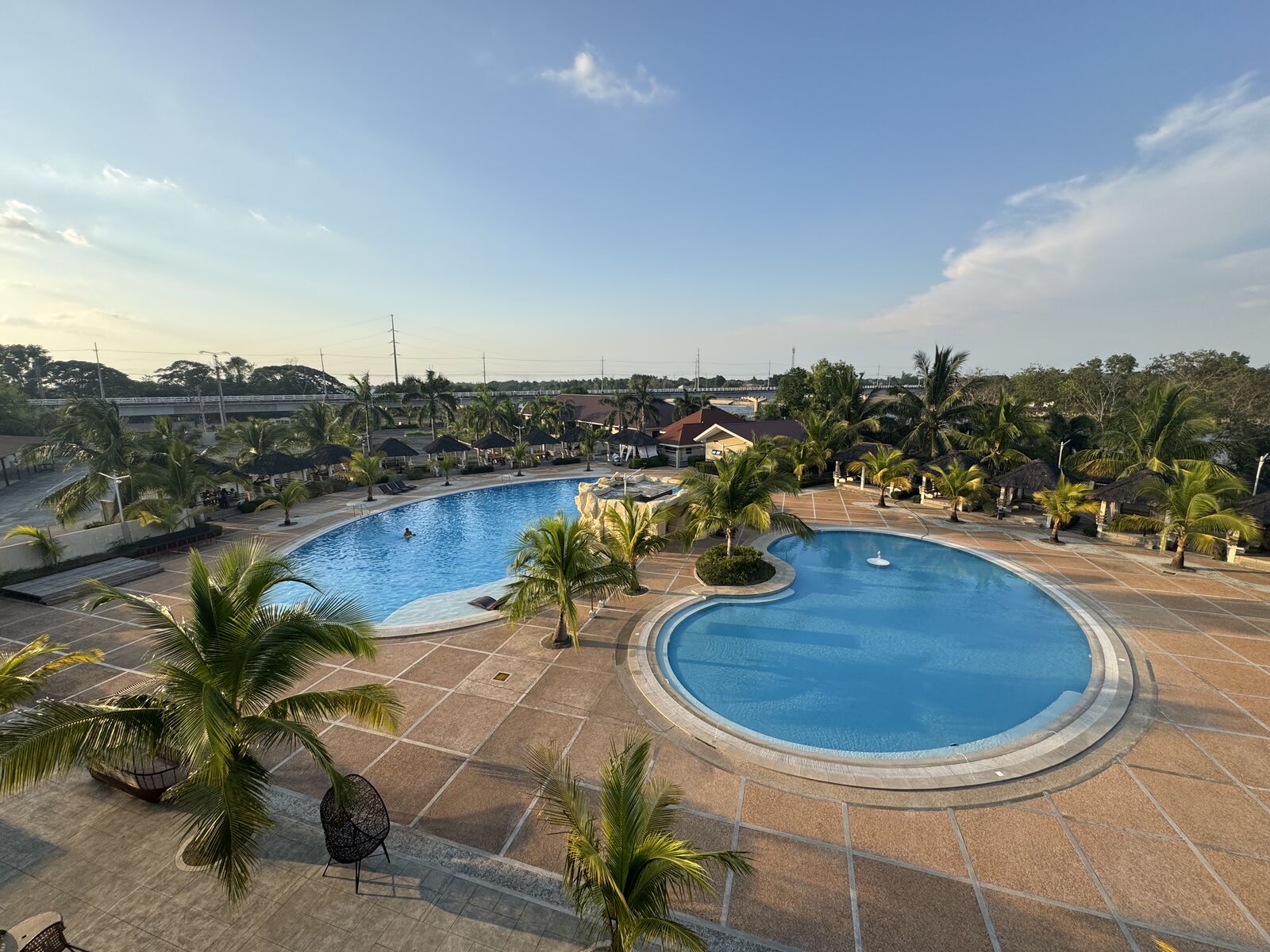
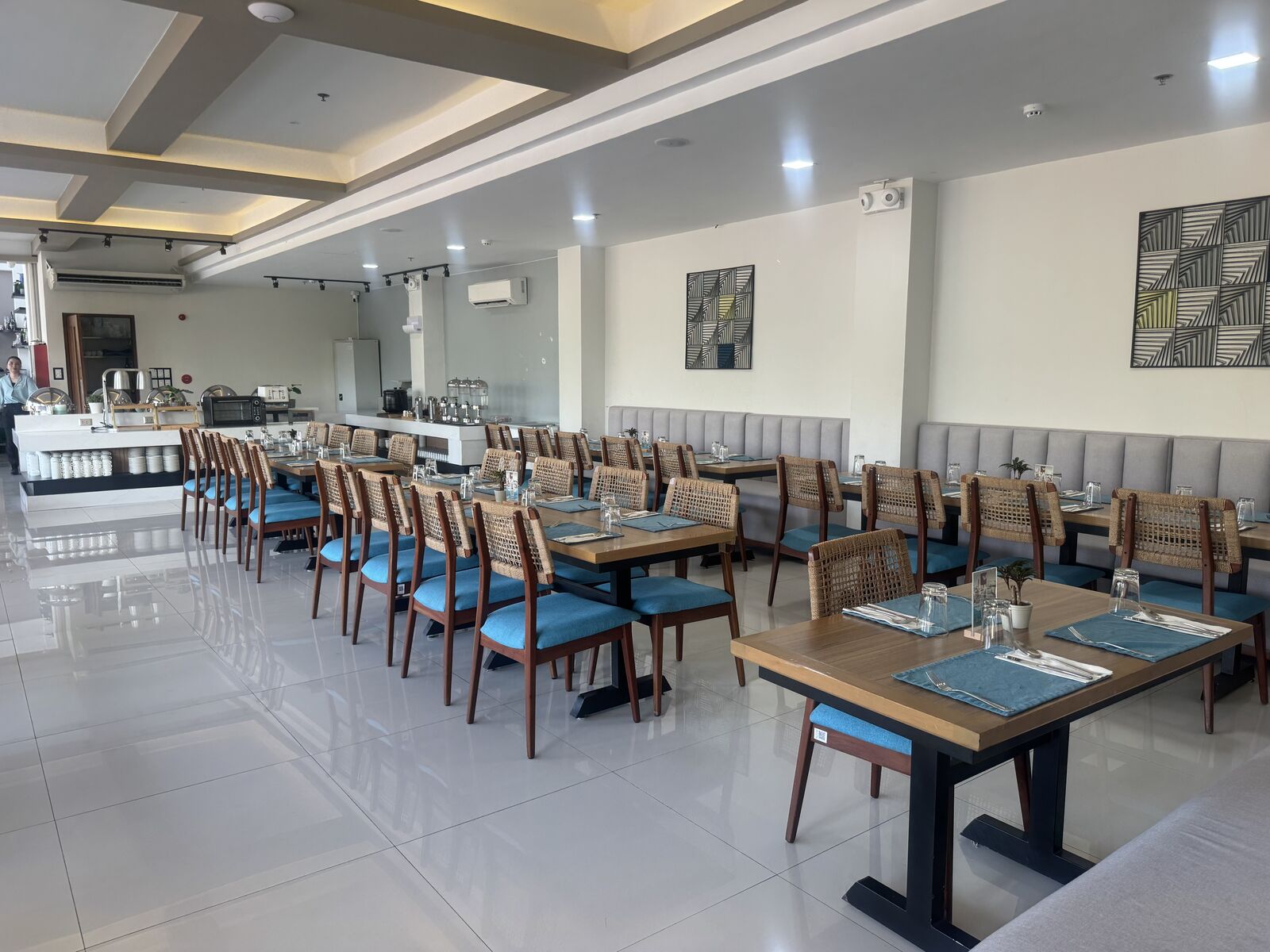
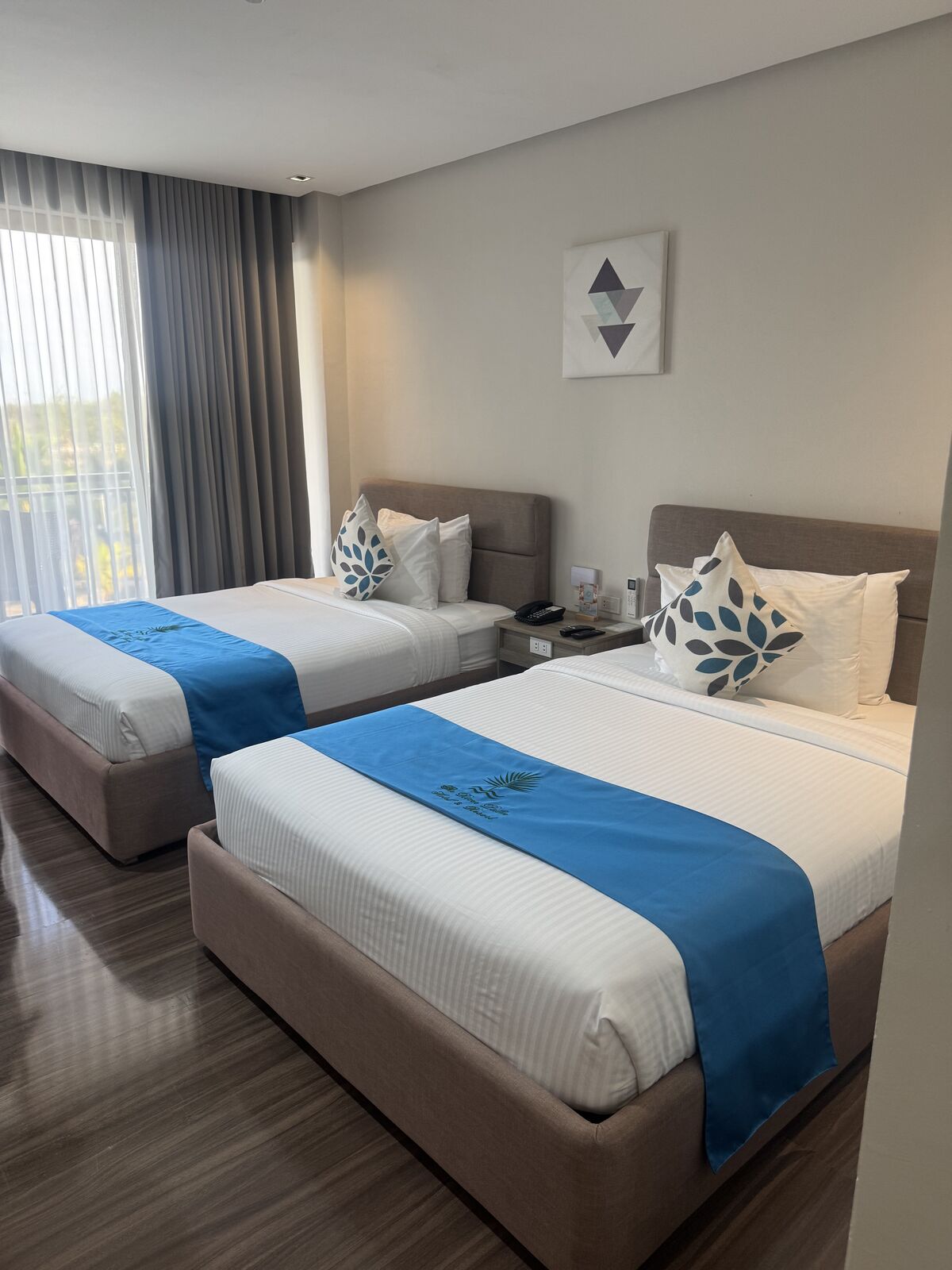
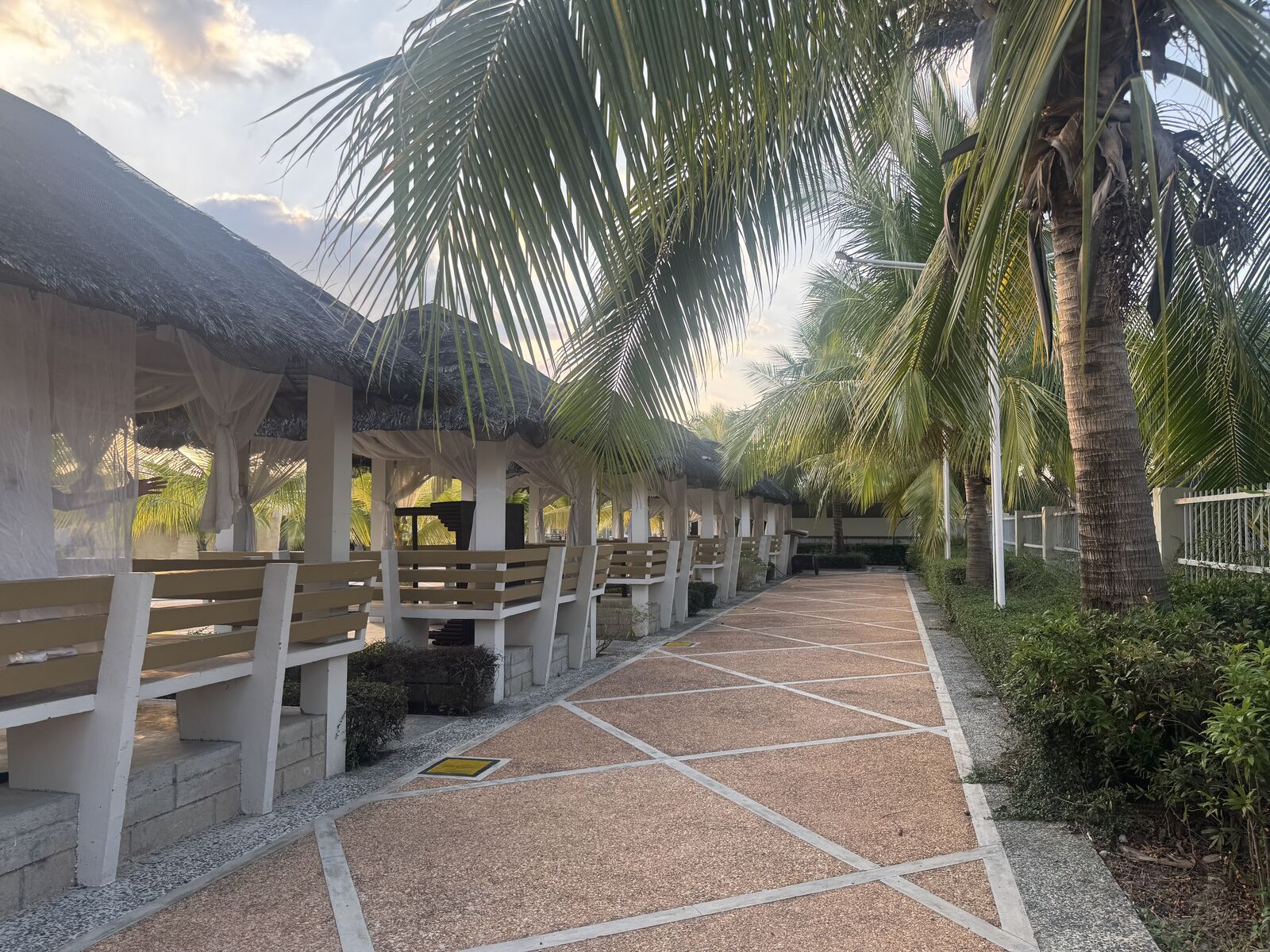
For anyone who would like something a little more comfortable and private, with genuinely peaceful surroundings, this hotel seemed like a very good fit.
The second stop was MC Hotel, right in the centre of town. Step outside and there is a McDonald's and a market within easy reach — a different kind of convenience entirely.
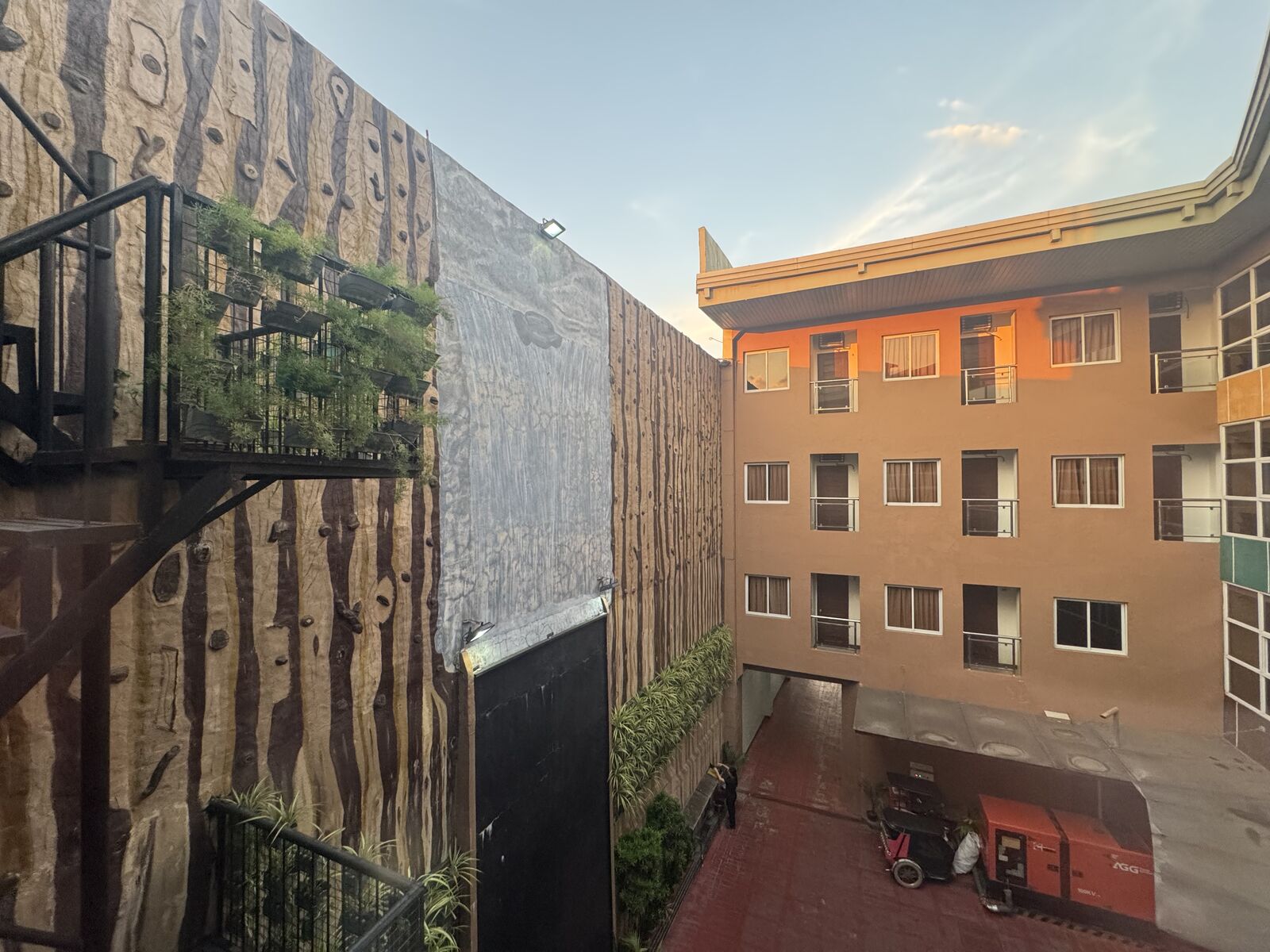
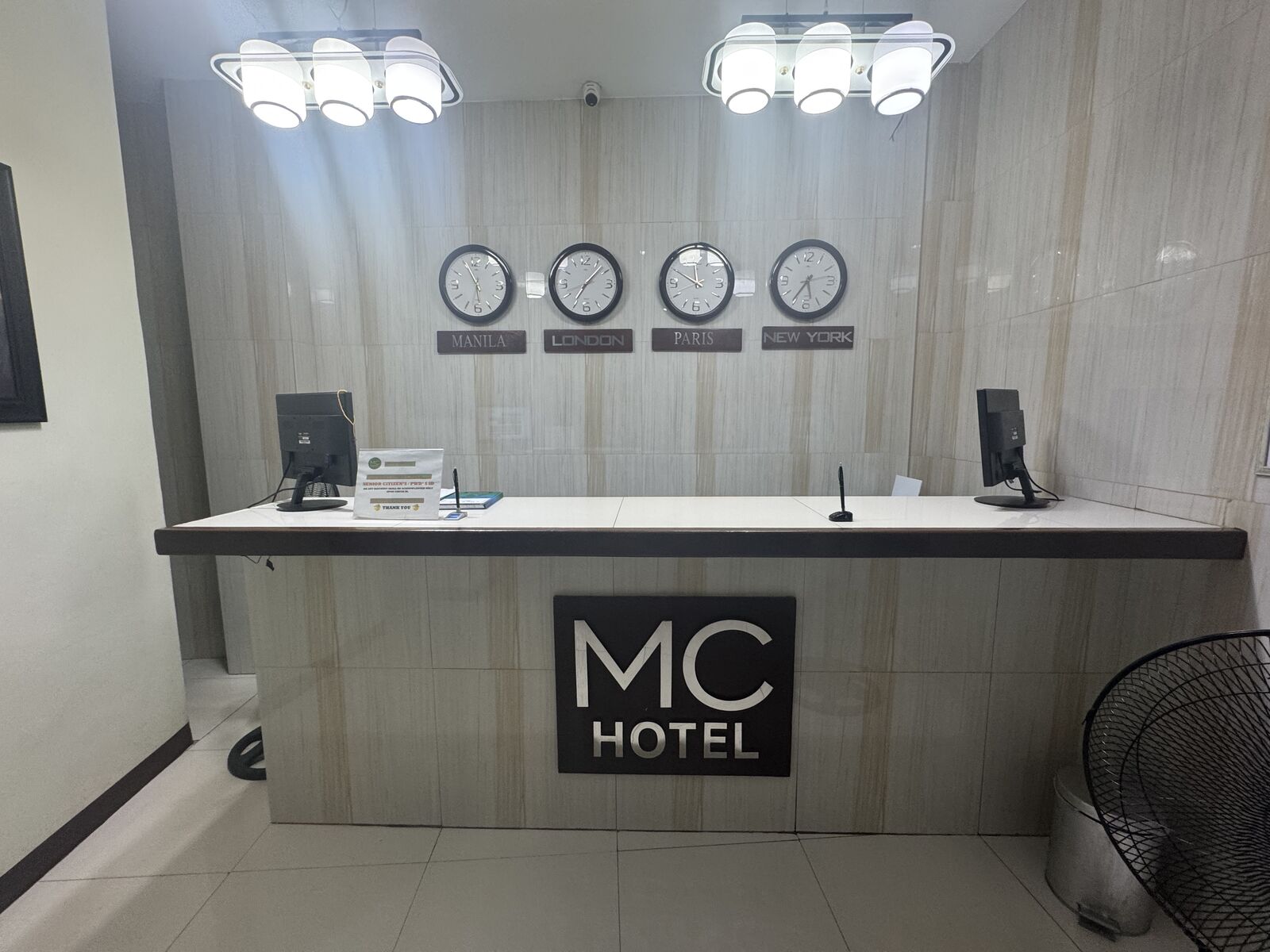
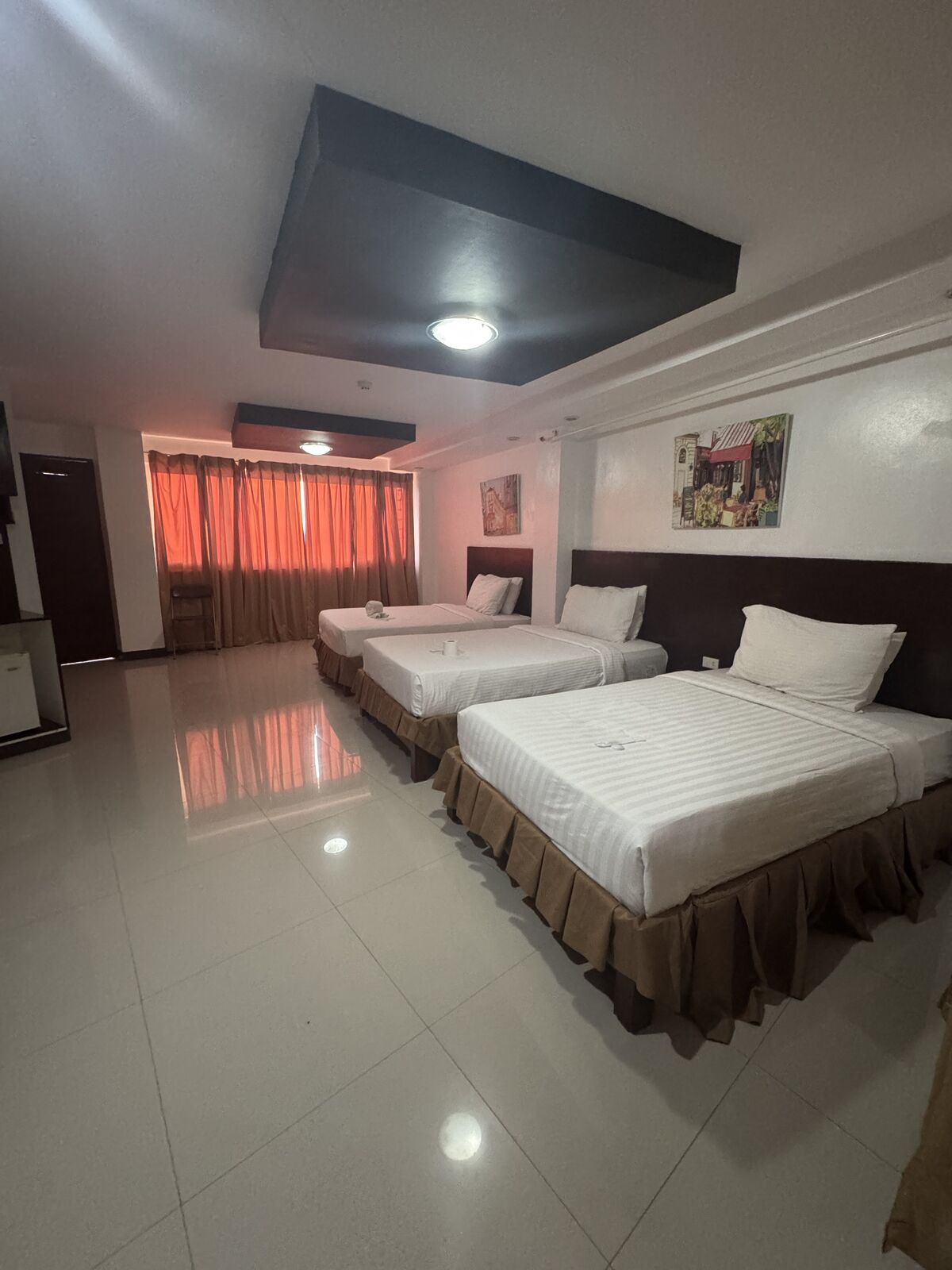
A hotel stay is an option that suits many kinds of participant — families, couples or friends travelling together, and those in their senior years. The dormitory has its own warmth and appeal, but for anyone who feels they would like a little more privacy and space to themselves, having a hotel option available is something worth knowing about.
As the sun went down — a walk to the town sports complex with Mylo the mascot dog
As the evening cooled and the light faded, we headed to the town's sports complex with Mylo, the school's mascot dog.
Mylo, like Cookie who appeared in yesterday's diary, is one of Parrots-kun's mascot dogs. Apparently he loves sticking his head out of the car window to watch the town go by.

The sports complex is free and open to anyone. By early evening, people were already arriving to exercise and move their bodies after the day.
Inside the complex: a swimming pool, tennis courts, and an athletics track.
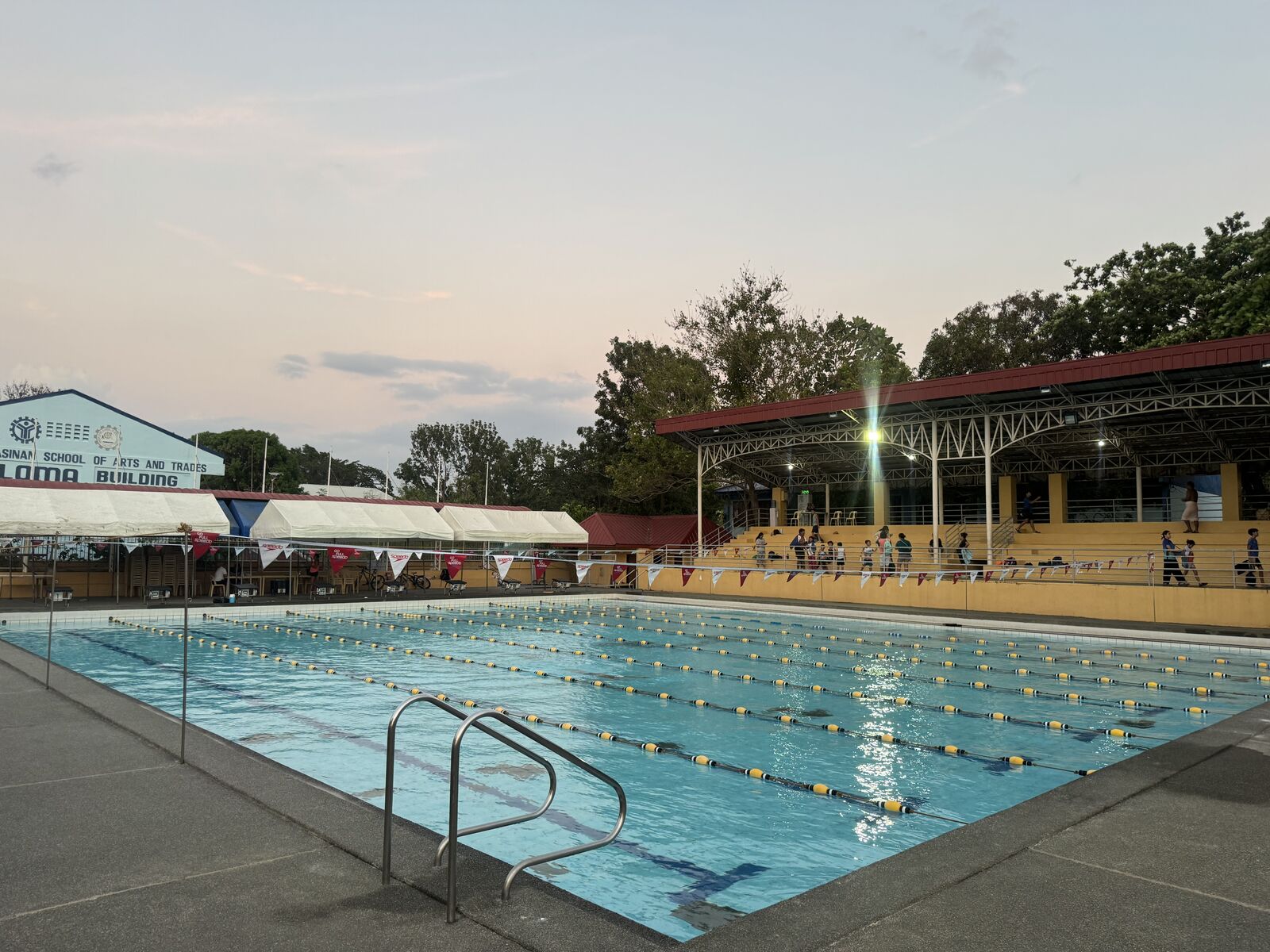
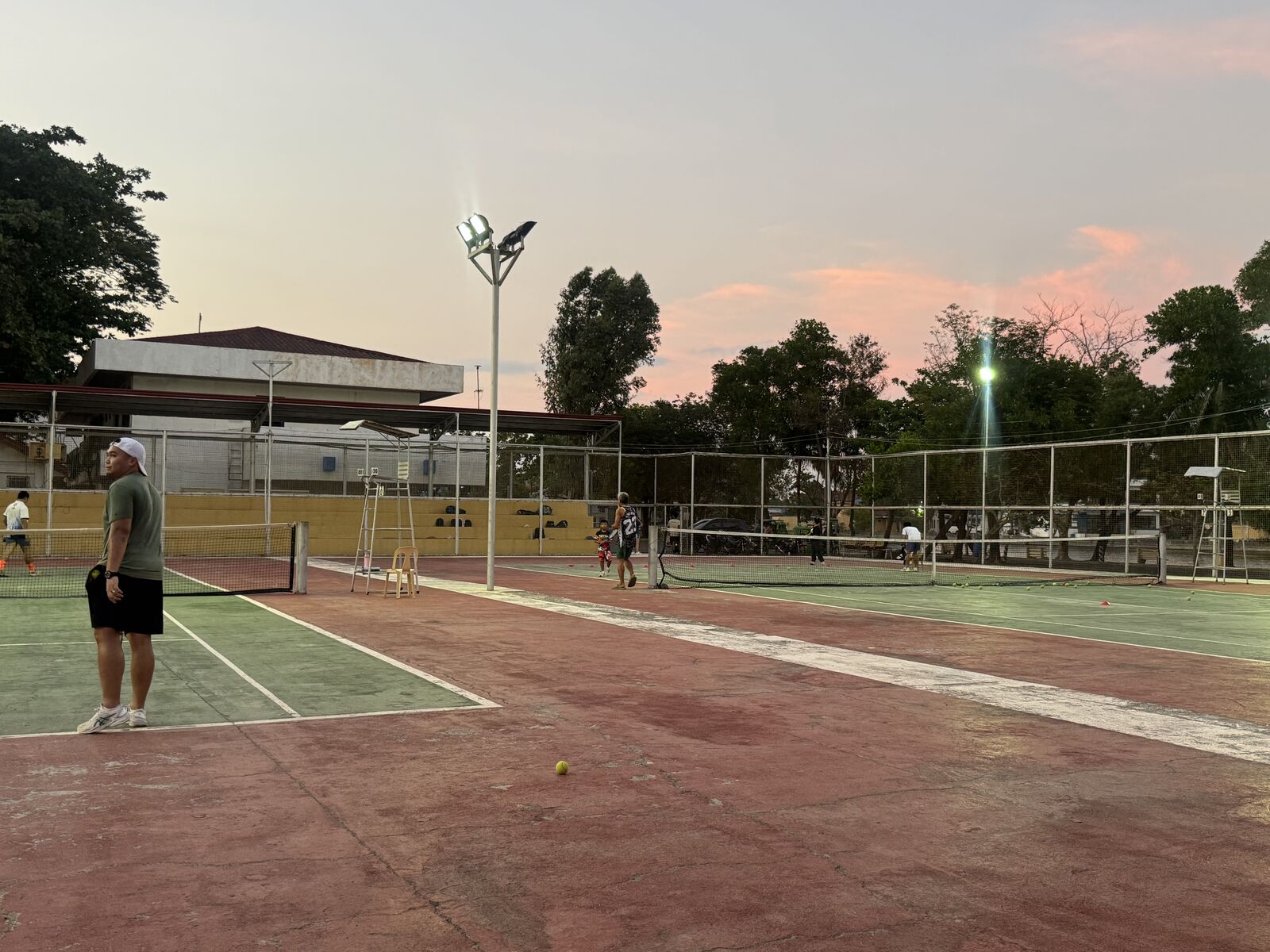
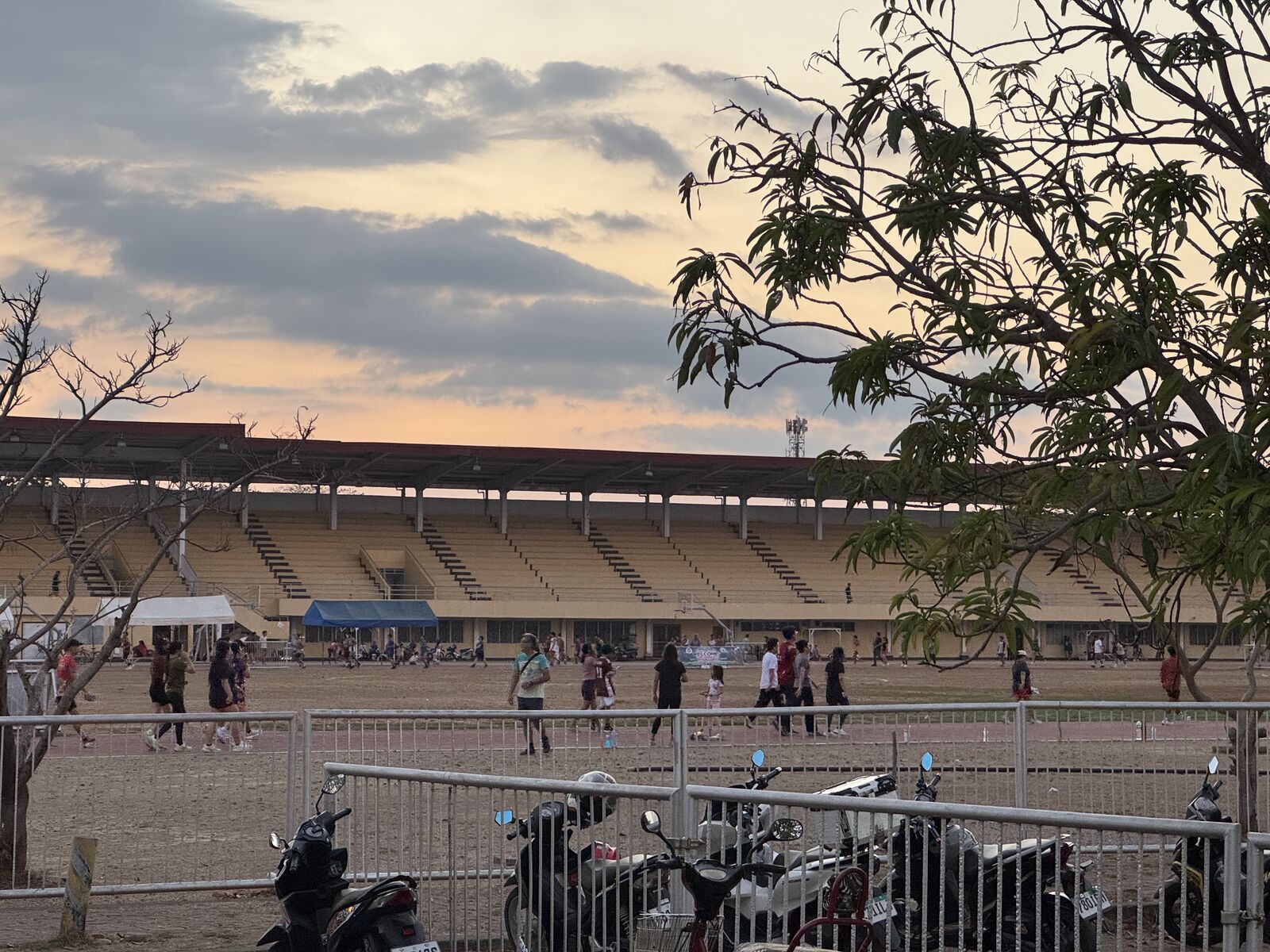
Study English at school. Enjoy a meal. Explore the neighbourhood. Move your body in the evening. That kind of daily rhythm — all of it here and available — is genuinely appealing.
The view from the pier nearby was beautiful too.
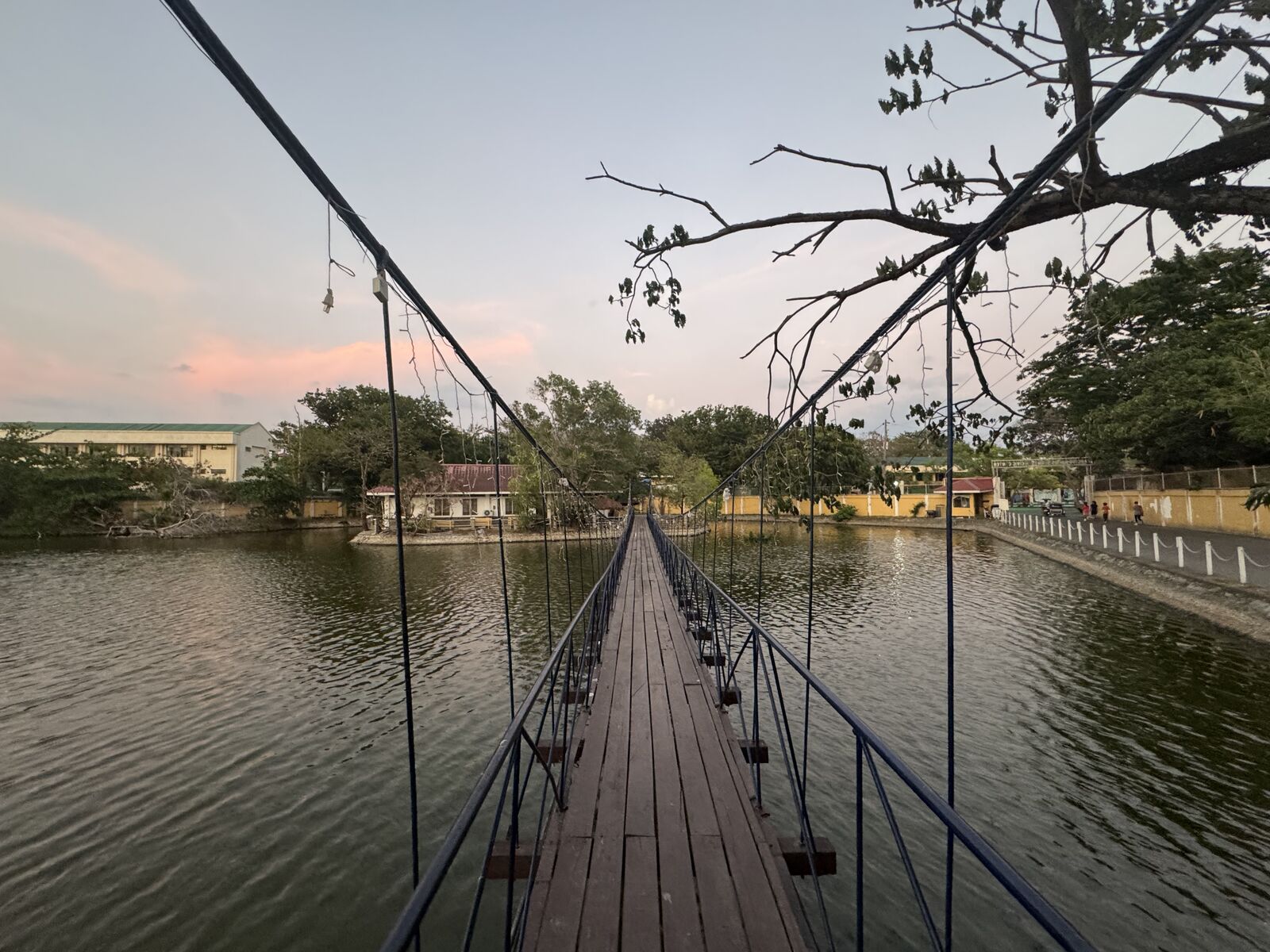
Lingayen is not flashy in the way a big city is. Its appeal is quieter, closer to everyday life. Being able to use the town's facilities the same way the local residents do, even during a short stay, makes for something more than tourism — and something, we think, genuinely worth having.
Dinner at NARO — a relaxed evening with Filipino food in a moodily lit setting
That evening, we went to restaurant NARO.
The atmosphere inside was warm and low-key — exactly the kind of place you want to land in at the end of a full day of visits, and settle in for a proper meal.
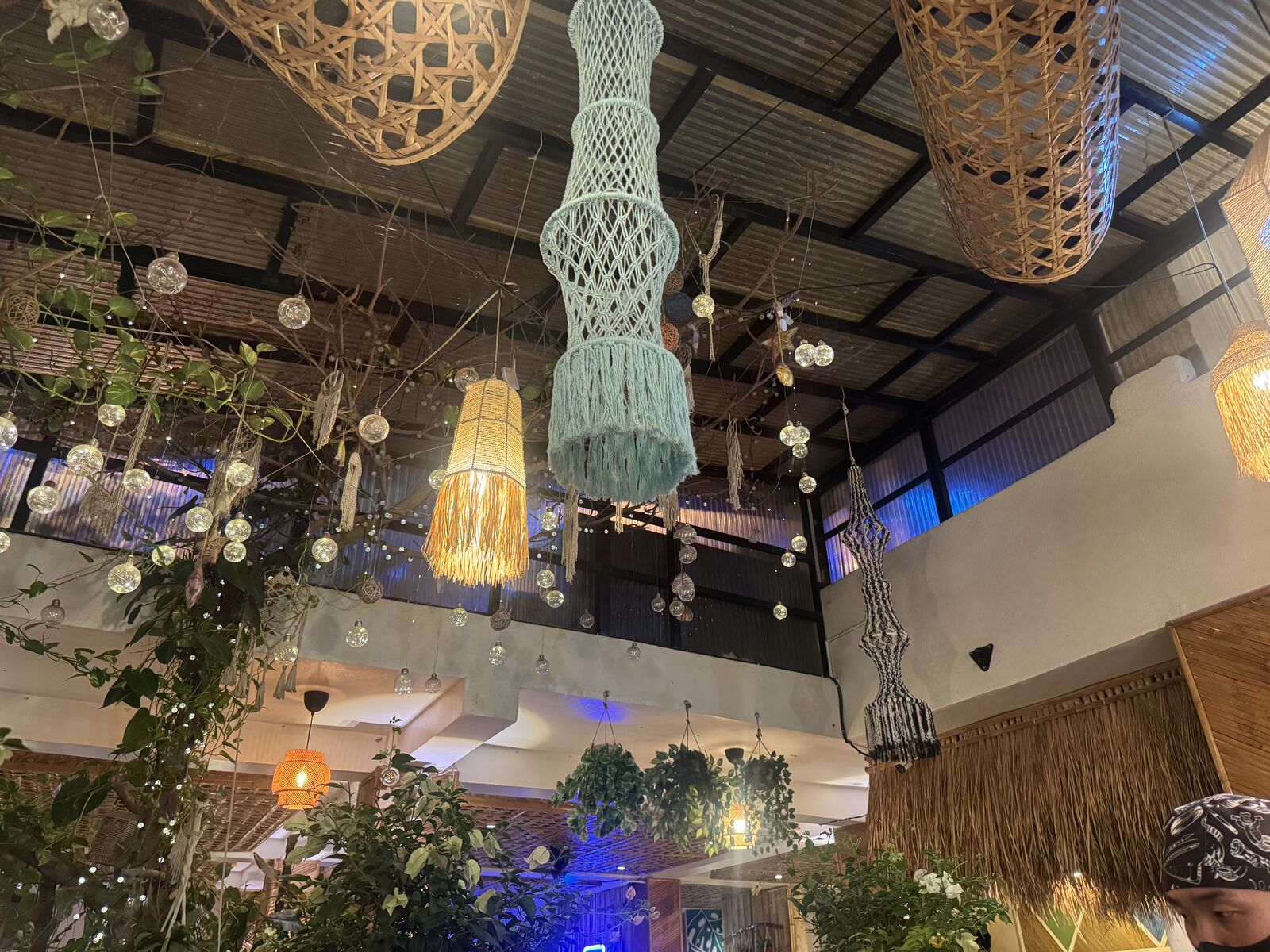
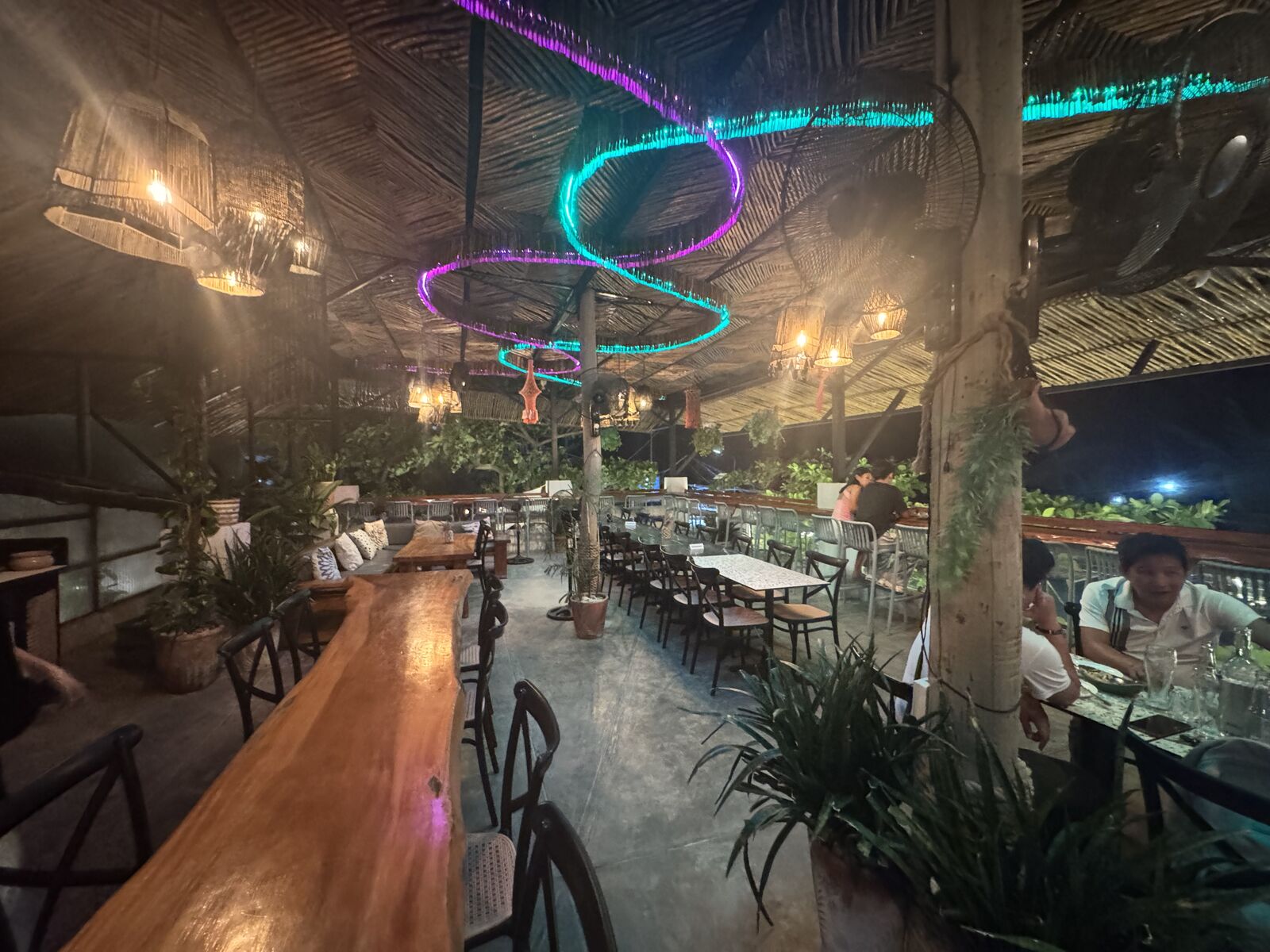
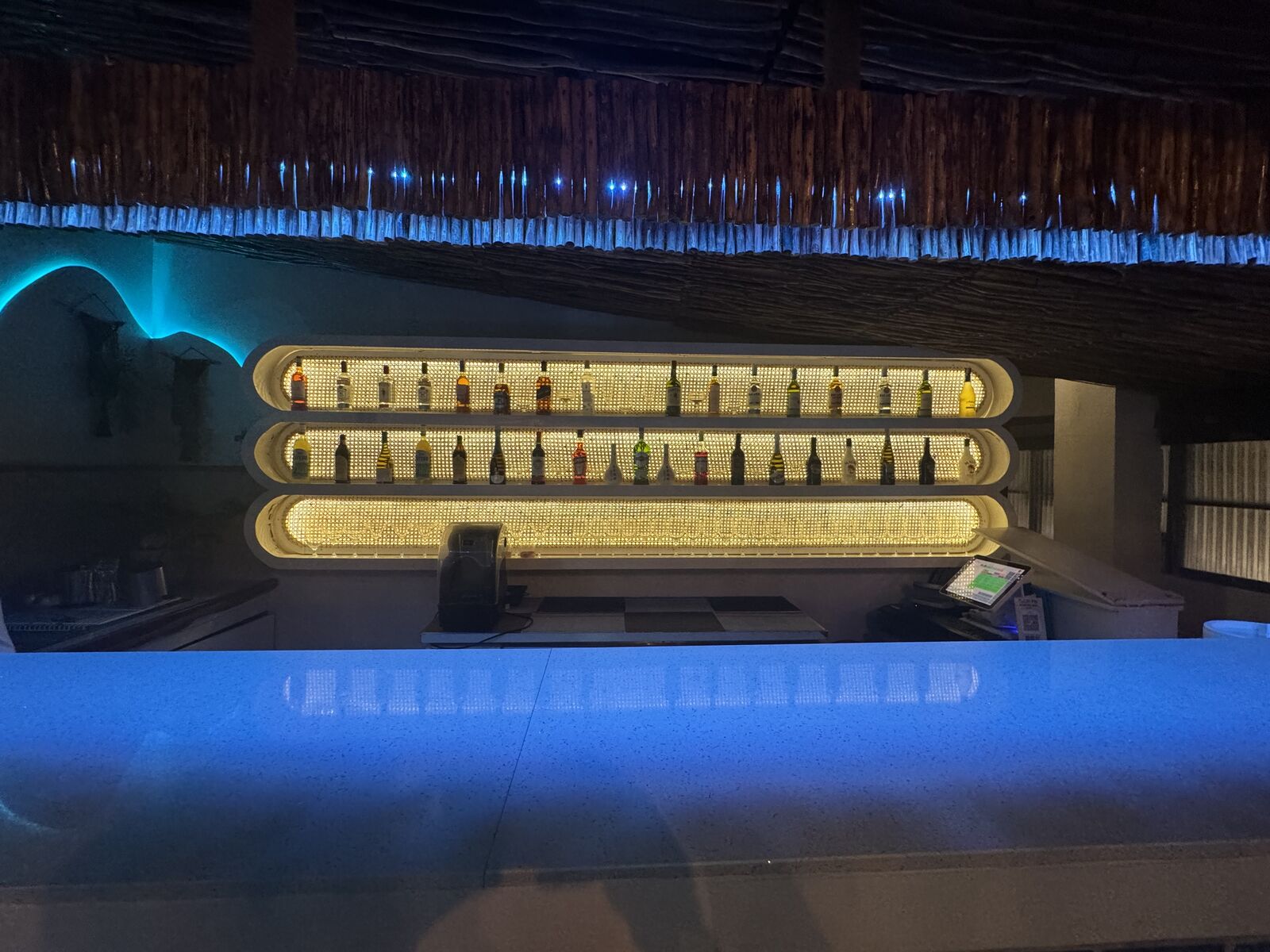
We worked our way through a generous spread of Filipino dishes.
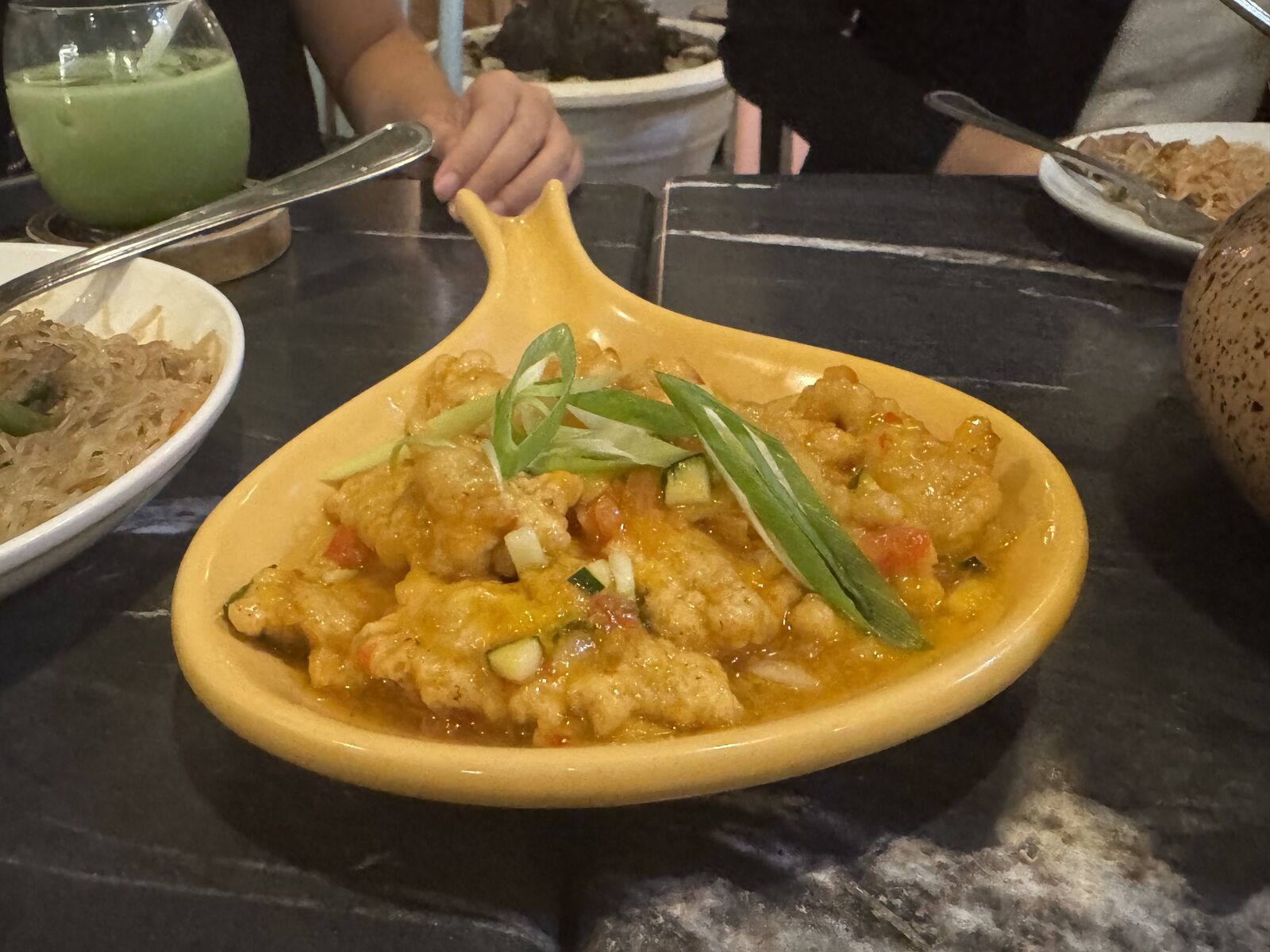
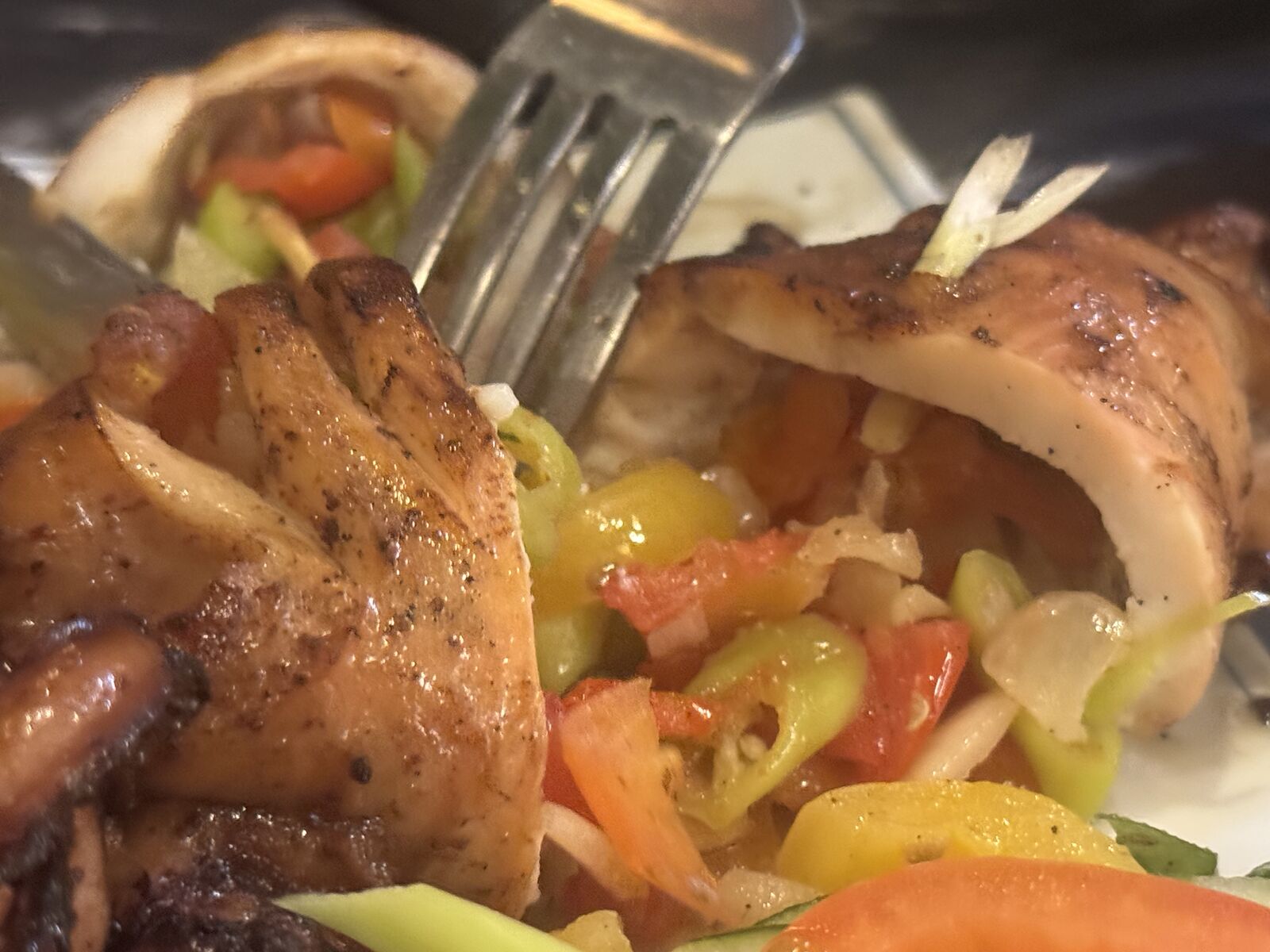
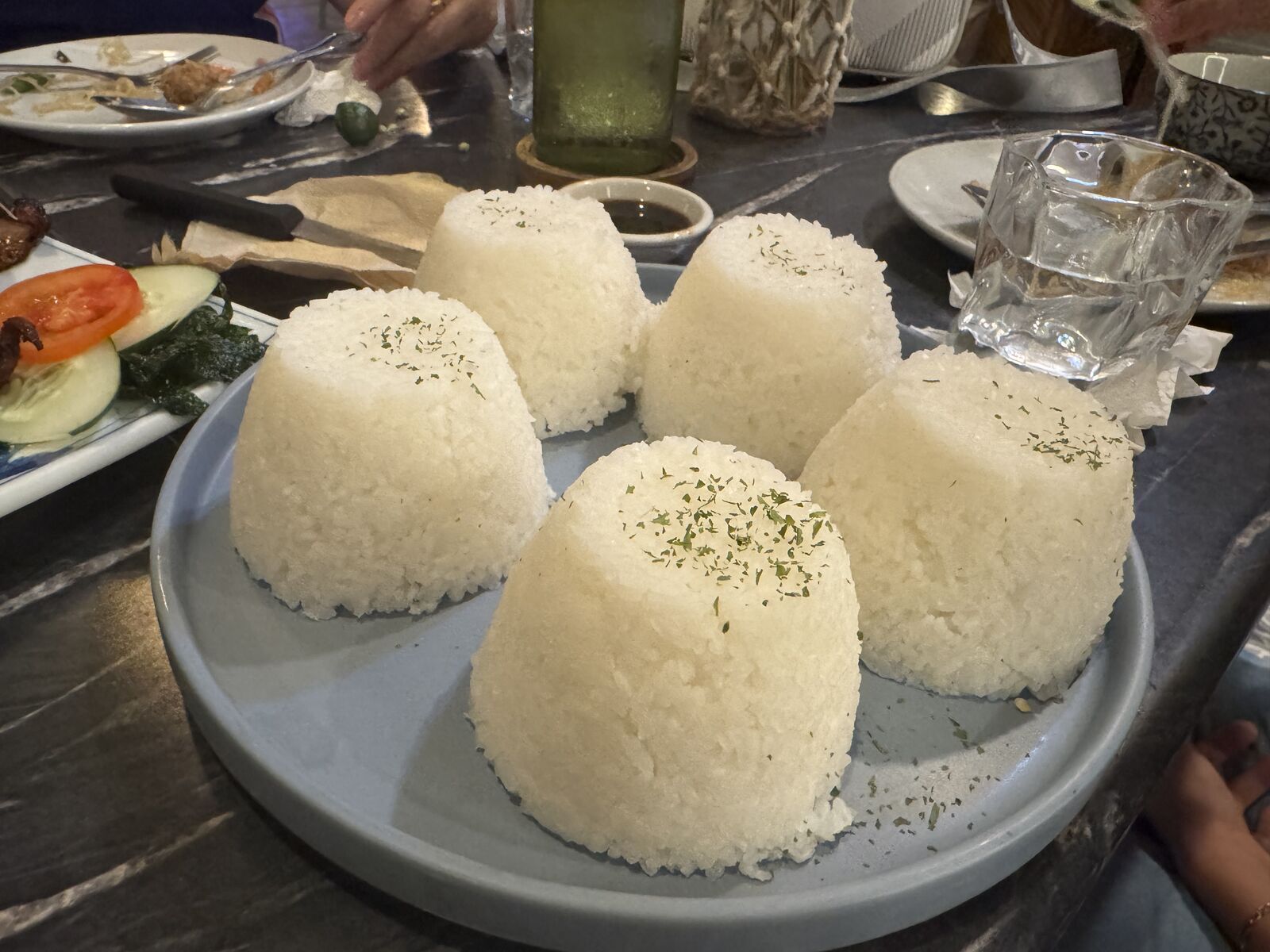
One thing to know about ordering food in the Philippines — rice almost always comes with the meal. At this restaurant, it arrived in a shape that stopped us mid-conversation: moulded into a perfect cone, like a miniature Mount Fuji.
It reminded us of the rice decorations you sometimes see on a Japanese children's lunch plate — playful and charming in exactly the same way. Small differences like that, encountered unexpectedly over a meal, are one of the quiet delights of travel.
To close the day — traditional Filipino massage at SHIAWASE
By the time we finished dinner, it was already past nine in the evening.
And yet, as a final stop for the day, we made our way to SHIAWASE — a spa offering traditional Filipino massage.
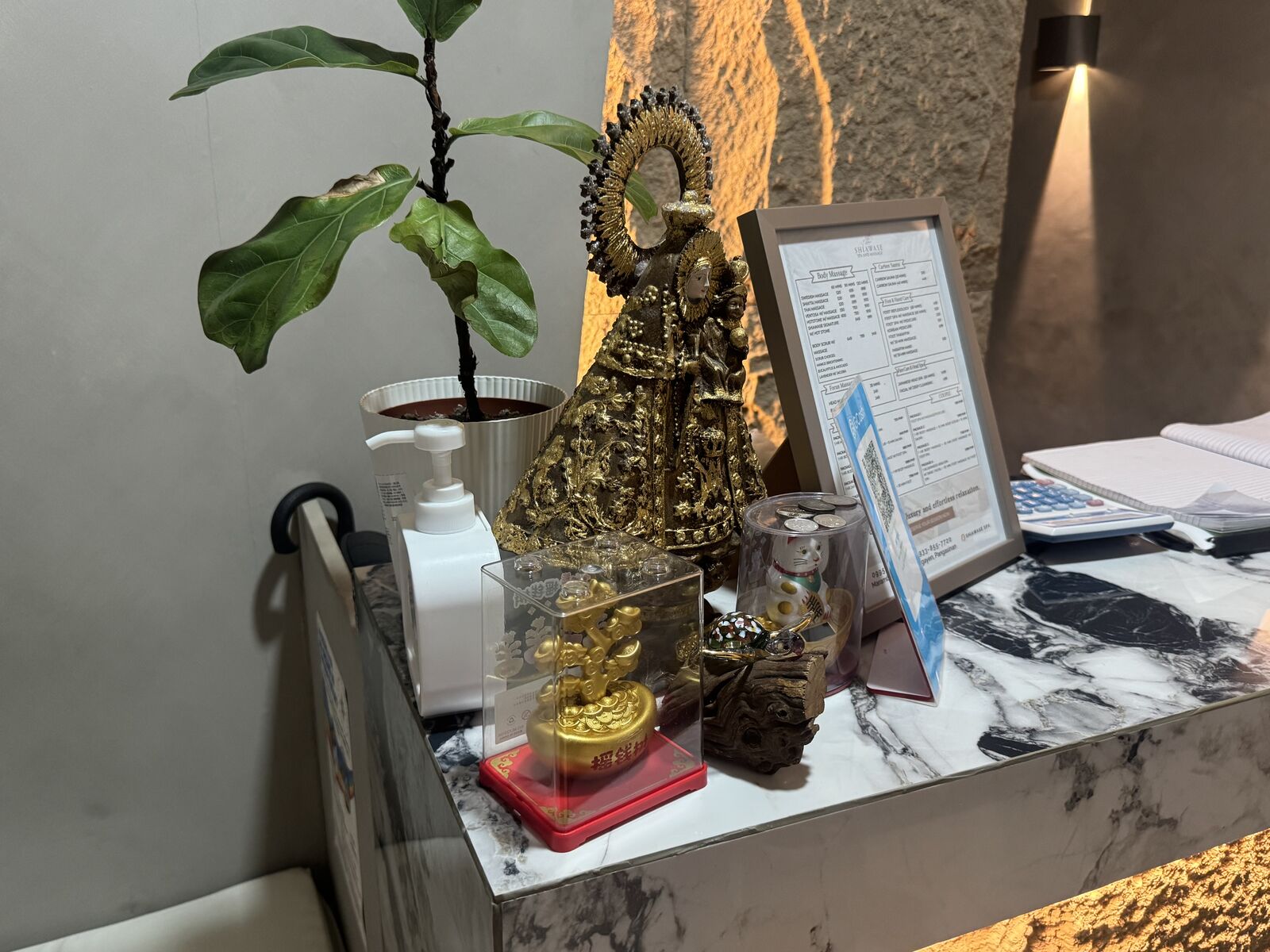
Ninety minutes of massage, and the body that had been on the go since nine in the morning was restored in one go.
Over the years, we have had massages at local shops in Vietnam, Thailand, and other places known for being affordable — but this place was among the best value of all of them, and honestly, that came as a surprise.
The optional add-on of a traditional Filipino massage experience is something that can be arranged at exactly this kind of establishment.
When you are filling your days with lessons and activities, having time to properly rest and recover matters too. The chance to experience local massage as part of the programme — to slow down and be looked after — is, we felt, one of the things that makes this particular plan worth doing.
What Day 4 left us thinking
Day 4 was the day when Parrots-kun's teaching environment and the practical side of life during a stay came together, all in one go.
What struck us most clearly, across everything we saw and did today, was this: a stay at Parrots-kun is not simply about sitting in a classroom and learning English.
Talk with a teacher. Harvest on the farm. Gather around a traditional meal. Drop off the laundry. Check out the hospital and the hotels. Walk to the sports complex where the locals gather. Eat at a neighbourhood restaurant.
Each of those things is a thread in the experience of living here, not just visiting.
Taking that first step abroad from Hokkaido — it is natural to feel some anxiety. But the warmth of the lessons, the convenience of the daily infrastructure, the knowledge that there is a safety net if things go wrong, and the attentive care of the local staff: together, those things turn the anxiety, bit by bit, into something closer to confidence.
What we want to offer the people of Hokkaido is not just English lessons. It is the kind of experience that makes someone say: "I want to go there." "I could send my family there." "I think I could actually do this."
A study-abroad experience that is warm, grounded, and genuinely felt.
Editor's note
The moment that stayed with us most from Day 4 was Kay's lesson.
When you are speaking English, it is easy to get stuck in your own head — reaching for the right grammar, the right word — and the language stops coming. But when a teacher meets you with warmth and patience, something shifts. Suddenly you find yourself thinking, "it's fine to get it wrong — just try."
That sense of safety, we feel, is one of the most important things in language learning.
Beyond that: the school's farm lunch, the convenient launderette, the partner hospital, the hotels, the sports complex, and the massage parlour — being able to see all of those places with our own eyes was a real gain. Taken together, they make a picture of what daily life during a stay actually looks like.
A study-abroad trip is not held together by lessons alone. The food, the rest, the laundry, the healthcare, getting to know the town — each small part of daily life needs to feel manageable before you can give your full attention to learning. We came away from Day 4 more convinced of that than ever.
In Day 5, we will share more of what we encountered — the learning environment, the community, the experience.
See you again in Day 5.